
Blog
Benefits of online reviews for restaurants in 2026
Discover how online reviews drive revenue, trust, and growth for US restaurants. Learn proven strategies to get more reviews and protect your reputation.
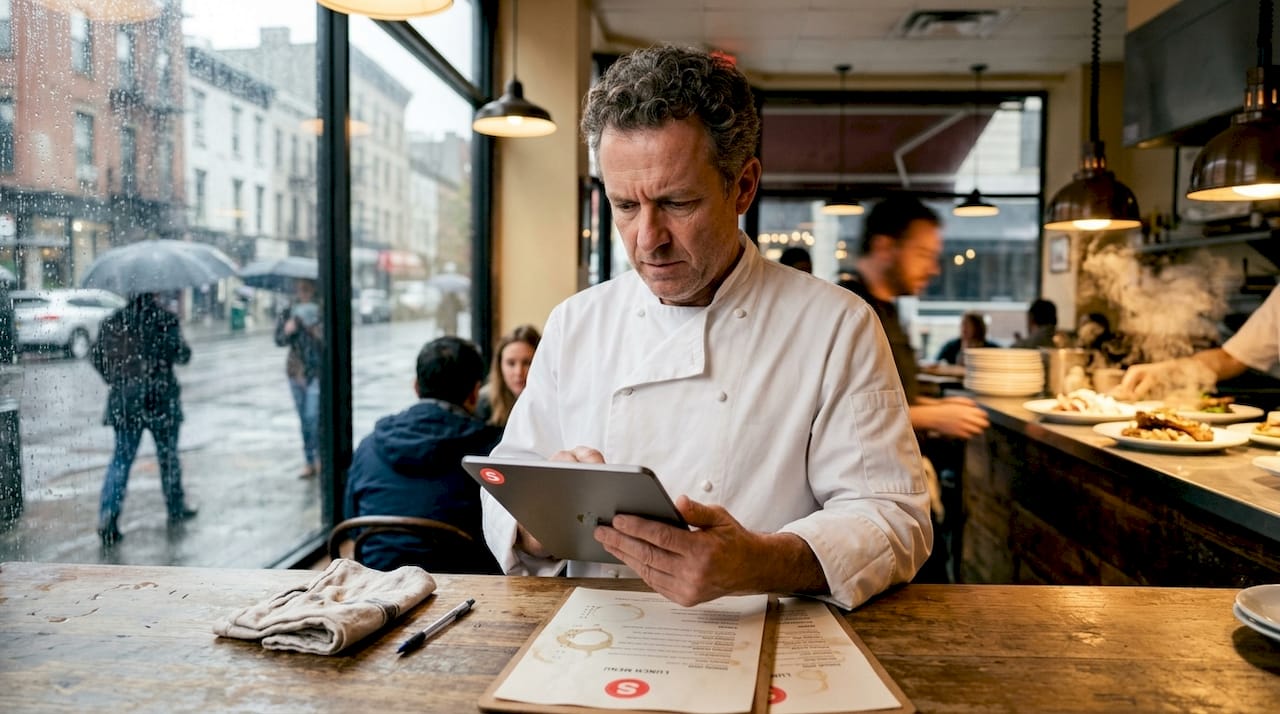
Benefits of online reviews for restaurants in 2026
TL;DR:
- Online reviews significantly influence restaurant trust, visibility, and revenue growth.
- Active review management, prompt responses, and genuine feedback foster long-term reputation building.
- Avoid fake reviews and negative responses to protect credibility and sustain customer trust.
Every night, hundreds of diners in your city open their phones and scroll through reviews before picking a place to eat. 94% of diners check online reviews before choosing a restaurant, meaning your reputation is often decided before a single guest walks through your door. This article breaks down why reviews matter so much, what real benefits they deliver, how to get more of them working in your favor, and what traps to avoid along the way. Whether you run a neighborhood diner or a multi-location concept, the strategies here will help you build a stronger, more profitable reputation.
Table of Contents
- Why online reviews matter for restaurants
- Key benefits of positive online reviews
- How to maximize the value of your reviews
- Pitfalls and risks: Avoiding the common traps
- Our take: What most restaurant owners miss about online reviews
- Take your restaurant’s reputation to the next level
- Frequently asked questions
Key Takeaways
| Point | Details |
|---|---|
| Boosts revenue | Higher ratings on review sites can result in significant revenue growth for restaurants. |
| Improves customer trust | Positive online reviews make diners more likely to choose your restaurant over competitors. |
| Enhances financing options | Better reviews can lead to improved loan terms and lender confidence. |
| Builds long-term reputation | Effective review management strengthens your restaurant’s brand and guest loyalty. |
Why online reviews matter for restaurants
Online reviews are no longer a nice-to-have. They are the single most powerful form of social proof available to a restaurant today. Think about it: a stranger’s opinion carries more weight with a new diner than your best ad campaign ever will. That is a dramatic shift in how trust is built, and it happened fast.
A one-star increase in Yelp ratings leads to 5-9% revenue growth for independent US restaurants, according to a Harvard Business School study. For a restaurant doing $1 million a year, that is up to $90,000 in additional revenue from a single rating point.
The impact on revenues and restaurant survival goes even deeper than most owners realize. Higher-rated restaurants attract more first-time visitors, convert more browsers into regulars, and spend less on paid advertising because organic word-of-mouth does the heavy lifting. It is a self-reinforcing cycle: better reviews drive more traffic, more traffic generates more reviews, and the whole flywheel keeps spinning.
Strong restaurant reputation management starts with understanding where reviews actually live. Google, Yelp, TripAdvisor, and OpenTable are the big platforms, but niche food apps and social media mentions count too. A consistent presence across all of them signals credibility to both diners and search engines.
Here is a quick summary of why reviews drive real business results:
- Trust: New diners trust peer reviews more than any paid promotion
- Discovery: High ratings improve your visibility in local search results
- Differentiation: A strong review profile sets you apart from competitors with similar menus and price points
- Retention: Responding to reviews shows guests you care, which encourages repeat visits
Now that you understand just how important reviews have become, let’s break down the core ways they drive business success.
Key benefits of positive online reviews
Understanding the scale of influence, let’s get practical and list the real, tangible benefits of gathering stellar online reviews.

The most obvious benefit is more customers walking through your door. But the financial upside goes well beyond foot traffic. Research shows that higher Yelp ratings actually improve access to capital. A 0.5-star increase on Yelp correlates with a 25-basis-point reduction in SBA loan spreads and 6% lower collateral requirements. If you have ever tried to secure a small business loan, you know how significant that is.
Here is how star ratings translate into measurable revenue outcomes:
| Star rating | Estimated revenue impact | Customer trust level |
|---|---|---|
| Below 3.5 stars | Significant revenue loss | Low; most diners skip |
| 3.5 to 4.0 stars | Moderate growth | Acceptable; some hesitation |
| 4.0 to 4.5 stars | Strong growth (5-9%) | High; diners actively choose you |
| Above 4.5 stars | Premium positioning | Very high; loyal advocates |
Beyond revenue, positive reviews reduce your risk of business exit. Restaurants with consistently high ratings are statistically less likely to close within their first three years. That is not a coincidence. It reflects the compounding effect of trust built over time.
Direct benefits you can expect from a strong review profile include:
- More walk-ins from local search and map results
- Higher average check size because confident diners order more freely
- Stronger word-of-mouth referrals from guests who feel validated by others’ experiences
- Better loan and financing terms as lenders factor in your online reputation
A solid review management checklist can help you stay on top of all these moving parts without letting anything slip. Pair that with smart restaurant marketing types and you have a system that compounds your results over time.
Pro Tip: Screenshot your best reviews and feature them on your social media accounts, menu inserts, and even your front window. Social proof at the point of decision is incredibly powerful.
How to maximize the value of your reviews
With the benefits clear, here’s a practical breakdown of steps to get the most from each online review you receive.
Most restaurants collect reviews passively and hope for the best. The ones that win treat review generation as an active, ongoing process. Simple actions amplify the value of every review you receive, and the effort required is much smaller than most owners expect.
Personalized responses boost customer goodwill and future reviews. When guests see that you actually read and replied to feedback, they feel valued, and that feeling travels.
Follow these steps to build a review engine that works consistently:
- Respond to every review within 24 to 48 hours. Speed signals that you take feedback seriously. A quick, genuine reply to a five-star review reinforces the positive feeling. A fast, professional reply to a negative one can actually recover the relationship.
- Personalize your responses. Mention something specific from the review. Generic replies feel automated and miss the opportunity to build a real connection.
- Ask for reviews at the right moment. The best time to request a review is right after a great experience. Train your staff to mention it naturally at the end of a meal.
- Use QR codes on receipts and table cards. QR codes on receipts make it frictionless for guests to leave a review before they even get home. This single tactic can double your review volume.
- Follow up via SMS or email. If you collect contact info, a short post-meal message with a direct review link is one of the highest-converting tactics available.
- Feature positive reviews across your marketing. Use them in email newsletters, social posts, and on your website. Reviews are free content that builds trust everywhere you share them.
For a full breakdown of how to integrate these tactics into your broader strategy, the digital marketing checklist is a great starting point. You can also look at how other operators approach handling customer feedback to get fresh ideas.
Pro Tip: Use QR codes on receipts for seamless post-meal review requests. Place the code near the total line where guests naturally pause, and include a short note like “Loved your meal? Tell others.”
Pitfalls and risks: Avoiding the common traps
Finally, while online reviews offer huge upsides, being aware of the dangers is just as crucial to your long-term reputation.
The temptation to shortcut the process is real. Buying fake reviews, incentivizing guests in ways that violate platform rules, or ignoring negative feedback entirely are all mistakes that can cost you far more than they save. Negative reviews cost up to 30 customers each, and fake reviews erode the trust you have worked hard to build the moment diners suspect them.
Here is a direct comparison of how positive and negative reviews affect your restaurant:
| Factor | Positive review effect | Negative review effect |
|---|---|---|
| New customer acquisition | Strong increase | Up to 30 lost customers per review |
| Search visibility | Improved rankings | Reduced local search placement |
| Loan and financing terms | Better rates and collateral | Higher risk perception |
| Staff morale | Boosted team confidence | Can create internal tension |
One surprising finding: even highly acclaimed restaurants are not immune to reputation risk. Michelin-starred restaurants may actually see a sentiment drop after receiving their award, as elevated expectations create a harder-to-please audience. The lesson is that reputation management never stops, no matter how successful you become.
The impact of fake reviews is also well documented. Platforms like Google and Yelp have sophisticated systems to detect manipulation, and getting flagged can wipe out your entire review history overnight.
Here is a clear list of do’s and don’ts:
- Do: Respond to every review, positive or negative, with honesty and care
- Do: Encourage authentic reviews from real guests through natural, compliant methods
- Do: Use negative feedback as a roadmap for genuine improvement
- Don’t: Buy fake reviews or use review-swapping schemes
- Don’t: Offer discounts or free items in exchange for positive reviews
- Don’t: Ignore criticism or respond defensively in public
Transparency and authenticity are your strongest long-term assets. One honest three-star review handled well does more for your reputation than ten fake five-star reviews.
Our take: What most restaurant owners miss about online reviews
Most restaurant owners treat online reviews as a scoreboard. They check the rating, wince at the bad ones, and celebrate the good ones. That reactive mindset leaves enormous value on the table.
The restaurants that consistently outperform their competition treat reviews as a living conversation with their community. They have built what we call a reputation flywheel: a steady, intentional practice of asking, responding, and improving that compounds over months and years. It does not require a big budget or a marketing team. It requires consistency and genuine care.
The uncomfortable truth is that chasing a perfect rating is less valuable than building a culture where honest feedback is welcomed. A restaurant that publicly thanks a critic and explains what changed earns more trust than one with a suspiciously flawless score. Diners are smart. They can tell the difference.
We have seen reputation management strategies work best when owners stop asking “how do I get more five-star reviews?” and start asking “how do I create experiences worth writing about?” That shift in thinking is where real, lasting growth begins.
Take your restaurant’s reputation to the next level
Ready to harness the power of your restaurant’s online reviews? Managing your reputation across multiple platforms, responding consistently, and turning feedback into growth is a lot to handle on top of running a full kitchen and front-of-house operation.
That is exactly where Sorbey comes in. Our restaurant marketing services are built specifically for local restaurants that want to grow smarter, not just harder. From review monitoring and response tools to full AI-powered restaurant marketing, we give you everything you need to build a reputation that fills seats night after night. Explore our platform and see how we help restaurants like yours turn every review into a growth opportunity.
Frequently asked questions
How do online reviews affect restaurant revenue?
A one-star increase in online ratings can boost restaurant revenue by 5 to 9%, according to Harvard Business School research. Over time, this compounds into a significant competitive advantage.
What is the best way to encourage diners to leave reviews?
Make it easy by placing a QR code on receipts or sending a short SMS after the meal with a direct review link. Timing and simplicity are the two biggest factors in getting guests to follow through.
Are fake reviews risky for my restaurant?
Fake reviews erode trust and can result in your listing being penalized or removed by platforms like Google and Yelp. The short-term rating boost is never worth the long-term damage.
What should I do about negative reviews?
Respond within 24 to 48 hours with a personalized, professional reply that acknowledges the issue and explains what you are doing to address it. A well-handled negative review can actually build more trust than a string of unchallenged five-star ratings.
Recommended
También te puede interesar

Best Restaurant Loyalty Programs 2026: ROI Guide
Discover the best restaurant loyalty programs 2026 that boost repeat visits. Learn how Sorbey’s platform can transform your guest data strategy!

Why Mobile Marketing Matters for Business Growth
Discover why mobile marketing matters for business growth. Learn how optimizing for mobile drives traffic, conversions, and customer retention.

SF Dim Sum Restaurant Marketing Checklist for 2026
Transform your SF dim sum with our 2026 marketing checklist. Optimize your profile, showcase dishes, and attract customers fast!