
Blog
How influencers drive restaurant success: a guide for U.S. owners
Micro-influencers drive 60% more engagement than celebrities. Learn how U.S. restaurant owners can build influencer partnerships that drive real foot traffic and ROI.
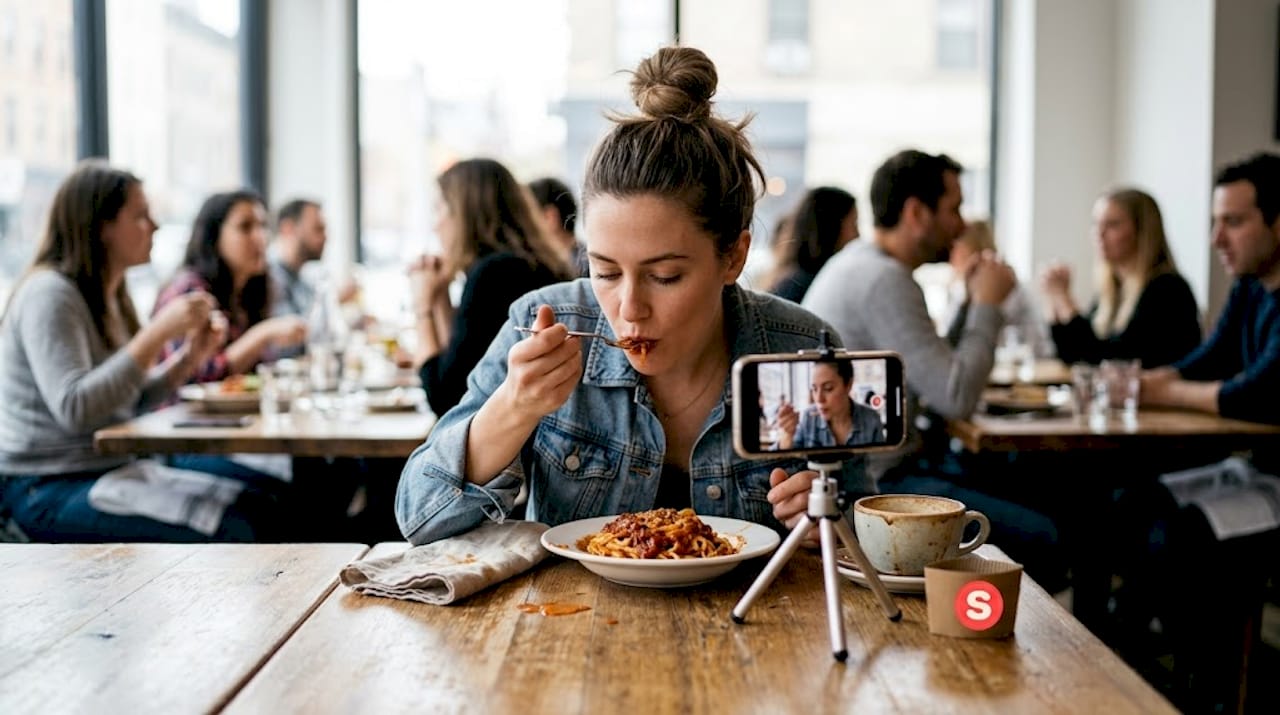
How influencers drive restaurant success: a guide for U.S. owners
TL;DR:
- Micro-influencers with local followers generate 60% more engagement for restaurants than celebrities.
- Building long-term, authentic relationships with influencers produces better results than one-off campaigns.
- Effective influencer marketing relies on clear goals, proper tracking, and respectful, genuine partnerships.
Most restaurant owners assume influencer marketing means paying a celebrity thousands of dollars for a single post. That assumption is costing them real money. The truth is that micro-influencers drive 60% more engagement than their macro counterparts, and for local restaurants in cities like Chicago, Houston, or Los Angeles, that engagement translates directly into tables filled and orders placed. This guide breaks down how to identify the right influencers, structure partnerships that generate measurable returns, manage relationships without the drama, and build campaigns that grow your restaurant’s reputation in your actual neighborhood.
Table of Contents
- Understanding influencer types and their true impact
- How influencer partnerships drive measurable ROI
- The risks and rewards: Managing relationships with influencers
- Putting influencer marketing into action: A step-by-step framework
- A restaurant marketer’s perspective: Why influencer success is about local trust, not viral fame
- Leverage expert support for your next influencer campaign
- Frequently asked questions
Key Takeaways
| Point | Details |
|---|---|
| Local micro-influencers excel | Hyper-local micro- and nano-influencers create the highest engagement and customer visits for restaurants. |
| ROI is measurable and high | Well-managed influencer campaigns generate $6.50 for every $1 invested, often outperforming other marketing channels. |
| Relationship quality matters | Treating influencers professionally and aligning values prevents costly public backlash and promotes long-term gains. |
| Strategic execution is key | A structured approach—from influencer selection to campaign tracking—ensures both brand safety and tangible returns. |
Understanding influencer types and their true impact
Before you spend a single dollar, you need to know who you’re actually hiring. The influencer world is not one-size-fits-all, and the category you choose shapes everything from your budget to your foot traffic results.
Nano-influencers have between 1,000 and 10,000 followers. They’re often your neighbors, local food bloggers, or community regulars. Their audiences are tight-knit and highly loyal. Micro-influencers sit in the 10,000 to 50,000 follower range. They’ve built real credibility in specific niches like food, lifestyle, or local nightlife. Macro-influencers have 100,000 to 1 million followers, and mega-influencers or celebrities go beyond that. The bigger the number, the wider the reach, but also the weaker the local relevance.
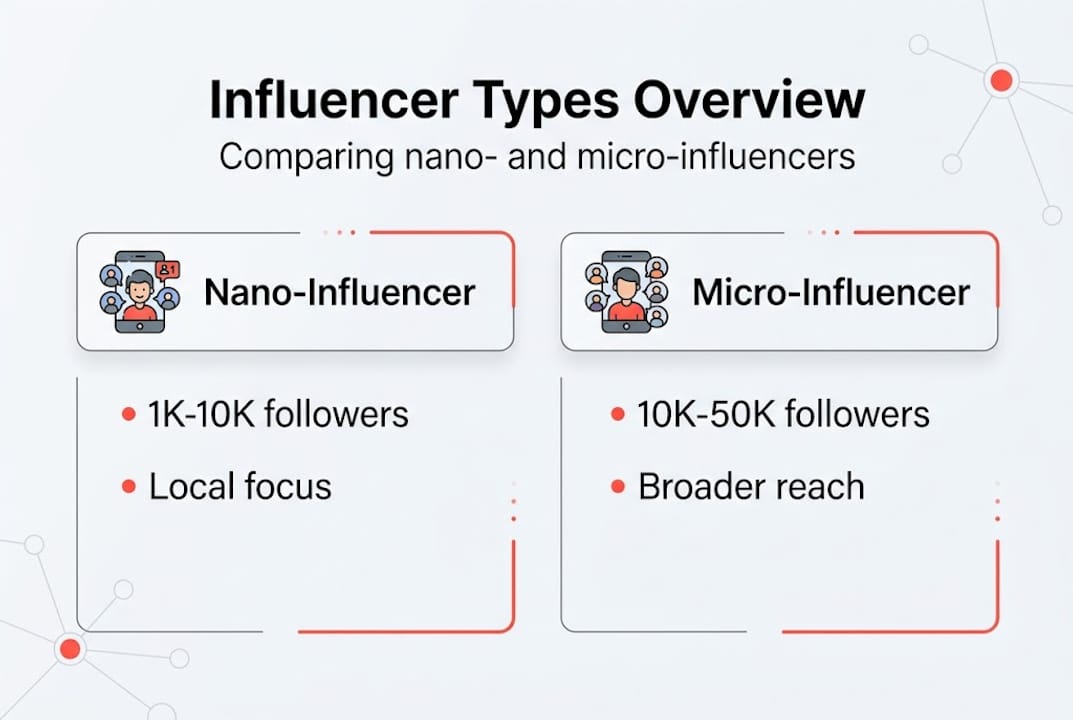
Here’s why that matters for your restaurant:
| Influencer type | Follower range | Avg. engagement rate | Best for restaurants? |
|---|---|---|---|
| Nano | 1K to 10K | 5% to 8% | Yes, hyperlocal reach |
| Micro | 10K to 50K | 3% to 6% | Yes, best ROI balance |
| Macro | 100K to 1M | 1% to 3% | Sometimes, with clear goals |
| Mega/Celebrity | 1M+ | Under 1% | Rarely, low local impact |
The data is clear. Micro-influencers generate 60% more engagement than macro-influencers, and for restaurants that live or die by local guests, that engagement is everything. A food influencer in your city talking to 18,000 local followers is worth far more than a celebrity talking to 2 million people scattered across 50 states.
Common goals restaurants achieve through influencer partnerships include:
- New customer visits: Driving first-time guests through authentic recommendations
- Social media buzz: Generating shareable content around new menu items or events
- Repeat visits: Building familiarity and loyalty through ongoing ambassador relationships
- UGC (user-generated content): Collecting reusable photos and videos for your own channels
If you want to see how influencer work fits into a broader strategy, explore marketing types that boost revenue and stay ahead with restaurant marketing trends for 2026. The bottom line: stop chasing celebrity reach and start building local credibility.
How influencer partnerships drive measurable ROI
Influencer marketing isn’t just a branding exercise. When it’s done right, it generates serious financial returns. Square reports $6.50 in revenue for every $1 spent on influencer marketing, with 92% of marketers calling it effective. Those numbers rival or beat most traditional advertising channels.
To get there, you need to choose the right campaign structure. Here are the most common formats restaurants use:
- Comped meals: You invite an influencer for a free dining experience in exchange for a post or story. Low cash outlay, high authenticity.
- Paid posts: You pay a flat fee for a dedicated post, Reel, or TikTok video. More control over timing and messaging.
- UGC repurposing agreements: You pay for the right to reuse an influencer’s content on your own channels. Great for extending shelf life.
- Affiliate or promo code deals: You give influencers a custom discount code. Every redemption is directly trackable revenue.
Setting SMART goals (Specific, Measurable, Achievable, Relevant, Time-bound) before any campaign launches is non-negotiable. Define what success looks like: 200 new reservations in 30 days, 500 promo code redemptions, or a 15% spike in Instagram followers.
“The restaurants winning with influencer marketing aren’t the ones with the biggest budgets. They’re the ones with the clearest goals and the tightest tracking.”
Pro Tip: Give every influencer a unique promo code tied to your POS system. When a guest uses that code, you know exactly which influencer drove the visit. This makes measuring ROI in restaurant marketing straightforward and gives you hard data for future campaigns.
Also, don’t let good influencer content disappear after 48 hours. Repurpose Instagram Reels on your website, use TikTok clips in email campaigns, and feature influencer quotes in your Google Business profile updates. Integrating that content into your broader digital marketing multiplies the return without multiplying the cost.
The risks and rewards: Managing relationships with influencers
Not every influencer story ends well. Alongside the upside is real reputational risk, and most of it comes down to how you treat people.
The most common mistakes restaurants make with influencers:
- Value misalignment: Partnering with someone whose content, tone, or audience doesn’t match your brand
- Poor treatment: Being dismissive, disrespectful, or transactional in your interactions
- No follow-up: Ghosting influencers after a visit with no feedback, payment delay, or gratitude
- Missing disclosures: Failing to require #ad or #sponsored tags, which violates FTC guidelines and damages trust
- One-and-done thinking: Treating influencers like a single transaction rather than ongoing ambassadors
The consequences can be severe. In one widely shared case, a San Francisco restaurant publicly shamed a micro-influencer for not having enough followers. The backlash from that post reached over 20 million people and eventually contributed to the restaurant shutting down. That’s not a cautionary tale. That’s a business destroyed by a single moment of disrespect.
“Treat every influencer like a guest critic from the New York Times. You may not know their reach until it’s too late to fix your behavior.”
Here’s what strong influencer relationship management looks like in practice:
- Draft clear contracts covering deliverables, posting dates, usage rights, and compensation
- Require FTC-compliant disclosure language in every post
- Offer genuine hospitality, not just a free plate
- Follow up within 48 hours of their visit with feedback and thanks
- Look for opportunities to collaborate again over time
Pro Tip: Long-term ambassador relationships almost always outperform one-off campaigns. An influencer who visits your restaurant four times a year becomes a trusted voice in your community, not just a paid promoter. Pairing these partnerships with strong event marketing strategies gives them fresh content to share and keeps your relationship mutually valuable.
Putting influencer marketing into action: A step-by-step framework
Ready to build your first (or best) influencer campaign? Here’s how to do it without wasting money or time.
- Define your goals and budget. Know what you want: more weekend reservations, a new dish going viral, or user-generated content for the next quarter. Set a realistic budget based on 2026 benchmarks.
- Find your influencers. Search local hashtags on Instagram and TikTok. Look for accounts posting food content in your city with strong comment activity, not just likes. Tools like Later, Modash, or even manual search work well.
- Vet before you invite. Check engagement rate (aim for 3% or higher), audience location, and content quality. A local micro-influencer in your ZIP code is worth more than a regional one with twice the followers.
- Reach out with a clear offer. Be specific. Tell them what you’re offering (comp meal, payment, or both) and what you’re asking for (one Reel, two stories, one TikTok). Vague outreach gets ignored.
- Negotiate and contract. 2026 influencer rates put nano-influencers at $100 to $400 per TikTok video and micro-influencers at $400 to $2,000. Get the deal in writing every time.
- Brief them well. Share your brand voice, key messaging, any dishes or features you want highlighted, and the posting window. Don’t script them. Do guide them.
- Track results. Use unique promo codes, UTM-tagged links, and reservation tracking. Compare visit volume and social metrics before, during, and after the campaign.
For visual platforms, hyper-local micro and nano-influencers on Instagram Reels and TikTok deliver the strongest restaurant results. Prioritize those channels.
Must-have components for every influencer campaign:
- Written contract with clear deliverables and deadlines
- Unique promo code or trackable link per influencer
- FTC disclosure requirement built into contract
- 30-day post-campaign performance review
- Follow-up plan for top performers
Use this as your digital marketing checklist alongside your influencer efforts to keep all channels aligned.
A restaurant marketer’s perspective: Why influencer success is about local trust, not viral fame
Here’s the uncomfortable truth most influencer marketing guides won’t say out loud: going viral almost never builds a sustainable restaurant business. We’ve seen restaurants flood with curious first-timers after a viral TikTok, only to find their kitchen overwhelmed, service suffering, and one-star reviews piling up from guests who showed up expecting magic and found chaos instead.
The restaurants that consistently win with influencer marketing aren’t chasing reach. They’re building local trust, one relationship at a time. A micro-influencer who genuinely loves your food and comes back every few months carries more weight than any sponsored mega-post. Their followers know them. They trust their taste.
This mindset shift changes how you evaluate success. Stop asking “how many views did that get?” and start asking “how many of those viewers live within five miles of my restaurant?” Real-world foot traffic from a highly local, engaged audience beats vanity metrics every time. Pairing this approach with event-driven influencer successes creates moments worth sharing that also build genuine community loyalty.
Leverage expert support for your next influencer campaign
Influencer marketing works best when it’s connected to your full marketing ecosystem, not running as a one-off experiment. At Sorbey, we help restaurant owners in major U.S. cities build influencer programs that are sourced strategically, contracted properly, and tracked for real ROI.
From finding the right local influencers and providing contract templates to integrating campaign results into your broader growth strategy, our restaurant marketing services are built specifically for operators like you. See how we’ve helped restaurants grow through influencer partnerships by reviewing our influencer campaign case study. Ready to stop guessing and start growing? Book a consultation with our team today.
Frequently asked questions
How do I choose the right influencer for my restaurant?
Look for micro- or nano-influencers with strong local engagement who align with your brand’s image and values. Hyper-local micro and nano-influencers in your city consistently outperform broader accounts for driving actual visits.
What’s the average cost to hire a micro-influencer in 2026?
Micro-influencer rates typically range from $400 to $2,000 per video in 2026, depending on platform and local market. Nano-influencer rates start lower at $100 to $400 per TikTok video.
How can I track the ROI of an influencer campaign?
Use unique promo codes, custom tracking links, and measure increases in visits or orders tied to influencer posts. Defining SMART campaign goals before launch makes measuring results straightforward.
Are there risks to working with influencers?
Yes, misalignment or disrespectful handling can cause public backlash or “deinfluencing,” which seriously harms your reputation. One high-profile shaming incident reached over 20 million people and shut down a restaurant.
Recommended
- Blog - Sorbey | Restaurant Marketing Insights | Sorbey
- Local advertising guide for restaurants: boost visibility | Sorbey Blog | Sorbey
- Why optimize for search engines: a guide for restaurants | Sorbey Blog | Sorbey
- Online Presence: Driving Engagement for Hospitality Brands – Lind Creative
También te puede interesar
Best Restaurant Loyalty Programs 2026: ROI Guide
Discover the best restaurant loyalty programs 2026 that boost repeat visits. Learn how Sorbey’s platform can transform your guest data strategy!
Why Mobile Marketing Matters for Business Growth
Discover why mobile marketing matters for business growth. Learn how optimizing for mobile drives traffic, conversions, and customer retention.

SF Dim Sum Restaurant Marketing Checklist for 2026
Transform your SF dim sum with our 2026 marketing checklist. Optimize your profile, showcase dishes, and attract customers fast!