
Blog
Why visual marketing works for restaurant owners
Discover why visual marketing works for restaurant owners. Boost engagement, attract customers, and make your visuals unforgettable!
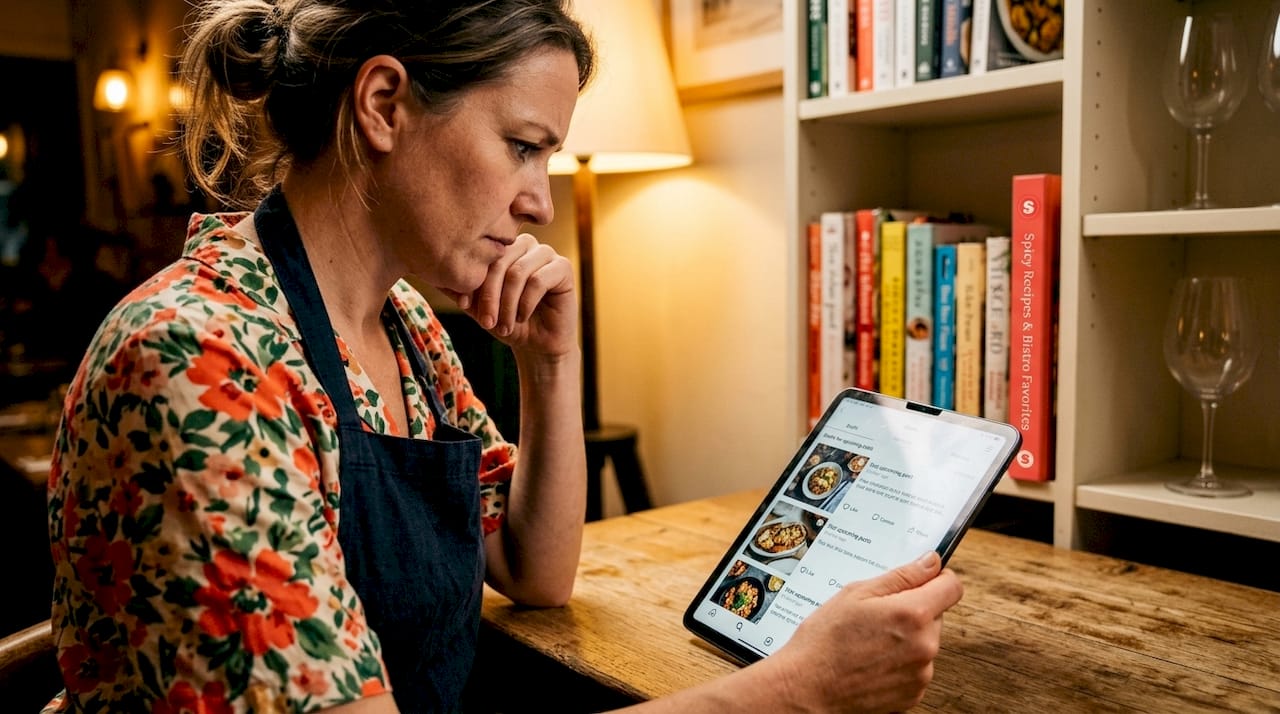
Why visual marketing works for restaurant owners
TL;DR:
- Visual marketing captures attention quickly because images and videos convey messages faster than text. Testing and refining visuals through feedback improve memorability, trust, and customer engagement. Consistent visual identity across all touchpoints enhances brand recognition and conversion.
Scroll through your Instagram feed right now. How much text do you actually read? Most people don’t read much at all. Users read only 20–28% of text on any given page, which means your carefully written captions and menu descriptions are largely invisible to the people you most want to reach. For restaurant owners competing in dense urban markets, that stat should reshape how you think about every dollar you spend on marketing. This article breaks down why visual marketing works, what the science says about how people actually process and remember images, and what you can do this week to make your visuals do more.
Table of Contents
- The science behind why visual marketing grabs attention
- How visual memory works in marketing your restaurant
- Why some images stick: mastering memorability in your visual marketing
- Practical visual marketing strategies to engage and convert restaurant customers
- Why most restaurant visual marketing misses the mark — and how to fix it
- Visual marketing solutions tailored for restaurant success
- Frequently asked questions
The science behind why visual marketing grabs attention
Let’s start with what’s happening inside your customer’s head when they see your post at 7 p.m. on a Tuesday. They’re hungry, they’re on their phone, and they’re moving fast. You have a fraction of a second to register.
Vision is the body’s dominant sense, with 70% of sensory receptors located in the eyes. That concentration means visual information gets processed faster and with more emotional weight than anything written. When you post a photo of your short rib tacos with the cheese still pulling, your customer’s brain responds before they even consciously decide to stop scrolling.
Here’s what most marketers miss: the 20–28% of text that people actually read is usually just headlines, captions, and bullet points, not paragraphs. That tells you something important about the importance of visual content. Images aren’t just a nice addition to your marketing. They carry the message when the text gets skipped.
Why does this matter more for restaurants in cities? Because urban diners have more choices. A neighborhood with three taco spots, two ramen places, and a new brunch concept opening every quarter means your visuals are competing against a wall of noise. The restaurants that win are the ones that stop faster.
Key benefits of visual marketing for urban restaurants include:
- Faster message delivery than text, critical when users spend less than three seconds per post
- Emotional triggering that drives craving and urgency before conscious thought kicks in
- Higher retention of your brand compared to text-only content
- Better scanability on mobile, where most local restaurant discovery happens
- Increased sharing because people share images far more than they share paragraphs
“The brain processes visuals in as little as 13 milliseconds, far outpacing the speed at which the eye can scan a line of text. For restaurants, that gap is where sales are won or lost.”
To put these principles into practice across all your channels, a solid digital marketing checklist for restaurants is worth bookmarking before you move forward.
How visual memory works in marketing your restaurant
Knowing that visuals grab attention is useful. Knowing why they stick is where your marketing gets genuinely sharper.
Visual memory operates in three stages: iconic memory, working memory, and long-term memory. Each one plays a distinct role in whether a customer remembers your restaurant when it’s time to make a dinner reservation.
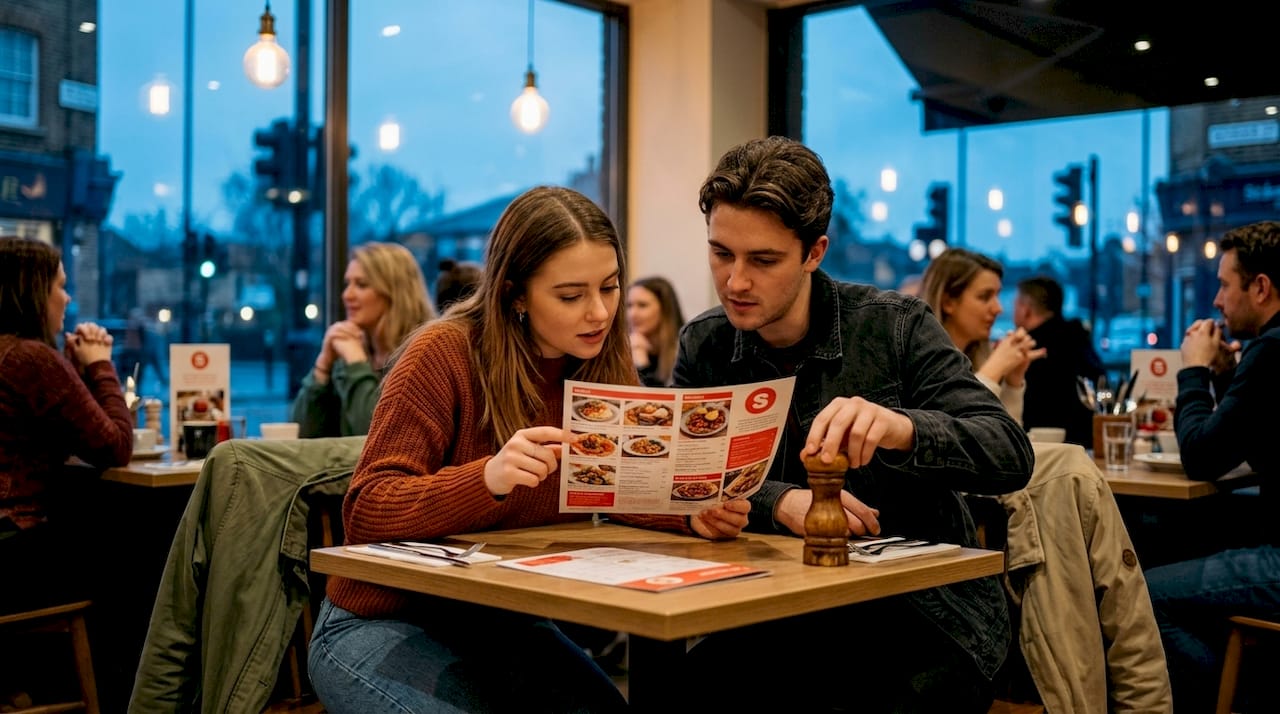
Iconic memory is your first window. It’s brief, lasting less than a second, but it has high capacity. This is where a striking dish photo or a vivid color palette registers instantly. If your image isn’t compelling in this window, the scroll continues.
Working memory holds details for a short time during active decision-making. This is where a customer mentally “holds” your restaurant name, a price point, or a visual of the ambiance while they decide whether to click through or keep scrolling.
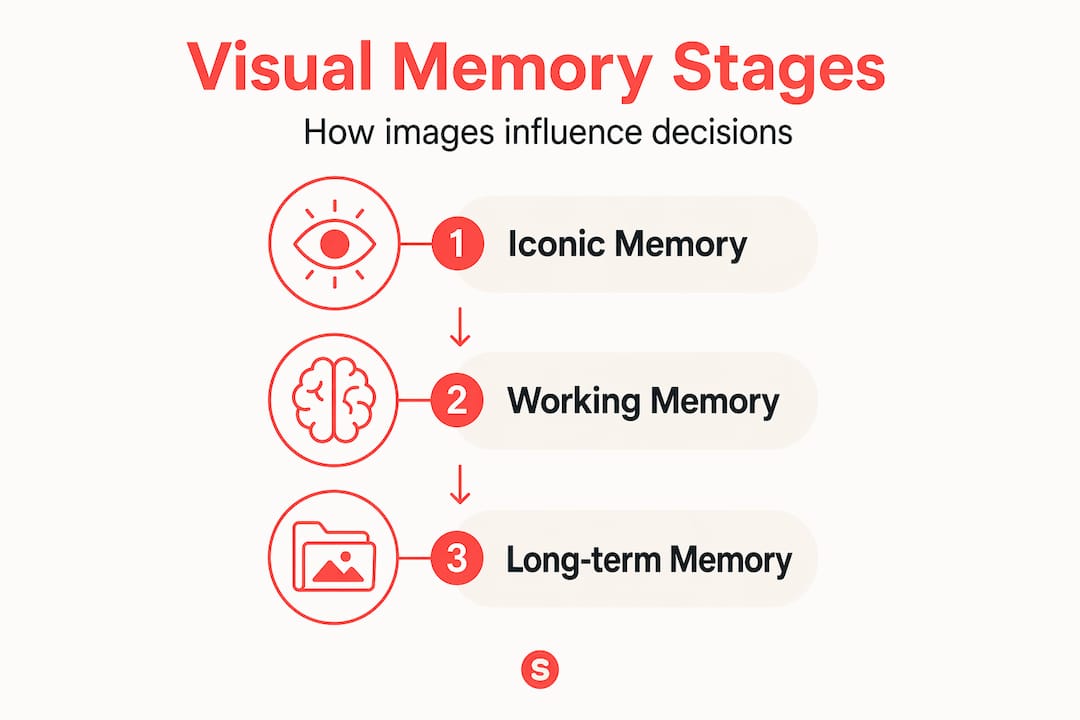
Long-term memory is the prize. When a customer has seen your visual style repeatedly across Instagram, Google, and your website, your brand becomes familiar. Familiarity builds trust, and trust drives return visits.
Here’s how to align your visuals to each stage:
- Iconic stage: Use one bold, high-contrast hero image per post. A single plate on a clean background beats a cluttered collage.
- Working memory stage: Add one short text overlay with a specific detail: a price, a day, a dish name. Keep it under six words.
- Long-term stage: Maintain a consistent color palette and photo style across every channel. Your customers should recognize your content before they read your name.
For a deeper look at how this plays out on your actual website, the best practices for restaurant websites covers this framework in a practical format.
Why some images stick: mastering memorability in your visual marketing
Not all images perform equally, and that’s not random. Memorability is actually a consistent property of visual stimuli, meaning some images are reliably remembered across different viewers. But here’s the part that should excite you: memorability can be improved through feedback-based testing and training.
That means you don’t have to guess which photo of your new seasonal salad will perform better. You can test it, collect data on recognition, and get measurably better at selecting winning visuals over time.
Pro Tip: Run a simple A/B test on your next Instagram story. Post two versions of the same dish shot from different angles or with different backgrounds. Check saves and replies after 48 hours. The one that gets saved more is the one that sticks.
Here’s a quick comparison of approaches that most restaurant marketers use versus what the data actually supports:
| Common approach | Evidence-based approach |
|---|---|
| Post what looks good to you | Test multiple images and track recognition data |
| Use the same filter for aesthetics | Match style to context (bright for lunch, warm for dinner) |
| Prioritize follower count growth | Prioritize image saves and shares as memory indicators |
| One-and-done ad creative | Iterate based on audience feedback over weeks |
| Focus on ad impressions only | Track consistency from ad to menu to Google photo |
The biggest gap in most restaurant creative testing for restaurant visuals is the failure to close the loop. A restaurant will run a beautiful ad, get good engagement, and then send customers to a Google Business listing with outdated or low-quality photos. The memory the customer built from the ad doesn’t match what they find at the point of decision. That disconnect erodes trust fast. Video content for restaurants can help close this gap by showing authentic behind-the-scenes content that sets accurate expectations.
Practical visual marketing strategies to engage and convert restaurant customers
The how visual marketing engages customers comes down to a few repeatable principles. Here’s what works, built on what the research actually says.
Visuals should be the primary meaning carriers in your content, with text playing a supporting, not competing, role. When you think of each post, ad, or email as a visual-first communication, your choices change. The image is the headline. The text confirms and directs.
A practical framework for restaurant visual marketing:
- Lead with your most distinctive dish or experience. Not your most popular, your most distinctive. Customers can get a burger anywhere. Show what they can only get from you.
- Optimize the first frame of every video. Most social platforms autoplay on mute. The first frame of your video and your Google Business photos are often the deciding visuals. Treat them like billboards, not afterthoughts.
- Build a visual identity document. Two or three colors. One or two fonts. A clear photo style. Share it with anyone who shoots content for your restaurant.
- Test images before committing ad spend. Post organically first, wait 48 hours, and see what your existing audience responds to. Only then boost the winner.
- Audit your touchpoints quarterly. Walk through your restaurant’s presence the way a new customer would: Google search, Instagram, website, delivery app. Ask whether the visuals feel like the same place at every step.
Additional tactics worth implementing immediately:
- Use natural light whenever possible. Overhead fluorescent shots of food kill appetite.
- Shoot vertically. Most urban diners are on mobile, and vertical content fills the screen.
- Include people. Images with human faces or hands naturally draw the eye and add warmth.
- Update your Google Business photos every 60 days. Freshness signals activity to both customers and search algorithms.
Pro Tip: Check out how some food truck operators approach menu visual testing to understand how high-stakes visual decision-making works even at small scale. The constraints force clarity that full-service restaurants often skip.
For a full workflow on building this into your operation, the restaurant content marketing workflow and local advertising guide for restaurants are practical starting points.
Why most restaurant visual marketing misses the mark — and how to fix it
After working with dozens of local restaurants, we’ve noticed the same pattern repeating. Owners invest in beautiful ad creative, run it across Instagram and Facebook, and see decent initial numbers. Then the campaign ends, and the needle doesn’t move the way they expected. Why?
Because the marketing stops at the ad. The most critical visual is often the decision-cue image a customer encounters right at the moment they’re choosing where to eat, not the awareness-stage ad they saw three days earlier. Think about your Google Business profile, your Yelp page, your delivery app thumbnail. Those images close the sale. Most restaurants treat them like an afterthought.
The second missed opportunity is feedback. Most restaurant marketers post, observe, and repeat without any structured testing. But memorability improves with iteration. Without measuring which images actually stick, you’re making the same guesses every month.
The fix isn’t complicated. Map your customer’s full journey from first impression to order confirmation. Identify every visual touchpoint along that path. Then apply the same quality and consistency standards to the last visual as you do to the first. That closing image, whether it’s a photo on a third-party delivery platform or your paper menu, often determines whether a curious customer becomes a paying one.
A review of proven restaurant marketing types shows clearly that the highest-converting tactics all share one trait: they reinforce the visual message across multiple steps of the customer journey, not just at the top.
The impact of visuals on sales isn’t about any single great photo. It’s about whether your customer sees a coherent, trustworthy visual story from discovery through dining.
Visual marketing solutions tailored for restaurant success
You now have the framework. The next step is making it consistent, measurable, and repeatable without it becoming a second full-time job.
Sorbey’s restaurant marketing services are built specifically for local restaurants that need to compete visually in crowded urban markets. From creative strategy to campaign analytics, we handle the work that most owners don’t have time to do well. Before you commit your next marketing budget, use our marketing ROI calculator for restaurants to model what your visuals could realistically return. If SMS campaigns are part of your strategy, the SMS campaign ROI calculator helps you plan spend before you launch. We understand what it takes to turn great food into a full dining room.
Frequently asked questions
Why is visual marketing more effective than text for restaurants?
Visual marketing captures attention faster because users read only 20–28% of text online, meaning images and videos deliver your message even when no one is reading. For restaurants, a compelling dish photo communicates quality, craving, and atmosphere in under a second.
How can restaurant owners improve the memorability of their marketing images?
Test multiple images with your existing audience before committing to paid promotion, and track which ones get saved or drive the most click-throughs. Memorability improves with feedback-based training and iteration, so the more you test and refine, the sharper your visual selection becomes.
What role does consistency play in restaurant visual marketing?
Consistent visual style across your ads, website, menus, and Google listing helps customers build a stable memory of your brand, which increases trust and reduces hesitation at the point of decision. Consistency between marketing visuals and decision cues is one of the most overlooked drivers of conversion.
Can short text support visuals effectively in marketing?
Yes, and it should. Visuals should be the primary meaning carrier, with text adding a single, clear supporting detail like a price, offer, or dish name. Keeping text under six words on a visual keeps the image front and center while giving the viewer exactly what they need to act.
Recommended
También te puede interesar
Best Restaurant Loyalty Programs 2026: ROI Guide
Discover the best restaurant loyalty programs 2026 that boost repeat visits. Learn how Sorbey’s platform can transform your guest data strategy!
Why Mobile Marketing Matters for Business Growth
Discover why mobile marketing matters for business growth. Learn how optimizing for mobile drives traffic, conversions, and customer retention.
SF Dim Sum Restaurant Marketing Checklist for 2026
Transform your SF dim sum with our 2026 marketing checklist. Optimize your profile, showcase dishes, and attract customers fast!