
Blog
What Is Upselling in Restaurants: A Manager's Guide
Discover what is upselling in restaurants and how it can boost your revenue. This guide offers effective techniques and strategies for success.
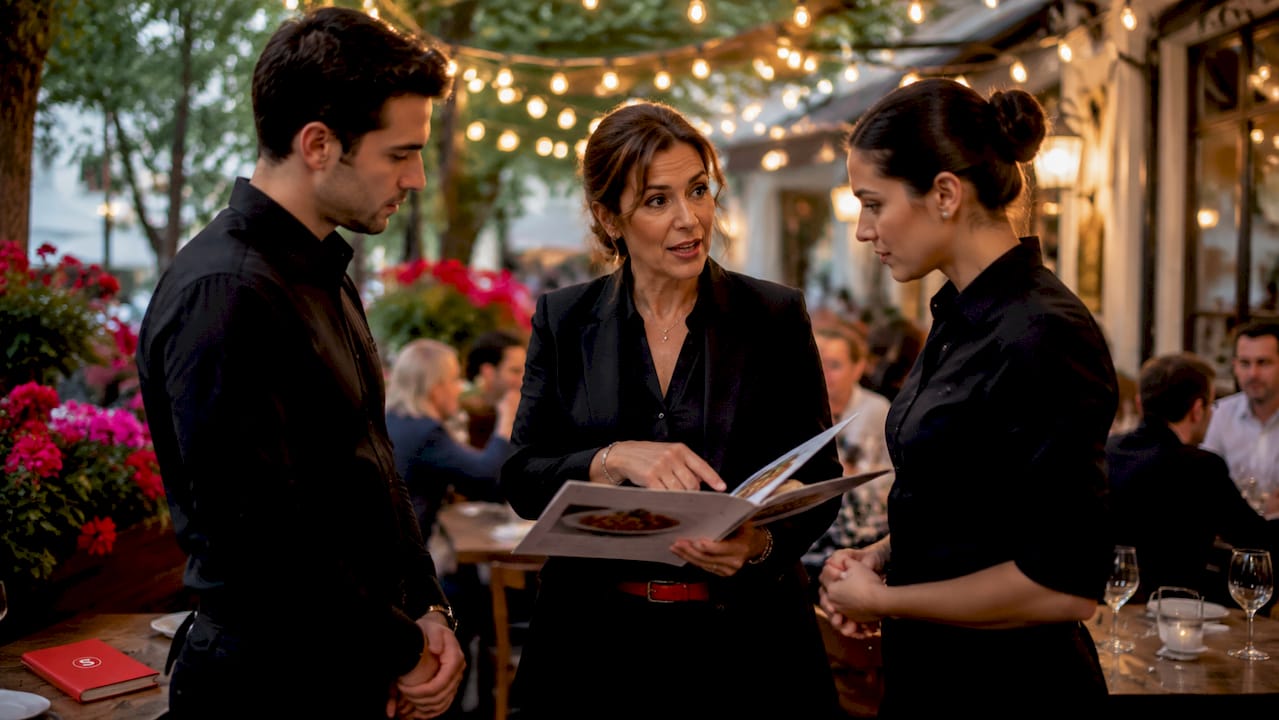
What Is Upselling in Restaurants: A Manager’s Guide
TL;DR:
- Upselling in restaurants significantly increases revenue by encouraging guests to select higher-value items and add-ons. Effective techniques include timing suggestions appropriately, using sensory language, and combining staff training with digital tools like menus and kiosks. Building a genuine, consultative service culture enhances guest experience and ensures consistent upselling success.
Upselling in restaurants is the practice of suggesting higher-value menu items, premium upgrades, or additional courses to increase a guest’s total spend while improving their dining experience. The industry term for this practice is suggestive selling, and it sits at the intersection of hospitality and revenue strategy. Done well, it feels like a knowledgeable friend steering you toward the best dish on the menu. Done poorly, it feels like a timeshare pitch. This guide gives restaurant managers and owners the frameworks, techniques, and digital tools to make suggestive selling a consistent, natural part of every shift.
What is upselling in restaurants and why does it matter financially?
Upselling is the single highest-return revenue lever available to a restaurant without adding a single new customer. Effective upselling increases average check size by 10% to 15%, and when a guest orders an entrée, appetizer, and alcoholic beverage, the total check can rise by up to 47%. That number is not a rounding error. It means a table spending $60 on entrées alone could generate $88 with a full upsell sequence.
The financial case gets stronger when you compare upselling to customer acquisition. Attracting a new diner requires marketing spend, advertising, and often a discount or promotion. Upselling works on guests already seated, already committed, and already in a buying mindset. The cost is a well-trained server and a thoughtful menu.
Beyond revenue, upselling improves the guest experience when it is grounded in genuine recommendations. A server who suggests the house-made burrata before the pasta course is not selling. They are curating. Guests who feel guided toward a better meal leave more satisfied, tip more generously, and return more often. That combination of higher check size and stronger loyalty is why restaurant upselling techniques belong at the center of any revenue strategy.
How does upselling differ from cross-selling and why both matter?
Upselling and cross-selling are related but distinct tactics, and confusing them leads to inconsistent training and missed revenue.
Upselling means encouraging a guest to choose a premium version of what they already want. A guest orders a 6-ounce filet. The server suggests the 10-ounce cut for $12 more. That is upselling: same category, higher value.
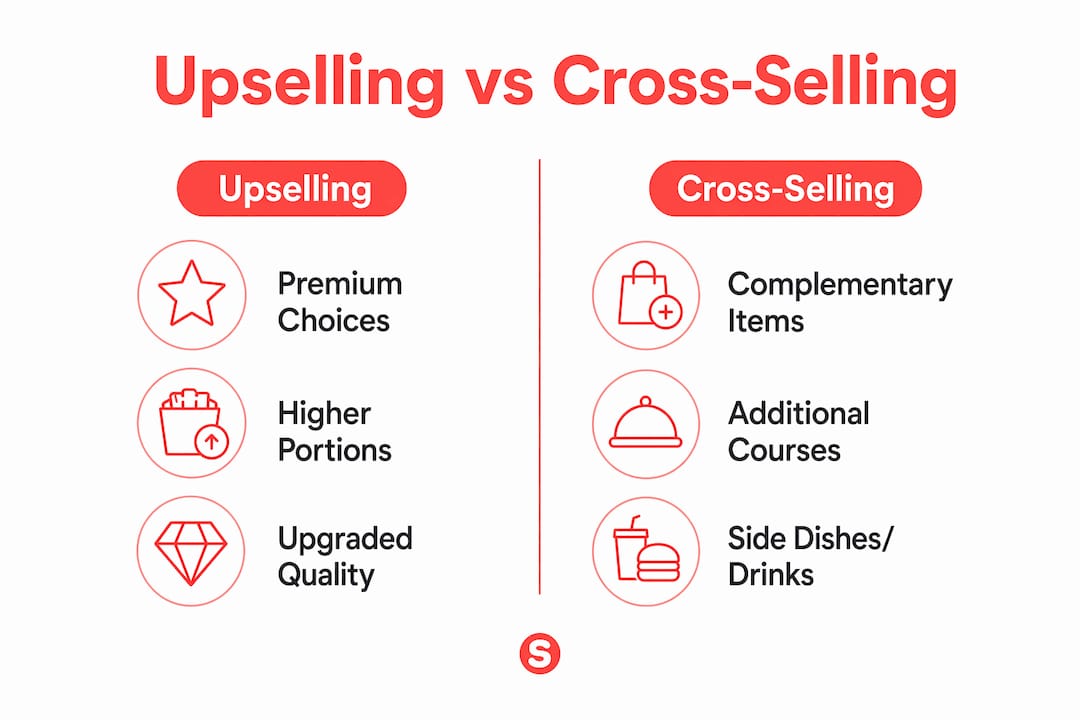
Cross-selling means suggesting complementary additions the guest has not yet considered. The same guest orders the filet, and the server recommends a side of truffle fries or a glass of Malbec. That is cross-selling: different category, added value.
| Tactic | Definition | Example | Revenue Impact |
|---|---|---|---|
| Upselling | Upgrade within the same category | Suggest larger portion or premium ingredient | Increases per-item value |
| Cross-selling | Add a complementary item | Suggest a wine pairing or appetizer | Increases total items per check |
| Combined approach | Both tactics in sequence | Upgrade entrée and add a starter | Maximizes share of wallet per guest |
Used together, upselling and cross-selling capture the full revenue potential of each table visit. A guest who upgrades their entrée and adds a dessert represents a compounded gain. Training servers to use both tactics in sequence, rather than choosing one or the other, is what separates average check performance from exceptional check performance.
What are the most effective upselling techniques for restaurant staff?
The most reliable upselling strategies for servers share one quality: they feel like service, not sales. Upselling should use sensory descriptive language and genuine enthusiasm rather than scripted pitches. “The short rib is braised for eight hours and falls apart on the fork” lands differently than “Would you like to try our short rib?”
Here are the techniques that produce consistent results:
-
Upsell at the right moment. Timing is the most critical factor in upselling success. The three optimal windows are: when taking the drink order, when confirming the entrée selection, and just before the bill arrives for dessert. After a guest mentally closes their order, suggestions feel intrusive rather than helpful.
-
Confirm before suggesting. Repeat the guest’s order back to them before offering an upgrade. “So you’re going with the salmon. Would you like to add the roasted asparagus that pairs really well with it?” Confirmation signals attentiveness and makes the suggestion feel personal rather than automatic.
-
Frame the price difference, not the total. Framing upgrades as small price differences rather than total costs reduces sticker shock significantly. “It’s just $4 more for the premium cut” converts far better than stating the full price of the upgraded item. Guests anchor on the gap, not the total.
-
Use sensory language. Words like “crispy,” “slow-roasted,” “house-made,” and “seasonal” activate appetite and desire. Generic phrases like “it’s good” or “it’s popular” do not. Train servers to describe two or three dishes in vivid detail so the language comes naturally during service.
-
Run short, regular training sessions. Ten-minute weekly staff huddles focused on role-playing specific upsell scenarios outperform a single two-hour training session every quarter. Repetition builds muscle memory, and muscle memory survives a busy Saturday night rush.
Pro Tip: Identify your top two or three upsell items each week based on margin and availability. Brief your team on exactly how to describe them before each service. Specificity in training produces specificity on the floor.
How can digital tools and menu design enhance upselling efforts?
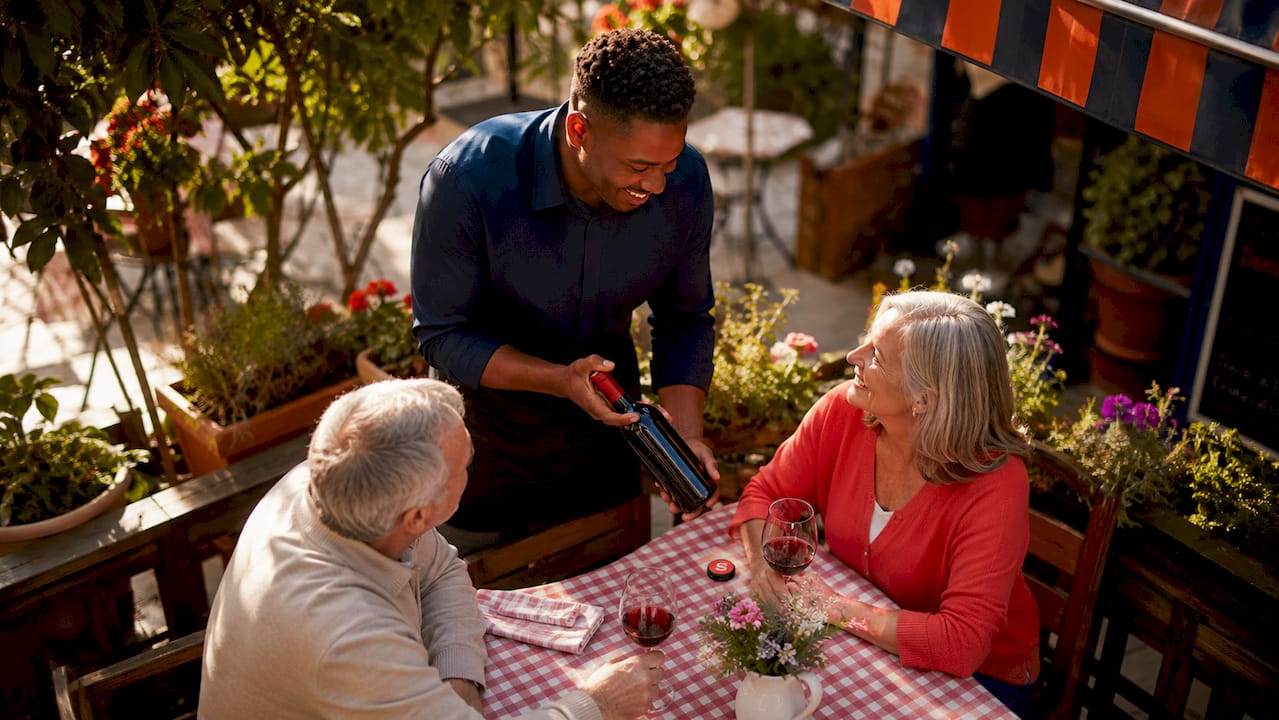
Human servers are your most persuasive upselling asset, but digital tools scale that persuasion to every order, every channel, and every hour of the day.
Digital kiosks and signage boost average order values by 20% to 30%, and 86% of restaurants report sales increases after adopting them. The reason is simple: a kiosk never forgets to suggest an upgrade, never has an off night, and never feels awkward asking. It presents the upsell the same way every single time.
QR menus take this further. Framing upgrades as recommendations rather than direct sales prompts achieves 2 to 3 times higher conversion rates in digital ordering. A QR menu that shows “Guests who ordered this also loved the truffle fries” mimics the social proof of a server recommendation without requiring staff involvement.
Menu design itself is a silent upselling tool. Strategic item placement in the menu’s golden triangle (the top right corner and center of the page) draws the eye to high-margin items before a guest even speaks to a server. A well-labeled “Chef’s Selection” section signals premium quality and gives servers a natural reference point for suggestions.
For a deeper look at how layout and item framing drive purchase behavior, the Sorbey menu optimization guide covers the specific design principles that increase average check size. Digital channels like Instagram DMs and automated upselling tools extend the same logic beyond the dining room, capturing revenue from online orders around the clock.
The most effective approach combines both layers. Digital tools handle consistency and scale. Trained servers handle nuance and relationship. Neither replaces the other.
What common pitfalls should restaurant managers avoid?
The biggest mistake in upselling is optimizing for average order value while ignoring conversion rate. Over-upselling can reduce conversion rate even as it raises the average ticket on completed orders. If aggressive upselling causes guests to disengage, order less, or leave with a negative impression, the net revenue impact is negative. Track both metrics together, not in isolation.
A second pitfall is scripted, robotic delivery. Guests recognize a sales script immediately, and it destroys the trust that makes a suggestion feel credible. Servers who sound like they are reading from a card will be ignored or resented. The fix is training that focuses on genuine product knowledge rather than memorized lines.
Knowing when to stop is equally important. If a guest declines a suggestion once, that is a signal, not an opening for a second attempt. Upselling should target guests with purchase intent who are already engaged and receptive. Pushing a guest who has clearly closed their order creates friction and damages the overall experience.
Pro Tip: After each service, ask your floor manager to note which upsell attempts landed and which were declined. Patterns in that data reveal whether your timing, language, or item selection needs adjustment.
Key takeaways
Upselling in restaurants works because it converts existing guest intent into higher revenue without acquiring new customers, and the most effective programs combine trained staff, smart menu design, and digital tools.
| Point | Details |
|---|---|
| Revenue impact is measurable | Effective upselling raises average check size by 10% to 15% and total check by up to 47%. |
| Timing determines success | Upsell during drink orders, entrée selection, and before the bill to catch guests before they mentally close. |
| Price framing matters | Presenting the upgrade difference (“just $4 more”) converts better than stating the full upgraded price. |
| Digital tools scale consistency | Kiosks and QR menus boost average order values by 20% to 30% without relying on staff memory. |
| Track both AOV and conversion | Raising average order value at the cost of conversion rate can reduce total revenue, so monitor both. |
The uncomfortable truth about upselling culture in restaurants
Most restaurant managers I have worked with treat upselling as a sales problem. They write scripts, post laminated cue cards in the server station, and wonder why nothing sticks. The real problem is almost never the script. It is that the staff does not believe in what they are selling.
A server who has never tasted the short rib cannot describe it with conviction. A server who feels like they are pressuring guests will hesitate at exactly the wrong moment. The restaurants I have seen build genuinely strong upselling cultures share one habit: they feed their staff. Regular family meals where servers eat the menu, discuss it, and develop real opinions about it produce better upselling results than any training manual.
The second thing I would push back on is the obsession with digital tools as a silver bullet. Kiosks and QR menus are genuinely powerful, and the data on order value increases is real. But they work best as a complement to human service, not a replacement for it. A guest who feels seen by a knowledgeable server and then gets a well-timed digital prompt at checkout is in a completely different headspace than a guest who ordered from a screen and never spoke to anyone.
The operators who get this right treat upselling as consultative hospitality. The server’s job is not to sell. It is to help the guest have the best possible version of their meal. When that framing takes hold across a team, the revenue follows naturally.
— Barthelemy
How Sorbey helps restaurants turn upselling into consistent revenue
Sorbey is an all-in-one marketing platform built specifically for local restaurants, and upselling is one of the clearest places where the right tools make a measurable difference. Sorbey’s restaurant marketing solutions include menu optimization support, digital upselling integration, and automated recommendation tools that work across your online ordering channels.
Whether you are looking to redesign your menu layout for higher-margin item placement, set up QR menu upsell prompts, or build a staff training program grounded in real data, Sorbey brings those capabilities together in one place. Restaurants using Sorbey’s tools report stronger average check performance without the guesswork of managing separate platforms. If you are ready to make upselling a reliable part of your revenue strategy, explore what Sorbey offers at sorbey.co/en/services.
FAQ
What is the difference between upselling and cross-selling in a restaurant?
Upselling encourages a guest to choose a premium version of an item they already want, such as a larger portion or a higher-quality ingredient. Cross-selling suggests complementary additions like a wine pairing, appetizer, or dessert that the guest has not yet ordered.
How much can upselling increase restaurant revenue?
Effective upselling increases average check size by 10% to 15%. When a guest orders an entrée, appetizer, and alcoholic beverage, the total check can increase by up to 47% compared to an entrée-only order.
What are the best moments for a server to upsell?
The three optimal upselling windows are when taking the drink order, when confirming the entrée selection, and just before presenting the bill for a dessert suggestion. Timing suggestions before a guest mentally closes their order is the most critical factor in conversion.
Do digital menus and kiosks actually improve upselling results?
Yes. Digital kiosks and signage boost average order values by 20% to 30%, and 86% of restaurants report sales increases after adopting them. QR menus that frame upgrades as recommendations achieve 2 to 3 times higher conversion rates than standard menu presentations.
How do you upsell without making guests feel pressured?
Use sensory, descriptive language instead of generic sales phrases, confirm the guest’s order before suggesting an upgrade, and stop after one declined suggestion. Upselling works best when it targets guests who are already engaged and frames the suggestion as a personalized recommendation rather than a sales push.
Recommended
- What is upselling in digital marketing for restaurants | Sorbey Blog | Sorbey
- Boost restaurant loyalty with 10 proven engagement tips | Sorbey Blog | Sorbey
- The Restaurant Promotions Process: A Practical Guide | Sorbey Blog | Sorbey
- Menu optimization guide: boost profits and delight customers | Sorbey Blog | Sorbey
Vous pourriez aussi aimer
Best Restaurant Loyalty Programs 2026: ROI Guide
Discover the best restaurant loyalty programs 2026 that boost repeat visits. Learn how Sorbey’s platform can transform your guest data strategy!

Why Mobile Marketing Matters for Business Growth
Discover why mobile marketing matters for business growth. Learn how optimizing for mobile drives traffic, conversions, and customer retention.
SF Dim Sum Restaurant Marketing Checklist for 2026
Transform your SF dim sum with our 2026 marketing checklist. Optimize your profile, showcase dishes, and attract customers fast!