
Blog
How to Manage Online Reviews for Restaurants
Learn how to manage online reviews effectively for your restaurant. Boost your reputation and attract more guests with proven strategies.

How to Manage Online Reviews for Restaurants
TL;DR:
- Consistent online review management improves a restaurant’s reputation within three to six months. It involves monitoring, responding promptly, and generating authentic reviews from satisfied customers. A human, personalized approach is more effective than automated responses in building trust and loyalty.
Online review management is the process of actively tracking, responding to, and influencing customer feedback to protect and promote your restaurant’s reputation. For restaurant owners, this practice is not optional. A single unanswered negative review on Google Business Profile or Yelp can cost you a table’s worth of new guests every week. The good news: a systematic approach to how to manage online reviews, built around monitoring, responding, and generating fresh feedback, produces measurable results within 3–6 months.
How to manage online reviews: tools and systems to start with
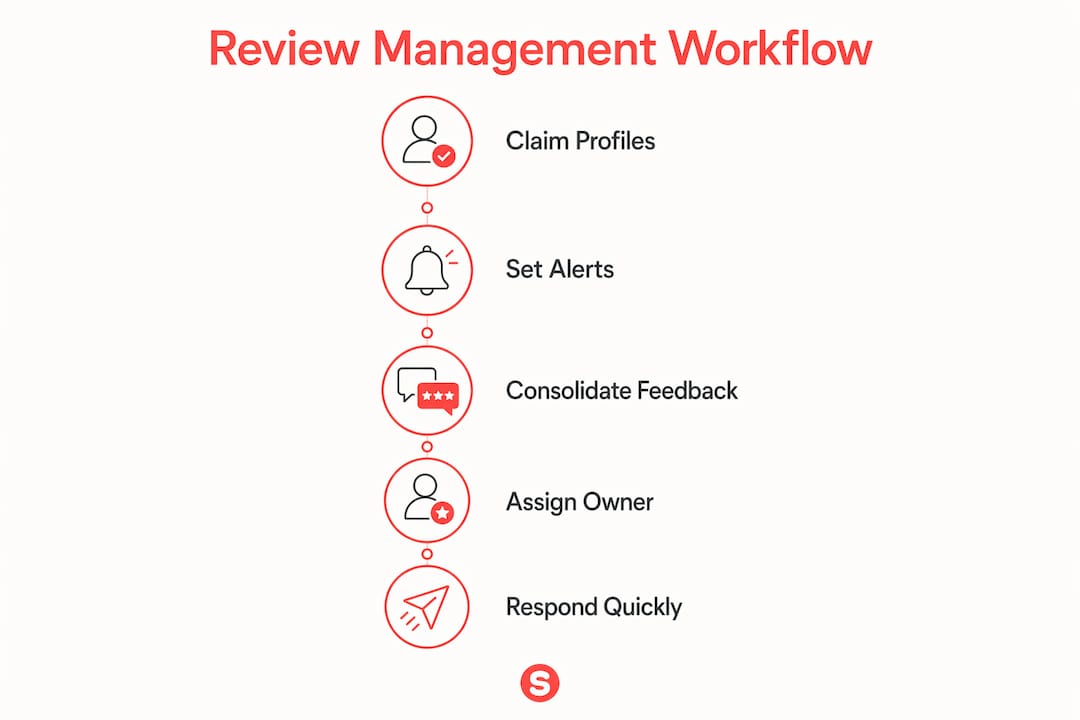
The right setup makes review management repeatable rather than reactive. Monitoring tools like Google Alerts, Brand24, and Mention send real-time notifications when your restaurant gets mentioned across platforms. That volume and fragmentation of review sources makes automated monitoring non-negotiable for any busy kitchen team.

Start by claiming and fully updating your profiles on Google Business Profile and Yelp. These two platforms drive the most foot traffic decisions for restaurants, and an incomplete profile signals neglect before a guest even reads a review. Add your hours, photos, menu link, and a direct booking URL.
Next, build a simple system to consolidate alerts. A shared Slack channel or a weekly spreadsheet review log works well for small teams. The goal is to make sure no new review sits unread for more than 24 hours.
Assign ownership clearly. One team member, typically a manager or front-of-house lead, should own daily monitoring. A second person should handle responses. Separation of duties prevents both tasks from falling through the cracks during a busy dinner service.
| Tool | Best use | Cost |
|---|---|---|
| Google Alerts | Free brand mention tracking | Free |
| Brand24 | Real-time multi-platform monitoring | Paid |
| Mention | Social and review tracking with analytics | Paid |
| Google Business Profile | Direct review management on Google | Free |
Pro Tip: Set Google Alerts for your restaurant name, your chef’s name, and common misspellings of your restaurant. You will catch reviews and mentions you would otherwise miss entirely.
How do you get more authentic reviews from your customers?
Generating reviews is the most underused tool in a restaurant’s reputation toolkit. Most satisfied guests simply forget to leave feedback unless you ask them at the right moment. The benefits of online reviews for restaurants compound over time, so building a steady inflow of new feedback matters as much as responding to existing ones.
Here is a step-by-step approach that works:
- Ask within 24 hours of the visit. Send a follow-up text or email while the meal is still fresh. A message like “We loved having you in last night. Would you mind sharing your experience on Google?” with a direct link takes guests 30 seconds to act on.
- Use QR codes at the table. Place a small card near the check with a QR code linking directly to your Google review page. Guests who had a great time will scan it before they leave.
- Personalize every request. Reference the specific dish they ordered or the occasion they celebrated. Generic “please leave us a review” messages get ignored.
- Focus on Google first. Google reviews carry the most weight for local search visibility. Once you have a steady flow there, expand requests to Yelp and any niche food platforms relevant to your market.
- Build a follow-up workflow. If a guest does not respond to the first message, one polite follow-up three days later is acceptable. Beyond that, let it go.
Offering incentives for reviews violates platform policies and risks profile suspension. Genuine requests from satisfied customers produce more sustainable results and more credible feedback.
Pro Tip: Train your front-of-house staff to verbally mention reviews during checkout. A simple “If you enjoyed tonight, we would really appreciate a Google review” from a server converts at a much higher rate than any digital message alone.
What are the best practices for responding to customer reviews?
Responding within 24–48 hours is the baseline standard for effective review management. A prompt response signals to potential guests that your restaurant is attentive and professionally run. Delayed responses, or no response at all, communicate the opposite.
Responding to positive reviews
Thank the reviewer by name and reference something specific they mentioned. If they praised your risotto, say so. Generic “Thanks for your review!” replies waste the opportunity to show personality and reinforce what makes your restaurant worth visiting. Keep positive responses short, warm, and specific.
Responding to negative reviews
Negative reviews require more care. Personalization in responses using a reviewer’s first name and specific visit details boosts authenticity and builds trust with future readers. A response that says “Hi Maria, I’m sorry your pasta arrived cold on Saturday evening” reads as genuine. A response that says “We are sorry you had a bad experience” reads as automated.
Responding professionally to angry reviews shows prospective customers that your business takes responsibility and has a clear resolution process. The formula is simple: acknowledge the issue, apologize sincerely, and offer to resolve it offline.
“We are sorry to hear your experience did not meet our standards, [Name]. We take this seriously and would love the chance to make it right. Please reach out to us directly at [email or phone] so we can speak with you personally.”
Avoid public arguments at all costs. One defensive reply can do more damage than the original negative review. If a review contains false information, respond calmly with facts, then flag it for removal through the platform’s reporting tools.
Pro Tip: Never copy-paste the same response to multiple reviews. Search engines and readers both notice template replies, and they signal that your engagement is performative rather than real.
How do you handle fake or damaging reviews?
Fake reviews and misinformation require a two-track response. The first track is platform reporting. Google, Yelp, and most major platforms have flagging tools for reviews that violate their policies. Use them for reviews that describe events that never happened, contain hate speech, or come from accounts with no history.
The second track is SEO suppression. Publishing authentic, positive content pushes negative search results off page one of Google, where the vast majority of attention is concentrated. This means actively creating blog posts, press mentions, social media content, and third-party features that rank for your restaurant’s name.
A practical suppression checklist:
- Publish a new blog post or press release about your restaurant at least once a month.
- Actively seek features in local food media and neighborhood guides.
- Keep your social media profiles active and updated with fresh content.
- Run a quarterly audit of your Google search results for your restaurant name.
- Manage your reputation across niche industry sites, social media, and forums to protect against algorithm changes or negative viral content.
For reviews that are clearly defamatory and cannot be removed through platform tools, consult a legal professional. This is a last resort, but it is a legitimate option when a false review causes documented financial harm.
Respond to inaccurate reviews calmly and factually in public. State what actually happened without attacking the reviewer. Other guests reading the exchange will form their own judgment, and a measured response almost always reflects well on your restaurant.
How do you build a sustainable review management workflow?
Consistent cadence beats ad hoc effort every time. A restaurant that responds to every review within 48 hours for six months will outperform one that responds brilliantly for two weeks and then goes silent. The goal is a repeatable process your team can maintain even during the busiest service weeks.
Here is how to build that process:
- Assign roles. Designate one person to monitor reviews daily, one to draft and post responses, and one manager to approve responses to negative reviews before they go live.
- Create response templates with personalization slots. Build a library of 10–15 response frameworks for common scenarios: great food, slow service, wrong order, special occasion. Leave blank fields for names, dishes, and specific details.
- Set KPIs. Track your average star rating, response rate, response time, and monthly review volume. Review these numbers weekly, not monthly.
- Use AI tools responsibly. AI writing tools can draft responses quickly, but always edit for tone and specificity before posting. An AI-generated reply that sounds generic defeats the purpose.
- Analyze feedback trends quarterly. If multiple reviews mention slow service on Friday nights, that is an operations problem, not a PR problem. Use review data to drive real changes.
| KPI | Target | Review frequency |
|---|---|---|
| Average star rating | 4.2 or above | Weekly |
| Response rate | 100% of reviews | Weekly |
| Response time | Under 48 hours | Daily |
| Monthly new reviews | Growing month over month | Monthly |
Pro Tip: Use your review management checklist to run a monthly audit. A structured checklist prevents the small tasks, like updating your profile photos or checking niche platforms, from being skipped during busy periods.
Key Takeaways
Restaurants that monitor, respond, and generate reviews on a consistent schedule see measurable reputation gains within 3–6 months, making process and cadence more valuable than any single brilliant response.
| Point | Details |
|---|---|
| Claim your profiles first | Update Google Business Profile and Yelp before doing anything else. |
| Ask for reviews within 24 hours | Post-visit requests sent the same day convert at the highest rate. |
| Respond within 48 hours | Prompt, personalized replies build trust with future guests reading your reviews. |
| Suppress negatives with content | Publishing positive content pushes harmful results off page one of Google. |
| Track KPIs weekly | Monitor star rating, response rate, and review volume to catch problems early. |
Why authenticity beats automation in restaurant review management
I have worked with dozens of local businesses on reputation management, and the pattern is always the same. Restaurant owners who treat review responses as a PR exercise get mediocre results. The ones who treat every response as a direct conversation with a future guest build something that actually compounds.
The biggest mistake I see is using sanitized, corporate-sounding language. A response that reads like a press release tells every potential guest that no real person is paying attention. Restaurants are personal. Your guests chose your place for a birthday dinner or a first date. They deserve a response that sounds like it came from a human being who cares.
The role of customer service in hospitality extends directly into how you handle reviews online. The same empathy your best server shows at the table should show up in every written response. That consistency is what separates restaurants with a loyal following from those constantly chasing new guests to replace the ones they lost.
Generic online reputation advice tells you to “respond promptly and professionally.” That is the floor, not the ceiling. The restaurants that win long-term are the ones that use review management as a feedback loop, reading what guests actually say, making real operational changes, and then watching their ratings climb as a result. That is not a marketing tactic. That is just running a better restaurant.
— Barthelemy
Sorbey’s restaurant marketing tools for review management
Managing reviews across Google, Yelp, and social platforms while running a full kitchen is genuinely hard. Sorbey is built specifically for restaurants that need a practical, all-in-one marketing solution without the complexity of enterprise software.
Sorbey helps restaurant owners track reviews, organize responses, and build a stronger local reputation without adding hours to their week. The platform is designed around the real rhythms of food service, not generic business marketing. If you want expert-guided support for your restaurant marketing, Sorbey’s services page shows exactly what is available and how it works for restaurants like yours.
FAQ
How long does it take to see results from review management?
Restaurants that maintain a consistent review management process typically see measurable reputation improvement within 3–6 months. Consistency matters more than any single response or review.
Should I respond to every review, positive and negative?
Yes. Responding to every review, including positive ones, signals to potential guests that your restaurant is engaged and attentive. Aim for a 100% response rate with replies posted within 48 hours.
Can I ask customers to leave reviews?
You can and should ask satisfied customers for honest reviews. Never offer discounts or gifts in exchange, as incentivizing reviews violates platform policies and risks account suspension.
What should I do about a fake or false review?
Flag the review using the platform’s reporting tool and respond publicly with calm, factual information. If the review is defamatory and causes documented harm, consult a legal professional as a last resort.
Which platform should I focus on for restaurant reviews?
Google Business Profile is the top priority for local search visibility. Once you have a steady review volume there, expand your focus to Yelp and any niche food platforms relevant to your city or cuisine type.
Recommended
Potrebbe interessarti anche

Best Restaurant Loyalty Programs 2026: ROI Guide
Discover the best restaurant loyalty programs 2026 that boost repeat visits. Learn how Sorbey’s platform can transform your guest data strategy!

Why Mobile Marketing Matters for Business Growth
Discover why mobile marketing matters for business growth. Learn how optimizing for mobile drives traffic, conversions, and customer retention.

SF Dim Sum Restaurant Marketing Checklist for 2026
Transform your SF dim sum with our 2026 marketing checklist. Optimize your profile, showcase dishes, and attract customers fast!