
Blog
How to promote your restaurant online in 2026
Learn proven strategies to promote your restaurant online in 2026. Boost local visibility, attract more customers, and grow your business with effective digital marketing tactics.
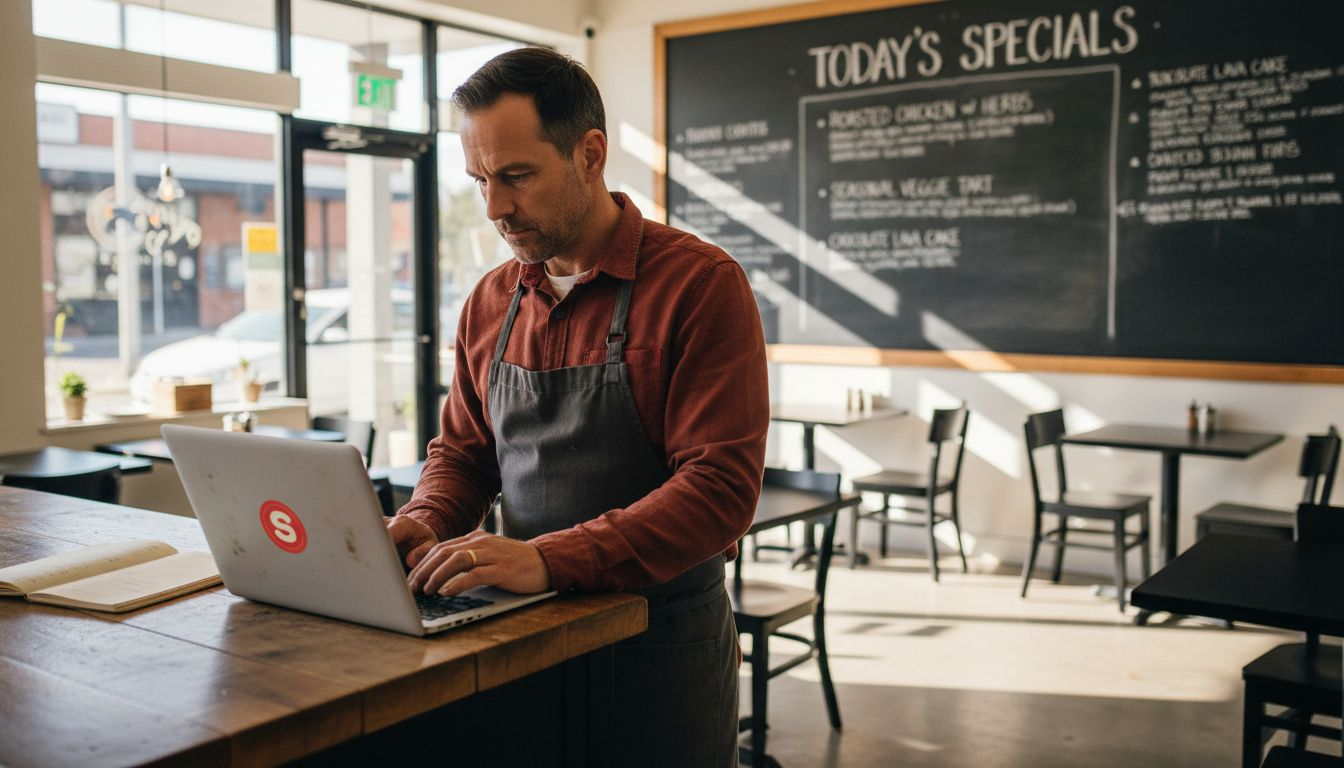
How to promote your restaurant online in 2026
Attracting diners to your restaurant in 2026 requires more than great food and service. You need a strong online presence to reach customers actively searching for dining options. Many restaurant owners struggle with digital marketing, unsure which strategies deliver results. This guide provides actionable steps to boost your online visibility, engage potential customers, and fill more tables through effective digital promotion tactics tailored for restaurants.
Table of Contents
- Understanding Your Online Promotion Prerequisites
- Implementing Effective Digital Marketing Strategies
- Measuring Success And Refining Your Online Promotion
- Common Mistakes To Avoid When Promoting Your Restaurant Online
- How Sorbey Can Help Boost Your Restaurant’s Online Presence
- How To Promote Restaurant Online: FAQ
Key takeaways
| Point | Details |
|---|---|
| Website optimization is essential | A mobile-friendly site with updated menus increases customer engagement and discovery |
| Local SEO drives foot traffic | Optimizing your Google Business Profile and using geo-targeted keywords helps nearby diners find you |
| Social media builds community | Regular, engaging content and targeted ads connect you with your audience where they spend time |
| Reviews shape reputation | Managing customer feedback across platforms builds trust and influences dining decisions |
| Data guides improvements | Tracking metrics like website traffic and engagement reveals what works and what needs adjustment |
Understanding your online promotion prerequisites
Before launching digital marketing campaigns, you need solid foundations. Think of your online presence like your physical restaurant: you wouldn’t open without proper equipment, and you shouldn’t promote without the right digital assets.
Start with a mobile-friendly website that loads quickly and displays menus clearly. Optimizing your restaurant website boosts customer engagement and discovery. Your site should feature high-quality food photos, current hours, accurate contact information, and an easy way to make reservations or order online. Mobile optimization matters because most diners search for restaurants on their phones while deciding where to eat.
Next, claim and verify your Google Business Profile. This free tool puts your restaurant on Google Maps and local search results. Fill out every section completely: business category, service area, hours, menu links, and photos. Upload fresh images regularly to show your space, dishes, and atmosphere.
Understand your target customers and geographic reach. Are you attracting lunch crowds from nearby offices, families for weekend brunch, or date-night diners? Knowing your audience shapes every marketing decision. Define your service radius: the neighborhoods where most customers live or work.
Set up social media profiles on platforms your customers use. For restaurants, Instagram and Facebook typically perform best. Create business accounts rather than personal profiles to access analytics and advertising tools. Use consistent branding across all platforms: same logo, similar bios, matching color schemes.
Pro Tip: Schedule a monthly review of all online profiles to update menus, photos, and promotions, ensuring information stays current and customers always see your latest offerings.
- Verify your website displays correctly on phones and tablets
- Complete every field in your Google Business Profile
- Research competitor profiles to identify gaps in your approach
- Designate someone on your team to manage social media consistently
- Document login credentials and profile details in a secure location
Implementing effective digital marketing strategies
With foundations established, focus on channels that drive measurable results for restaurants. Each strategy works best when tailored to your specific audience and consistently executed over time.
Local SEO puts your restaurant in front of diners searching nearby. Local SEO and managing reviews critically impact restaurant discovery and reputation. Start by incorporating location-based keywords throughout your website: “Italian restaurant in downtown Seattle” or “best brunch in Brooklyn.” Add your city and neighborhood to page titles, headings, and menu descriptions naturally.
Google Business Profile optimization extends beyond basic setup. Post weekly updates about specials, events, or seasonal menu items. Respond to every review within 24 hours. Add attributes like “outdoor seating,” “vegan options,” or “family-friendly” to help customers find exactly what they want. Upload new photos weekly to keep your profile active and engaging.
Social media marketing builds community and keeps your restaurant top of mind. Create a content calendar mixing different post types: behind-the-scenes kitchen shots, customer testimonials, dish close-ups, staff spotlights, and promotional announcements. Video content, especially short-form videos showing food preparation or plating, generates significantly higher engagement than static images.
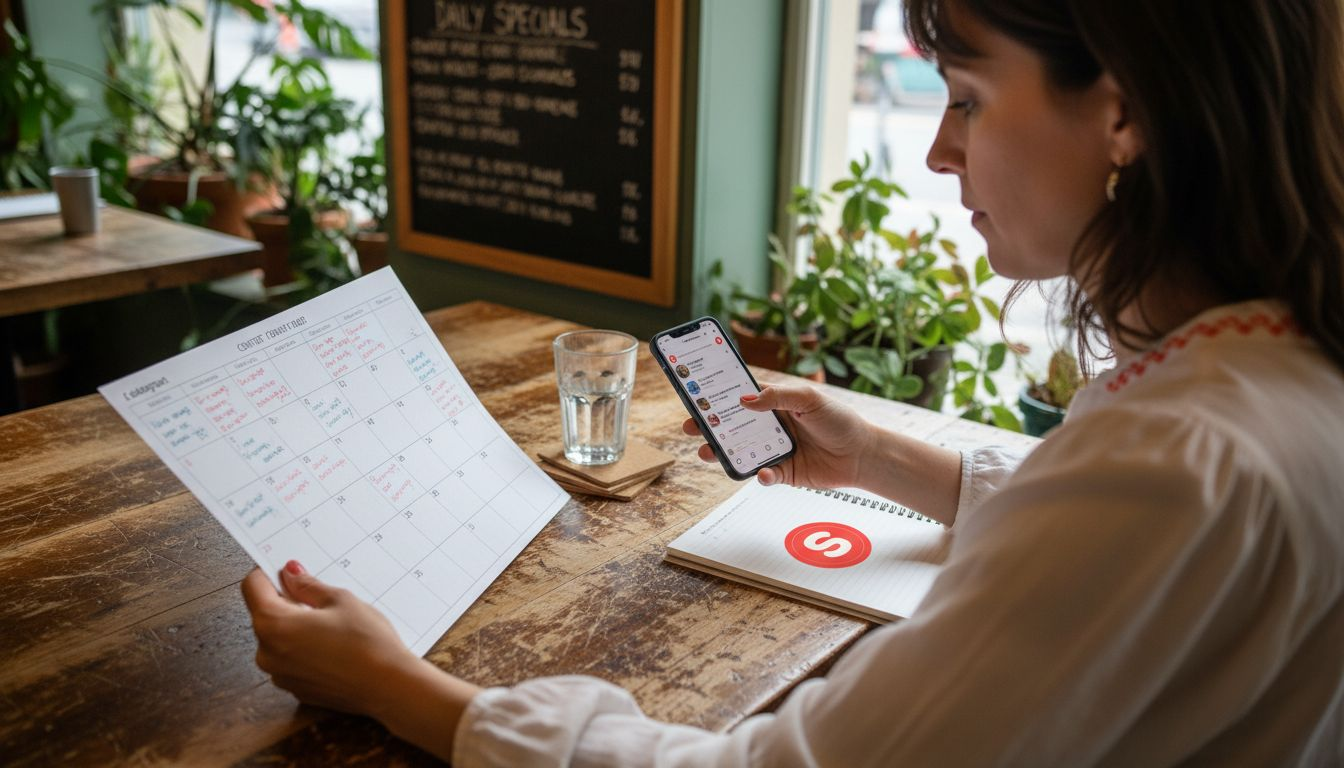
Run targeted social media ads to reach specific demographics within your service area. Facebook and Instagram ads let you target by location, age, interests, and behaviors. Start with small budgets, test different images and messages, then scale what performs best. Promote special events, new menu items, or limited-time offers to create urgency.
Email marketing maintains direct communication with past customers. Collect email addresses through reservation systems, loyalty programs, or website signups. Send monthly newsletters featuring upcoming events, seasonal menu changes, and exclusive offers for subscribers. Keep emails brief, visually appealing, and mobile-optimized. Include clear calls to action like “Reserve Your Table” or “Order Online Now.”
Online review management directly influences customer decisions. Actively encourage satisfied diners to leave reviews on Google, Yelp, TripAdvisor, and Facebook. Make it easy by providing direct links or QR codes on receipts. Monitor all platforms daily for new reviews. Thank customers for positive feedback and address negative reviews professionally, offering to resolve issues offline.
Pro Tip: Create a review response template for common scenarios, then personalize each response with specific details from the customer’s experience to show genuine attention and care.
- Audit your current local search rankings for key terms related to your cuisine and location
- Optimize website content with natural, location-specific keywords in headings and descriptions
- Set up a posting schedule for Google Business Profile updates at least twice weekly
- Develop a 30-day social media content calendar with varied post types and consistent branding
- Launch a small test ad campaign targeting a 5-mile radius with a compelling offer
- Create an email signup incentive like a discount or free appetizer for new subscribers
- Implement a systematic process for requesting reviews from satisfied customers after their visit
- Designate team members to monitor and respond to all online reviews within one business day
Measuring success and refining your online promotion
Tracking results transforms guesswork into strategy. You need concrete data showing which efforts attract customers and which waste resources. Without measurement, you’re promoting blindly.
Google Analytics reveals how people find and use your website. Install the tracking code on every page. Monitor metrics like total visitors, traffic sources, popular pages, and conversion rates. Pay special attention to mobile traffic patterns since most restaurant searches happen on phones. Track how many visitors view your menu, check your hours, or click directions to your location.
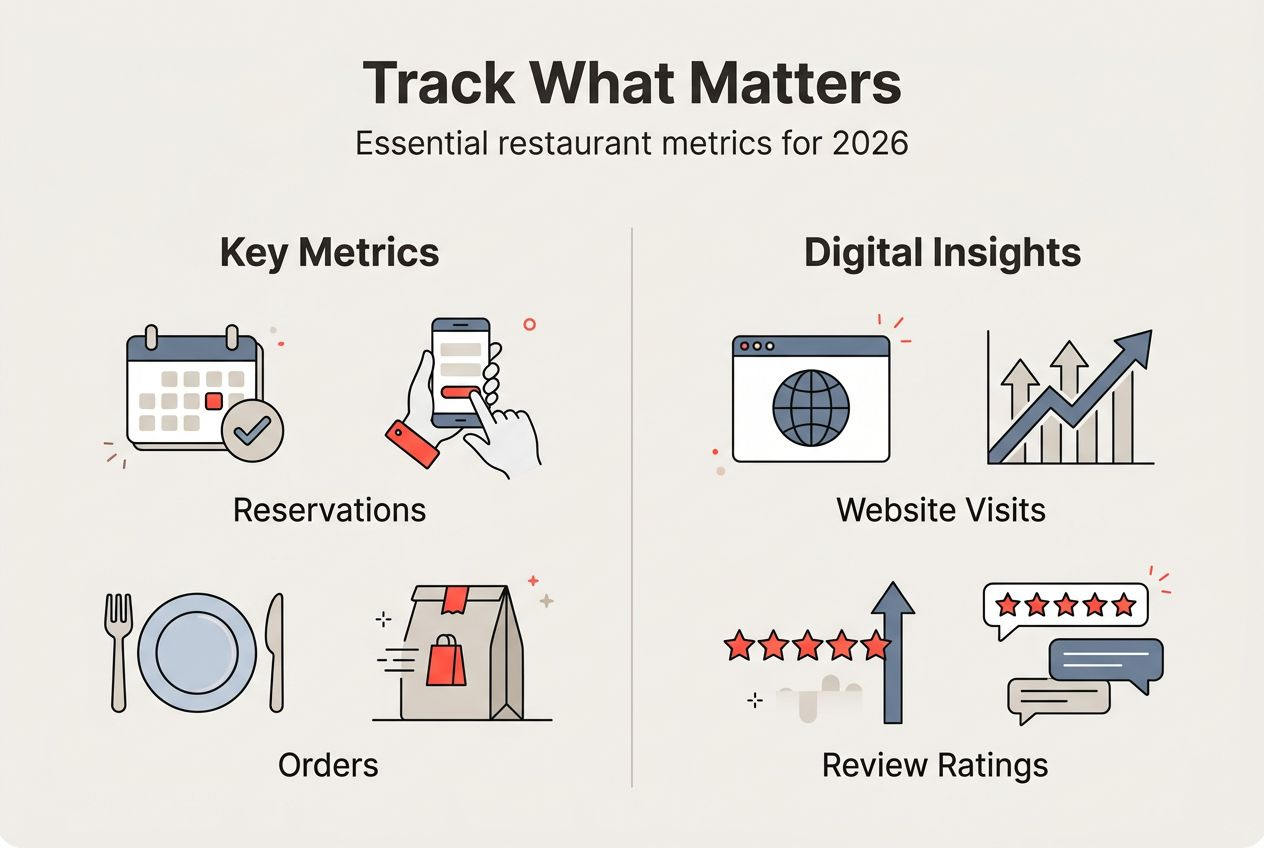
Google Business Profile insights show how customers interact with your listing. Review metrics including search impressions, profile views, direction requests, phone calls, and website clicks. These numbers indicate whether your local SEO efforts are working. Compare month-over-month trends to identify growth or decline.
Social media platform analytics measure engagement and reach. Facebook and Instagram provide detailed dashboards showing post performance, audience demographics, and follower growth. Track which content types generate the most likes, comments, shares, and saves. Note what posting times reach the largest audience.
Tracking key performance indicators allows for data-driven marketing refinements and better customer acquisition. Review your metrics weekly at first, then monthly once you establish baseline performance. Look for patterns: which days see the most website traffic, which social posts drive reservations, which keywords bring qualified visitors.
| Metric | Why It Matters | How to Track | | — | — | | Website traffic | Shows overall online visibility and interest | Google Analytics dashboard | | Local search ranking | Indicates how easily nearby customers find you | Manual searches or rank tracking tools | | Google Business Profile views | Measures local discovery and profile effectiveness | Google Business Profile insights | | Social media engagement rate | Reveals content resonance with your audience | Platform-specific analytics | | Online review volume and rating | Influences customer decisions and search rankings | Review monitoring across all platforms | | Email open and click rates | Shows subscriber interest and message effectiveness | Email marketing platform reports | | Conversion rate | Measures how many visitors take desired actions | Google Analytics goals and events |
Regular refinement based on data improves results over time. Use these practices to optimize continuously:
- Schedule monthly marketing reviews to analyze all metrics together
- Identify your top three performing content pieces and create similar posts
- Test different posting times and days to find when your audience is most active
- Experiment with new content formats like polls, stories, or live videos
- Adjust ad targeting based on which demographics convert best
- Update underperforming website pages with better images or clearer calls to action
- Survey customers about how they discovered your restaurant to validate data
Don’t chase every metric. Focus on numbers directly tied to business goals: reservations, online orders, foot traffic, and revenue. Vanity metrics like follower counts matter less than actual customer actions.
Common mistakes to avoid when promoting your restaurant online
Even well-intentioned marketing efforts fail when you make preventable errors. Recognizing these pitfalls helps you allocate time and budget more effectively.
Inconsistent or outdated information across platforms confuses potential customers and damages credibility. When your website shows different hours than Google, or your menu prices don’t match what diners see online, you create frustration before they even visit. Audit all your online listings quarterly to ensure accuracy everywhere. Update menus immediately when you change dishes or prices.
Neglecting customer reviews, especially negative ones, signals you don’t care about customer experience. Ignoring review management and inconsistent information undermine promotional efforts. Every unanswered review represents a missed opportunity to show prospective customers how you handle feedback. Respond to all reviews, positive and negative, with professionalism and genuine care.
Copying generic content or using stock photos makes your restaurant forgettable. Customers want authentic glimpses of your unique atmosphere, dishes, and personality. Invest in original photography showing your actual food, space, and team. Write descriptions in your own voice rather than using template language that could apply to any restaurant.
Spreading efforts too thin across every platform dilutes impact. You don’t need presence on every social network. Choose two or three platforms where your target customers spend time and commit to posting quality content consistently. Better to excel on Instagram and Facebook than to maintain mediocre profiles across six platforms.
Ignoring mobile optimization costs you customers daily. If your website loads slowly or displays poorly on phones, visitors leave immediately. Test your site on multiple devices regularly. Ensure buttons are large enough to tap easily, text is readable without zooming, and navigation works smoothly on small screens.
Failing to track results means you can’t improve. Without data, you don’t know if your social media ads work, which posts engage customers, or whether your SEO efforts pay off. Set up tracking from day one and review metrics regularly.
Mishandling negative reviews damages reputation far more than the original complaint. A defensive or dismissive response tells prospective customers you don’t value feedback, while a thoughtful, solution-oriented reply demonstrates professionalism and commitment to customer satisfaction.
Key mistakes that undermine restaurant online promotion:
- Letting Google Business Profile information become outdated or incomplete
- Posting sporadically on social media instead of maintaining consistent presence
- Using low-quality photos that fail to showcase your food appealingly
- Ignoring local SEO basics like location keywords and proper business listings
- Failing to claim your restaurant on review platforms like Yelp and TripAdvisor
- Not training staff to encourage satisfied customers to leave reviews
- Copying competitor content instead of developing your unique brand voice
- Abandoning strategies too quickly before they have time to generate results
How Sorbey can help boost your restaurant’s online presence
Implementing comprehensive digital marketing while running a restaurant demands significant time and expertise. Sorbey’s AI-powered platform simplifies this challenge by handling the technical complexity of online promotion for you.
Our restaurant marketing solutions optimize every aspect of your digital presence. We manage local SEO to improve your search rankings, create engaging social media content, monitor and respond to reviews, and track performance metrics that matter. The platform learns from your restaurant’s unique characteristics and customer behavior to refine strategies continuously.
Access free restaurant marketing tools including calculators that estimate potential customer reach, content planning templates, and performance benchmarks for your market. These resources help you understand what’s possible and set realistic goals.
Real results speak louder than promises. Our Google Maps views case study demonstrates how one restaurant increased local visibility by 340% in three months through strategic profile optimization and consistent content. Similar improvements are achievable for your restaurant when you apply proven digital marketing strategies systematically.
Whether you handle marketing yourself or partner with experts, the strategies in this guide provide a roadmap to stronger online presence and more customers through your doors.
How to promote restaurant online: FAQ
What is the fastest way to promote my restaurant online?
Claim and optimize your Google Business Profile immediately for the quickest visibility boost. Add complete information, high-quality photos, and start posting updates weekly. This free tool puts you in front of local diners searching right now. Combine this with encouraging your happiest customers to leave Google reviews for maximum impact within weeks.
How can I improve my restaurant’s local search ranking?
Incorporate location-specific keywords naturally throughout your website, especially in page titles and headings. Keep your Google Business Profile active with regular posts, photos, and review responses. Build local citations by ensuring your restaurant appears consistently on directories like Yelp, TripAdvisor, and local chamber of commerce listings. Earning quality reviews on Google significantly boosts local rankings.
Should my restaurant invest in social media advertising?
Yes, but start small and test before scaling. Social media ads let you target specific demographics within your service area at relatively low cost. Begin with a modest budget promoting a compelling offer like a seasonal special or event. Track which ads generate actual reservations or orders, then invest more in what works. Organic social media alone rarely reaches enough potential customers in competitive markets.
How often should I update my online menus and promotions?
Update menus immediately whenever you change dishes, prices, or ingredients. For promotional content, post new specials or events at least weekly on Google Business Profile and social media to maintain visibility and engagement. Seasonal menu changes deserve dedicated announcements across all platforms. Stale content signals inactivity and makes customers question whether information is current.
What are the best platforms for collecting customer reviews?
Prioritize Google reviews since they influence both search rankings and customer decisions most significantly. Also focus on Yelp and TripAdvisor, which diners commonly consult when choosing restaurants. Facebook reviews matter for social proof. Rather than spreading thin across many platforms, concentrate efforts on these four where most customers research dining options. Make requesting reviews part of your standard service process for satisfied diners.
Recommended
Potrebbe interessarti anche

Best Restaurant Loyalty Programs 2026: ROI Guide
Discover the best restaurant loyalty programs 2026 that boost repeat visits. Learn how Sorbey’s platform can transform your guest data strategy!

Why Mobile Marketing Matters for Business Growth
Discover why mobile marketing matters for business growth. Learn how optimizing for mobile drives traffic, conversions, and customer retention.

SF Dim Sum Restaurant Marketing Checklist for 2026
Transform your SF dim sum with our 2026 marketing checklist. Optimize your profile, showcase dishes, and attract customers fast!