
Blog
Streamline Your Restaurant Content Marketing Workflow
Learn how to build a repeatable restaurant content marketing workflow that drives bookings, boosts engagement, and grows your local audience consistently.
Streamline Your Restaurant Content Marketing Workflow
TL;DR:
- A structured content workflow helps restaurants maintain consistent marketing efforts and audience engagement.
- Focusing on a few key channels and creating content around clear goals boosts marketing effectiveness.
- Regular tracking and refining of content performance lead to better results and higher ROI.
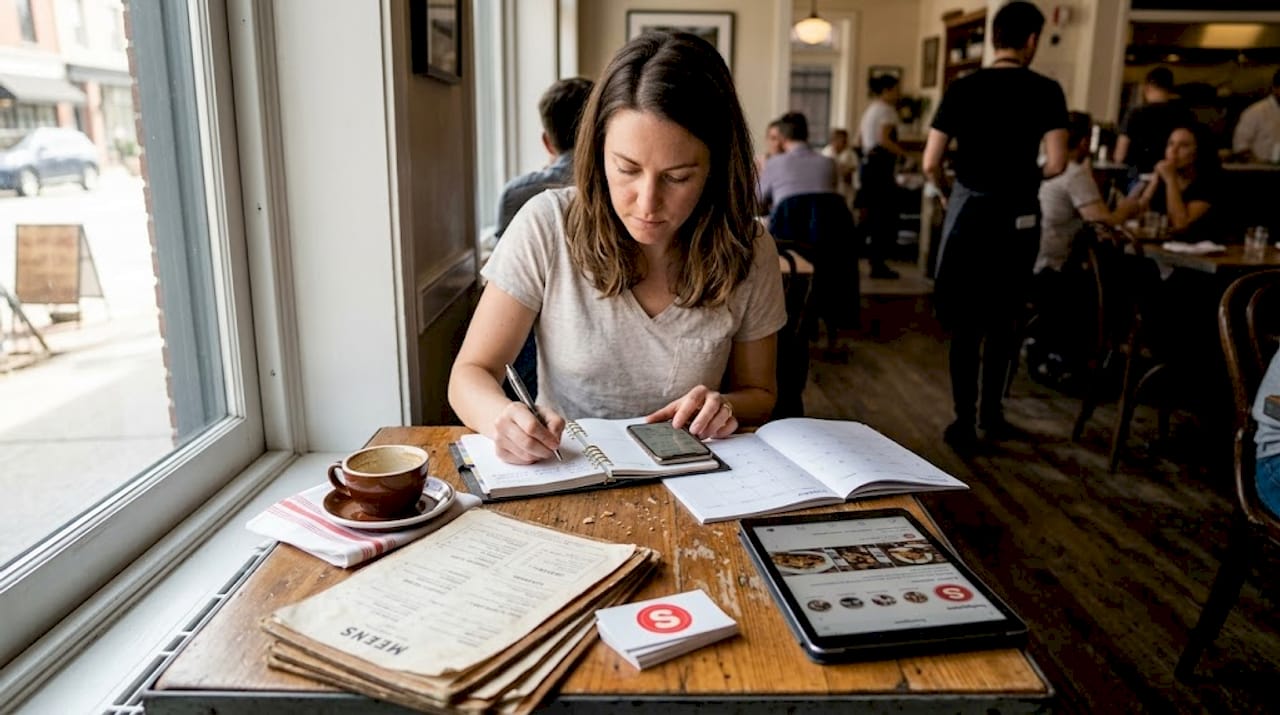
Running a restaurant means your attention is pulled in a dozen directions before 10 a.m. You’re managing staff, watching food costs, and somehow supposed to post on Instagram, send an email newsletter, and keep your Google profile fresh. Most restaurant owners treat marketing like a fire they put out when they have time, which means it never gets the fuel it needs. A structured content marketing workflow changes that. Instead of scrambling for ideas every week, you follow a repeatable system that keeps your brand visible, your regulars engaged, and new customers walking through the door. This guide walks you through every step.
Table of Contents
- Assessing your restaurant’s marketing needs
- Developing your brand story and content pillars
- Mapping a content calendar and batching production
- Distributing and optimizing your content
- Tracking results and refining your marketing workflow
- Why consistency beats complexity in restaurant marketing workflows
- Unlock marketing workflow efficiency with Sorbey
- Frequently asked questions
Key Takeaways
| Point | Details |
|---|---|
| Set clear goals | Define your audience and objectives before launching content efforts. |
| Balance your content | Use structured pillars to mix food, behind-the-scenes, UGC, and promotions. |
| Plan and batch produce | Map out a repeating content calendar and batch create to save time. |
| Optimize for mobile | Ensure all content is mobile-friendly to reach the majority of diners. |
| Track and refine | Use analytics and A/B testing to improve your workflow and maximize ROI. |
Assessing your restaurant’s marketing needs
Before you create a single post, you need to know exactly what you’re trying to accomplish. Too many restaurant owners skip this step and end up posting randomly, hoping something sticks. A clear strategy is the engine that drives every piece of content you produce.
Start with your business objectives. Are you trying to fill more tables on slow Tuesday nights? Drive private event bookings? Build a loyal local following that drives word-of-mouth? Each goal shapes the kind of content you create. A restaurant chasing private bookings should be producing very different posts than one trying to win foot traffic from nearby office workers.
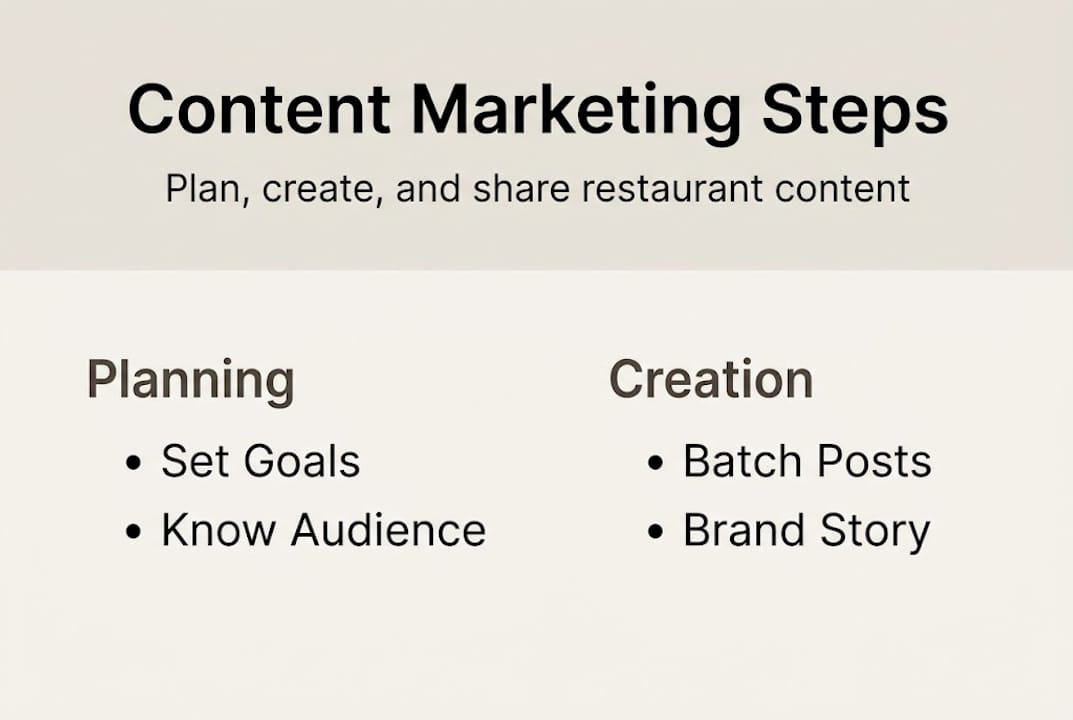
Next, get specific about your audience. Where do your ideal customers spend time online? A bar with a 25-to-35-year-old crowd lives on Instagram and TikTok. A family-style neighborhood spot might see more traction on Facebook and email. Defining your audience before you choose your channels prevents wasted effort.
Here’s a quick breakdown of the most common restaurant marketing channels and what each does well:
| Channel | Best for | Effort level |
|---|---|---|
| Visual food content, brand awareness | Medium | |
| Community, events, older demographics | Low-medium | |
| Loyalty, promotions, direct ROI | Low | |
| Google Business | Local SEO, reviews, search visibility | Low |
| Blog | Long-term SEO, brand authority | High |
Choose two or three channels to start. Spreading yourself across every platform guarantees mediocrity on all of them. Once you nail two, you can expand.
Finally, set your metrics before you launch. Decide in advance what success looks like. Options include:
- Engagement rate (likes, comments, shares per post)
- Follower growth week over week
- Email open and click rates
- Online bookings driven by campaigns
- Review volume and rating on Google or Yelp
The content marketing workflow that actually drives revenue always starts here, with defining your audience, goals, channels, and metrics before anything else. Exploring the different restaurant marketing types can also help you see which mix fits your business model best.
Developing your brand story and content pillars
Once you know who you’re talking to and what you want them to do, the next step is deciding what you’ll say and how you’ll say it. This is where your brand story comes in.
Your brand story is not your menu. It’s the reason your restaurant exists, the people behind it, and the feeling customers get when they walk in. A taco spot founded by a family that moved from Oaxaca has a story. A farm-to-table bistro that sources everything within 50 miles has a story. Even a casual burger joint with a quirky mascot has a story. Stories are what make people feel connected to a place rather than just transactional about it.
Express your story both visually and verbally. Your color palette, plating style, and photo editing choices all communicate something. So does your caption tone, whether that’s warm and neighborly or bold and playful.
To keep content balanced and prevent your feed from becoming one long advertisement, organize your posts around content pillars. A proven split recommended by content strategists is:
| Pillar | Share of content | Example |
|---|---|---|
| Food content | 40% | Dish reveals, recipe videos, seasonal menus |
| Behind-the-scenes (BTS) | 25% | Kitchen prep, staff spotlights, sourcing stories |
| User-generated content (UGC) | 20% | Reposting guest photos, review highlights |
| Promotions | 15% | Happy hour deals, event announcements |
This content pillar breakdown gives your feed variety without losing focus. The 70/20/10 rule works similarly: 70% value-driven content, 20% curated or shared content, 10% direct promotion.
Video content for restaurants is particularly powerful for the food and BTS pillars because it captures atmosphere in a way a single photo can’t. Even a 15-second clip of pasta being plated can generate ten times the reach of a static image. Mastering food photography basics will sharpen your visual content across all pillars.
Pro Tip: Your staff are your most underused content asset. A 30-second video of your head chef explaining where tonight’s special came from is authentic, costs nothing to produce, and builds trust faster than any paid ad.
Mapping a content calendar and batching production
Now that you have your pillars and story sorted, it’s time to get organized. A content calendar takes the guesswork out of what to post and when, and batch production makes the whole system sustainable even during a dinner rush week.
A realistic posting schedule for most restaurants is three to five times per week. Here’s how a weekly content calendar might look in practice:
- Monday — Food Reel (highlight a signature dish or new item)
- Tuesday — Behind-the-scenes Stories (quick kitchen or staff content)
- Wednesday — UGC repost or customer review spotlight
- Thursday — Blog post or email newsletter push
- Friday — Promotional post (weekend specials, events)
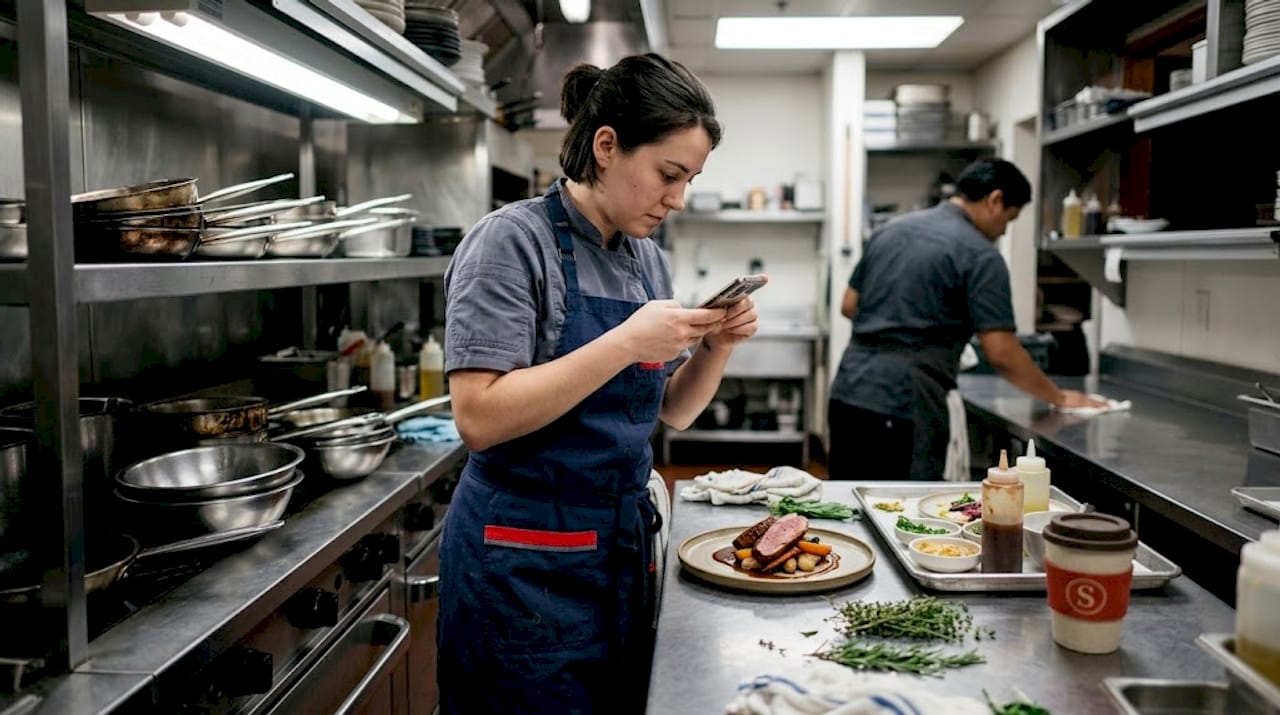
Batch creation is the real efficiency unlock here. Instead of shooting content daily, block two to three hours one day per week, or one day per month for bigger shoots. One photo session can yield a food reel, three static posts, a Stories series, and thumbnail images for your email. That’s weeks of content from a single session.
For event marketing strategies and seasonal campaigns, the calendar becomes even more critical. Planning for holidays and seasonal menu changes requires runway. For inspiration on seasonal campaign timing, thinking ahead by a full quarter is smart practice.
Pro Tip: Plan holiday campaigns 6 to 8 weeks in advance. Valentine’s Day content should be drafted by late December. Mother’s Day campaigns need to launch in late March. Waiting until the week before means competing for attention when everyone else is already saturating the feed.
“Videos may outperform static posts across nearly every platform right now, but don’t assume. Test a video against a static post for the same dish, track the data, and let your specific audience tell you what they prefer.”
Distributing and optimizing your content
Great content sitting in a folder does nothing. Distribution is where strategy meets execution, and getting it right means your posts actually reach hungry customers rather than disappearing into the algorithm.
For social media, post at peak times for your audience. Generally, restaurants see strong engagement between 11 a.m. to 1 p.m. and 5 p.m. to 7 p.m., when people are thinking about food. Use platform scheduling tools to queue posts in advance so you’re not scrambling mid-service.
For email, keep your list warm with a consistent send schedule. Weekly or biweekly works for most restaurants. Keep subject lines short, personal, and tied to something timely, like a new dish, an upcoming event, or a limited-time offer.
Repurposing content dramatically extends your output without extra production time. A content repurposing approach that applies to restaurants: one chef story becomes a video for Instagram, a caption for Facebook, a paragraph in your email, and a section of a blog post. Four pieces of content, one source.
The mobile-first content strategy matters more than most owners realize. With 80% of diners researching restaurants on mobile before visiting, every image, email, and landing page you create must look clean on a phone screen. Vertical video, large readable fonts, and fast-loading images are non-negotiable.
For deeper engagement, using videos for engagement on your social profiles and website can significantly boost time spent and conversion.
Pro Tip: AI tools can help you brainstorm captions, write email subject lines, and generate content ideas fast. But always have a human read the final version. AI misses local nuance, tone, and the kind of personality that makes a neighborhood restaurant feel real.
Tracking results and refining your marketing workflow
You’ve launched content across channels. Now comes the step most restaurant owners skip entirely: checking whether any of it is working.
Start by setting up a simple analytics dashboard. You don’t need expensive software. Most platforms provide free native analytics. Pull your numbers weekly for social and monthly for email and SEO.
Here’s a straightforward process for reviewing and improving:
- Pull weekly metrics — engagement rate, follower change, email opens, website clicks
- Identify your top three posts — note format, topic, timing, and caption style
- Identify your bottom three posts — look for patterns in what underperformed
- Run one A/B test per month — try two subject lines, two post formats, or two posting times
- Adjust your calendar — shift more resources to what worked, cut what didn’t
- Review monthly ROI — track and refine using campaign-level attribution where possible
Stat callout: Email marketing delivers an average of $36 ROI per $1 spent for restaurants, making it the highest-return channel in your toolkit. If you’re not building and nurturing your email list, you’re leaving serious money on the table.
The goal of tracking is not to obsess over numbers. It’s to make better decisions faster. A workflow that learns from its own data compounds in value over time. Restaurants that iterate consistently outperform those that set and forget.
Why consistency beats complexity in restaurant marketing workflows
Here’s something most marketing consultants won’t tell you: the restaurants that win at content marketing are rarely the ones with the biggest budgets or the most creative ideas. They’re the ones that show up every single week without fail.
Chasing every new platform or trend is exhausting and usually counterproductive. TikTok, Threads, YouTube Shorts — each new channel promises reach, and chasing all of them guarantees burnout. The operators we’ve seen grow steadily pick a focused approach and repeat it until it’s second nature.
Small wins compound. A consistent Monday food reel, a Wednesday UGC repost, and a Friday email builds audience trust and algorithm favor faster than a brilliant one-week campaign followed by three weeks of silence. Video storytelling done consistently, even imperfectly, outperforms sporadic perfection.
“Success isn’t about doing more. It’s about doing the right thing regularly.”
Build the simplest workflow that your team can actually sustain. Then protect it like a shift schedule.
Unlock marketing workflow efficiency with Sorbey
Putting all of this into practice takes the right tools in your corner. Sorbey is built specifically for local restaurants that want to grow without adding hours to their week.
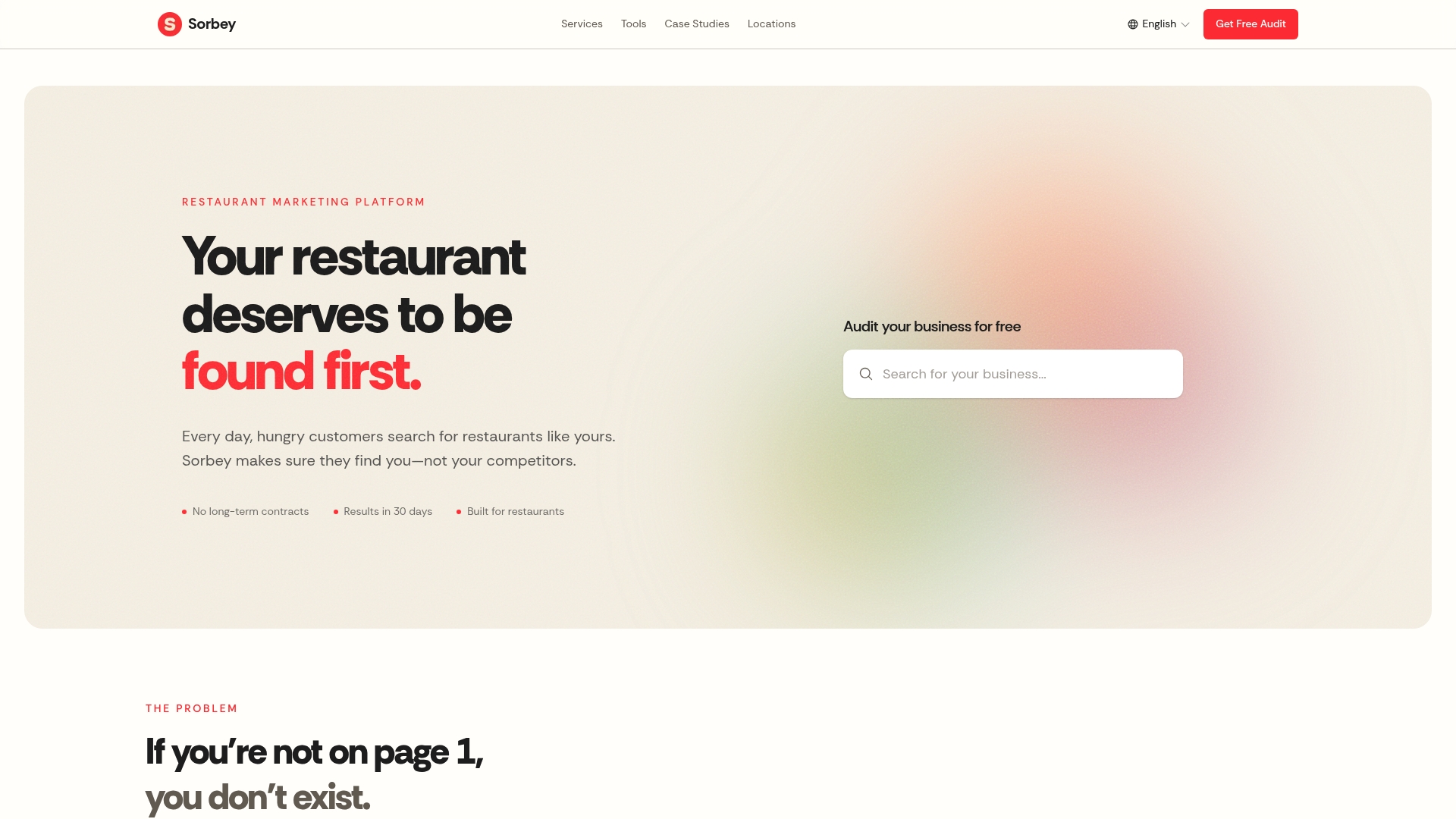
From content planning and scheduling to performance tracking and email campaigns, Sorbey’s restaurant marketing solutions give you a single place to manage your entire workflow. No more jumping between five apps and losing track of what went live. Whether you’re just building your first content calendar or refining a system that’s already running, Sorbey connects you to the tools and expertise that make consistent marketing possible for a busy restaurant team.
Frequently asked questions
What is the ideal posting frequency for restaurant content marketing?
Most restaurants find success posting 3 to 5 times per week across social, email, and blog channels for steady engagement without overwhelming your audience.
How can restaurants plan content around holidays and seasonal menus?
Plan holiday and seasonal campaigns 6 to 8 weeks ahead, using batch creation and a calendar to anchor quarterly pushes around menu changes so you’re never caught scrambling.
Is AI-generated content effective for restaurants?
AI can speed up content creation significantly, but 28 to 30% of users report concerns about quality and authenticity, so always have a human review the final output before publishing.
What metrics should I track to measure marketing success?
Track engagement (likes, comments, shares), bookings, online reviews, and campaign ROI. Email alone delivers $36 per $1 spent, making it one of the most measurable channels available to restaurants.
Why is mobile optimization important for restaurant marketing?
Eighty percent of diners research restaurants on mobile before visiting, so all content including images, emails, and landing pages must be designed for small screens first.
Recommended
- Use Video Content to Boost Restaurant Engagement and Sales | Sorbey Blog | Sorbey
- Services - Sorbey | Restaurant Marketing Solutions | Sorbey
- Digital marketing checklist for restaurants: boost visibility | Sorbey Blog | Sorbey
- Workflow de eventos gastronómicos en Barcelona: guía práctica
- Content Marketing Checklist: 70% More Leads & 5.2x ROI
Potrebbe interessarti anche

Best Restaurant Loyalty Programs 2026: ROI Guide
Discover the best restaurant loyalty programs 2026 that boost repeat visits. Learn how Sorbey’s platform can transform your guest data strategy!

Why Mobile Marketing Matters for Business Growth
Discover why mobile marketing matters for business growth. Learn how optimizing for mobile drives traffic, conversions, and customer retention.
SF Dim Sum Restaurant Marketing Checklist for 2026
Transform your SF dim sum with our 2026 marketing checklist. Optimize your profile, showcase dishes, and attract customers fast!