
Blog
Top Restaurant Branding Strategies to Boost Engagement
Discover proven restaurant branding strategies that boost customer engagement, drive revenue, and help your concept stand out in competitive urban markets.
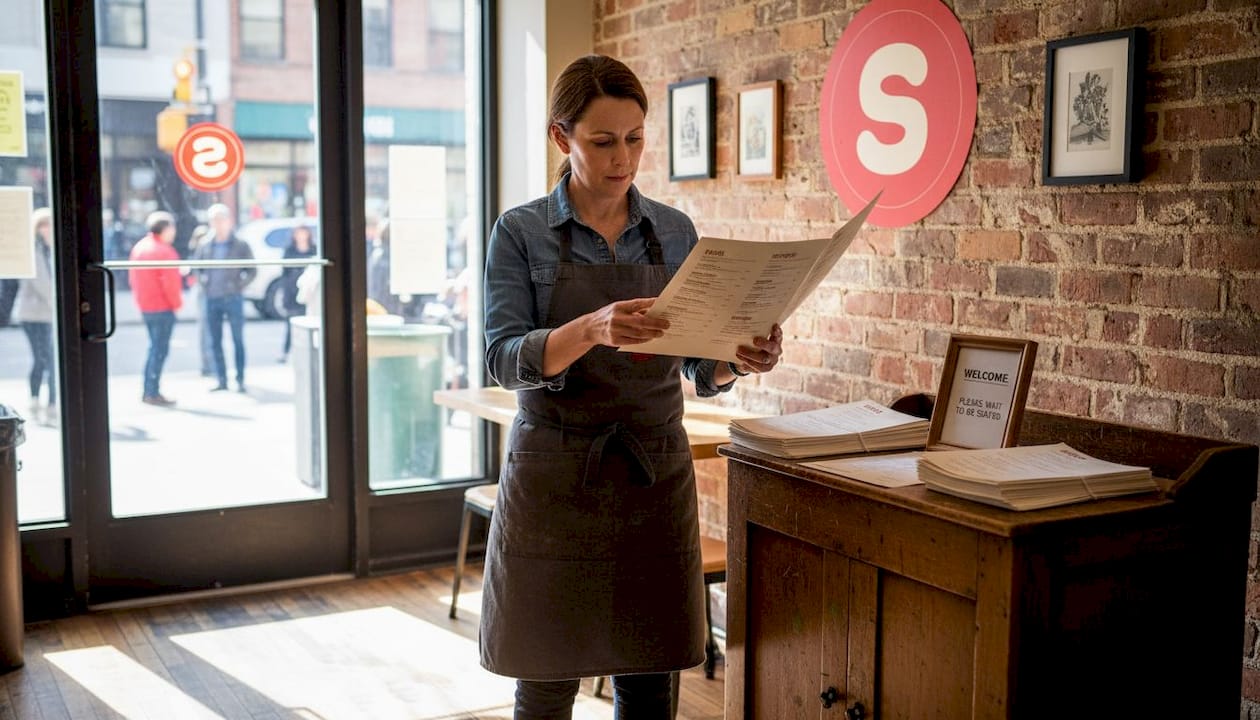
Top Restaurant Branding Strategies to Boost Engagement
Urban restaurant markets are brutal. In cities like New York, Chicago, and Los Angeles, hundreds of concepts compete for the same diners, the same foot traffic, and the same social media attention. The restaurants that win aren’t always the ones with the best food. They’re the ones with the strongest brand. Consistent branding across every touchpoint increases revenue by 23% on average, and that number alone should make branding a top priority for any serious operator.
Table of Contents
- Understanding modern restaurant branding
- Step-by-step branding strategy framework
- Core branding strategies that drive results
- Case studies: Top brands in action
- Branding benchmarks and how to measure success
- Common branding mistakes and how to avoid them
- Contrasting expert viewpoints: Where to start?
- How Sorbey can help you build a standout restaurant brand
- Frequently asked questions
Key Takeaways
| Point | Details |
|---|---|
| Consistency is king | Uniform branding across all platforms is vital for growth and customer trust. |
| Framework matters | A step-by-step approach ensures no critical branding component is missed. |
| Measure to manage | Track relevant KPIs and audit your branding impact regularly. |
| Professional visuals boost sales | High-quality food photography and design can significantly increase revenue. |
| Avoid common pitfalls | Stay clear of over-designed logos and keep staff thoroughly trained in your brand identity. |
Understanding modern restaurant branding
Branding is not your logo. That’s the most common misconception in the industry, and it costs operators real money. Your brand is the full experience a guest has with your restaurant, from the moment they see your Instagram post to the second they walk out the door.
Modern restaurant branding covers three core layers:
- Visual identity: Logo, color palette, typography, packaging, and signage
- Messaging: Taglines, menu copy, social captions, and staff language
- Experience: Ambiance, service style, music, and how problems get resolved
The smartest operators start with mission and values before touching any design tool. Why? Because visuals built on a clear purpose are far more consistent and memorable than visuals built on aesthetic preference alone. Brand consistency can make companies grow 2.4x faster, which means getting your foundation right pays dividends for years.
“Your brand is what people say about you when you’re not in the room.” This applies to restaurants just as much as Fortune 500 companies.
Digital-first branding is now the norm. AI tools have made professional-quality food visuals accessible to independent operators, not just chains with big budgets. If you want to see what innovative restaurant branding looks like in practice across urban markets, the gap between small operators and major chains is closing fast.
Step-by-step branding strategy framework
Once you’re clear on what restaurant branding encompasses, you’re ready for a systematic approach you can apply to your own business. A proven methodology breaks down into six essential steps:
- Define your mission — What does your restaurant stand for beyond the food? Write it in one sentence.
- Identify your target audience — Demographics, dining habits, price sensitivity, and lifestyle values all matter.
- Develop your unique selling proposition (USP) — What do you offer that no competitor within five blocks can replicate?
- Build your visual identity — Logo, colors, and typography should all reflect your mission, not just current design trends.
- Establish your brand voice — Casual and playful? Sophisticated and minimal? Pick a lane and stay in it across every channel.
- Enforce consistency — Every menu, social post, staff uniform, and receipt should feel like it came from the same place.
AI tools now make step four faster and cheaper than ever. Platforms that generate food photography and menu layouts can cut design costs by 60% or more for independent operators. Pairing strong visuals with a clear mission and visual identity strategy is what separates forgettable concepts from ones that build real loyalty.
Building restaurant branded search visibility is also part of this framework. When guests search your name directly, that’s a signal of brand strength that compounds over time.
Pro Tip: Set a calendar reminder every quarter to audit your brand across all channels. Check your website, Google profile, social accounts, and in-store materials for consistency. Small drift adds up fast.
Core branding strategies that drive results
With a framework in mind, here are the specific strategies that move the needle for restaurants competing in crowded urban markets.
Visual identity done right
Your logo needs to work at every size, from a 16x16 favicon to a 10-foot wall mural. Stick to two or three brand colors maximum. Typography should be readable on a phone screen, not just a printed menu. These constraints force clarity, and clarity is what makes a brand stick.

Menu engineering and food photography
Professional food photography boosts menu sales by 20 to 45%. That’s not a marginal gain. That’s the difference between a dish that moves and one that sits. High-quality images on your website, delivery apps, and social profiles signal quality before a guest ever tastes your food.
Brand voice consistency
Your Instagram bio, your Google Business description, your reservation confirmation email, and your server’s greeting should all feel like they come from the same personality. Inconsistency creates doubt. Doubt kills conversions.
- Write a one-page brand voice guide for your team
- Include sample phrases and phrases to avoid
- Review it during onboarding for every new hire
Staff training in brand culture
Your team is your brand in motion. A beautifully designed restaurant with rude or inconsistent service destroys everything you’ve built visually. Train staff not just on tasks but on tone, values, and how to handle difficult moments in a way that reflects your brand.
“Emotional connection, not price, is the primary driver of repeat visits for restaurant guests.”
Pro Tip: Use your restaurant website branding best practices as a reference point when training staff. If your website promises warmth and hospitality, your team needs to deliver exactly that.
Case studies: Top brands in action
Learning from the best is always wise. Here’s how top brands translate these strategies into winning results, and what you can adapt for your own restaurant.
Sweetgreen, Shake Shack, and Chick-fil-A each built dominant brands through very different focuses, which proves there’s no single formula. What they share is relentless consistency.
| Brand | Core branding focus | Key tactic | Result |
|---|---|---|---|
| Sweetgreen | Mission-driven (health, sustainability) | Transparent sourcing, local partnerships | Cult following among urban millennials |
| Shake Shack | Iconic visual design | Minimalist identity, premium positioning | Premium pricing power in fast-casual |
| Chick-fil-A | Quality and service culture | Staff training, consistent experience | Highest sales per unit in fast food |
What can a 30-seat neighborhood restaurant learn from these giants? Three things. First, pick one brand pillar and own it completely. Second, make your staff the living proof of that pillar. Third, let your visuals reinforce the message, not compete with it.
For more real-world examples, urban restaurant branding case studies show how independent operators in dense markets are applying these same principles at a fraction of the budget.
“The best restaurant brands don’t try to appeal to everyone. They go deep with a specific audience and earn fierce loyalty.”
Branding benchmarks and how to measure success
To fully benefit from sound branding strategies, you need to track their actual impact with concrete metrics.
Key restaurant benchmarks every operator should monitor include food cost percentage, labor cost percentage, prime cost (ideally under 65% of revenue), table turnover rate, and Net Promoter Score (NPS). These aren’t just financial metrics. They’re branding signals.
| Metric | Healthy benchmark | What it signals about your brand |
|---|---|---|
| Food cost % | 28-35% | Menu pricing and perceived value alignment |
| Labor cost % | 25-35% | Service quality sustainability |
| Prime cost | Under 65% | Overall operational brand health |
| Table turnover | 3-5x per service | Guest experience efficiency |
| NPS | 50+ | Emotional loyalty and word-of-mouth strength |
Tracking measuring restaurant branding effectiveness goes beyond financials. Monitor online review sentiment, branded search volume, and repeat visit rates. These tell you whether your brand is building equity or just generating one-time visits.
Key metrics to track after any branding update:
- Revenue per available seat hour (RevPASH)
- Average check size before and after
- Social follower growth vs. engagement rate
- Direct reservation vs. third-party booking ratio
- Customer retention rate over 90 days
Pro Tip: Every time you make a branding change, whether it’s a new logo, updated menu, or refreshed social tone, document the date and track your key metrics for 60 days after. That’s how you build a real evidence base for what works.
Common branding mistakes and how to avoid them
As you take steps to enhance your restaurant’s brand, be mindful of where many operators run into trouble.
- Overdesigning your logo — Complex logos fail at small sizes and confuse guests. Simplicity scales. Complexity doesn’t.
- Inconsistency across touchpoints — Your Yelp page looks nothing like your Instagram, which looks nothing like your menu. Guests notice, even if they can’t articulate why.
- Ignoring context — Most guests discover you on a phone screen. Design for mobile first, then scale up to signage and print.
- Skipping staff brand training — A barista training program or equivalent front-of-house training is not optional if you want your brand to live beyond your walls.
- Tracking vanity metrics — Follower counts feel good. Revenue, NPS, and retention actually tell you if your brand is working.
“Audit your brand quarterly. Check every touchpoint for consistency, from your Google Business profile to your to-go bags.”
The fix for most of these mistakes is the same: build a simple brand standards document and enforce it. One page covering logo usage, colors, fonts, tone of voice, and photography style is enough to keep a small team aligned. For branding design best practices specific to restaurant websites, the same principles of clarity and consistency apply.
Contrasting expert viewpoints: Where to start?
No successful branding journey is one-size-fits-all. Here’s how industry experts debate where to focus first.
Design agencies prioritize visual identity first, arguing that guests make snap judgments based on aesthetics before they ever read your mission statement. Harvard Business School, on the other hand, stresses that mission and values must come first, because visuals built on a shallow foundation erode under pressure.
Both camps have merit. Here’s how to decide which approach fits your situation:
- New restaurant, no existing brand: Start with mission and values. Build visuals from there.
- Existing restaurant with weak visuals: A visual refresh can deliver quick wins while you deepen your brand story.
- Established brand losing relevance: Evolution, not revolution. Gucci’s brand revival succeeded because it updated aesthetics while honoring its heritage, not by abandoning it.
- Fast-growing multi-location operator: Consistency becomes the top priority. Systems and standards matter more than creative freshness at this stage.
The expert branding perspectives that tend to produce the best results for urban independents combine a clear mission with a strong visual system and a digital-first rollout. Pick your starting point based on where your biggest gap is right now, not where the latest trend points.
“The most dangerous branding move is copying a competitor. The second most dangerous is changing everything at once.”
How Sorbey can help you build a standout restaurant brand
Ready to build a restaurant brand that stands out, drives loyalty, and grows your bottom line? Branding strategy is only valuable when it’s executed consistently across every channel, and that’s where most independent operators hit a wall.
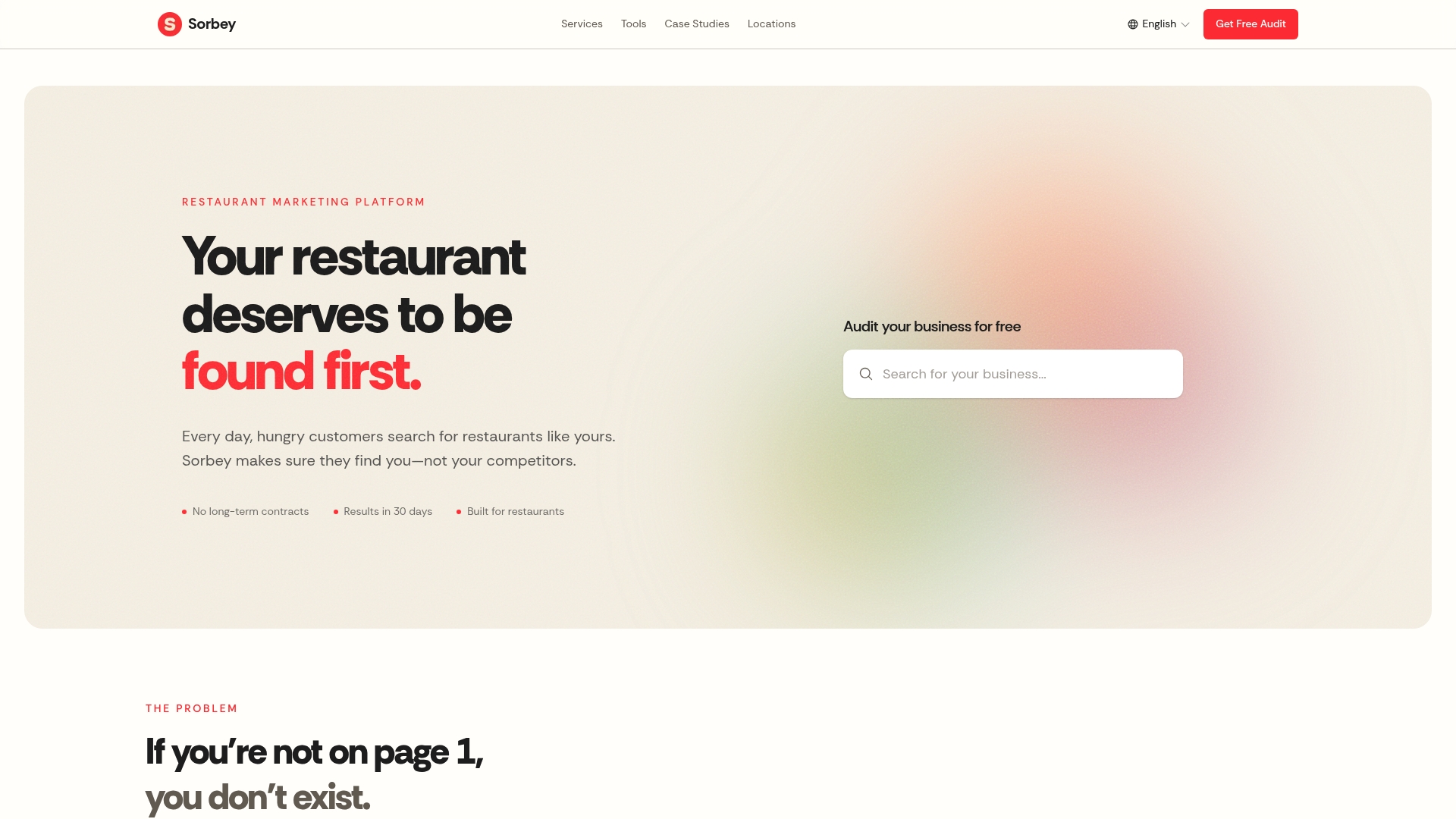
Sorbey is an all-in-one marketing platform built specifically for local restaurants. From visual identity and digital campaigns to performance tracking and marketing ROI calculator tools, Sorbey gives you everything you need to build, measure, and grow your brand without juggling five different vendors. Whether you’re launching a new concept or refreshing an existing one, explore restaurant marketing solutions designed to help you compete in the most demanding urban markets in the country.
Frequently asked questions
What is the most important element of restaurant branding?
Consistent branding across all customer touchpoints drives the greatest impact, increasing revenue by 23% on average. No single visual or message matters more than the sum of a coherent, reliable experience.
How can I measure if my restaurant branding is working?
Track revenue growth, Net Promoter Score, and customer retention, then benchmark against industry standards to see where you stand. Vanity metrics like follower counts won’t tell you if your brand is actually building business value.
Should I invest in professional food photography for branding?
Yes. Professional food photography can boost menu sales by up to 45% and shapes a diner’s perception of quality before they ever visit. It’s one of the highest-ROI branding investments available to restaurant operators.
How often should I update my restaurant’s branding?
Conduct a brand audit at least every quarter to catch inconsistencies and ensure your messaging stays relevant. Small, regular updates are far less disruptive than a full rebrand every few years.
Is it better to lead with my restaurant’s visual identity or mission?
Experts are divided, but aligning your visuals with a clear mission typically produces stronger long-term loyalty. Your starting point should depend on where your biggest brand gap is right now.
Recommended
- Innovative restaurant branding ideas to stand out in urban markets | Sorbey Blog | Sorbey
- Unlock the role of branded search for restaurant visibility | Sorbey Blog | Sorbey
- Optimize restaurant coffee service for 2026 profitability
Potrebbe interessarti anche

Best Restaurant Loyalty Programs 2026: ROI Guide
Discover the best restaurant loyalty programs 2026 that boost repeat visits. Learn how Sorbey’s platform can transform your guest data strategy!

Why Mobile Marketing Matters for Business Growth
Discover why mobile marketing matters for business growth. Learn how optimizing for mobile drives traffic, conversions, and customer retention.

SF Dim Sum Restaurant Marketing Checklist for 2026
Transform your SF dim sum with our 2026 marketing checklist. Optimize your profile, showcase dishes, and attract customers fast!