
Blog
Why Digital Marketing Matters for Your Business Growth
Discover why digital marketing matters for your business growth. Unlock precise customer engagement and measurable results today!

Why Digital Marketing Matters for Your Business Growth
TL;DR:
- Digital marketing allows brands to reach targeted audiences with measurable, real-time feedback through online channels. It drives business growth by building visibility, fostering engagement, and providing data-driven insights for strategic adjustments. Success relies on ongoing commitment, proper team training, and integrating marketing efforts with sales and customer data.
Digital marketing is the practice of promoting your brand through internet-based channels, including social media, email, search engines, and the web, to reach and engage customers more precisely than any traditional method allows. For business owners and managers, understanding why digital marketing matters is no longer optional. It is the difference between a brand customers find and one they never see. Unlike a newspaper ad or a flyer, digital marketing gives you real-time feedback, measurable results, and the ability to shift strategy the moment something stops working. This article breaks down how it works, what it delivers, and how to make it work for your specific business.
Why digital marketing matters for brand visibility and engagement
Digital marketing reaches larger, targeted audiences cost-effectively, with daily performance measurement enabling budget pivots that traditional advertising simply cannot match. A television spot runs once and disappears. A well-optimized Google search listing or a targeted Facebook ad campaign runs continuously, adjusts in real time, and tells you exactly who clicked, who stayed, and who bought.

The channels available to you cover every stage of the buyer journey. Search engine optimization (SEO) builds long-term visibility so customers find you when they are actively looking. Email marketing keeps existing customers engaged and coming back. Paid digital ads on platforms like Google Ads and Meta give you immediate reach to new audiences. Social media on Instagram, TikTok, and LinkedIn builds community and brand recognition over time.
What separates digital from traditional marketing is the data layer underneath every action. Marketing analytics enable quick learning and strategy adjustments based on real-time data from user interactions across smartphones, computers, and tablets. That means you are never guessing. You know which post drove reservations, which email subject line got opened, and which ad creative converted.
Pro Tip: Set up a simple weekly review of three metrics: click-through rate, conversion rate, and cost per lead. These three numbers tell you whether your campaigns are working before you spend another dollar.
Digital marketing also provides a start-to-finish view of key funnel metrics, from impressions and shares to time on page and click-throughs at each stage. This matters because visibility without conversion is just noise. The goal is not more traffic. It is more of the right traffic turning into paying customers.
How digital marketing drives innovation in SMEs
Digital marketing capabilities such as analytics, CRM systems, and social media interaction drive innovation and performance in small and medium enterprises. This finding reframes how you should think about your marketing budget. It is not an expense line. It is an investment in your business’s ability to learn, adapt, and create new value for customers.
Here is what that looks like in practice for a local restaurant or hospitality business:
- Analytics tools like Google Analytics or Meta Business Suite reveal which menu items generate the most online interest, which neighborhoods your customers come from, and what times they are most likely to engage with your content.
- CRM systems like HubSpot or Salesforce track customer interactions across every touchpoint, letting you personalize follow-ups, loyalty offers, and re-engagement campaigns.
- Social media interaction on platforms like Instagram creates a direct feedback loop with customers, surfacing preferences, complaints, and trends faster than any survey.
- Email automation through tools like Mailchimp or Klaviyo lets you deliver the right message at the right moment without manual effort every time.
These are not just promotional tools. They are intangible business assets that compound over time. A restaurant that builds a 10,000-person email list owns a direct communication channel no algorithm can take away. A business that masters its Google Business Profile and local SEO builds a presence that generates reservations without ongoing ad spend.
One important nuance: digital marketing’s marginal effect diminishes at high levels of existing relational network capital. In plain terms, if your business already runs on deep personal relationships and referrals, digital marketing will not multiply those results infinitely. It works best as a complement to your existing strengths, not a replacement for them. Calibrate your investment accordingly.
What challenges come with adopting digital marketing?
Digital marketing literacy significantly impacts MSME sales performance, with standardized effect sizes ranging from 0.35 to 0.50 depending on infrastructure and demographics. That range matters. It tells you that how well your team understands and uses digital tools is just as important as which tools you choose.
The most common barriers business owners face when adopting digital marketing include:
- Low digital literacy among staff or owners, particularly in businesses where the owner is over 50 or where the team has limited tech exposure. Training programs help, but they work best when paired with hands-on practice and clear business goals.
- Infrastructure gaps in rural or underserved areas, where unreliable internet access limits the effectiveness of real-time tools and cloud-based platforms.
- Resistance to change, especially in businesses with established word-of-mouth models. Team members who see digital marketing as extra work rather than a business advantage will underuse even the best tools.
- Fragmented data, where marketing, sales, and customer service each use separate systems that do not talk to each other. Without integration, you cannot see the full picture of what is working.
Training alone does not solve adoption resistance, particularly for older entrepreneurs and rural firms. The research is clear on this point. What works is combining training with organizational readiness: clear leadership buy-in, defined roles for who manages which channels, and a realistic timeline for building capability.
Pro Tip: Before investing in new tools, audit what your team actually uses today. A simple spreadsheet used consistently beats a sophisticated CRM that nobody logs into. Start with the behavior, then add the technology.
The importance of integrating marketing data with sales and customer service cannot be overstated. When your marketing platform connects to your reservation system or point-of-sale data, you can see which campaigns actually drove revenue, not just clicks.
Practical strategies for leveraging digital marketing advantages
Defining your audience before choosing your channels is the single most important step most business owners skip. You need to know who your best customers are, where they spend time online, and what problems or desires bring them to you. That clarity determines everything else.
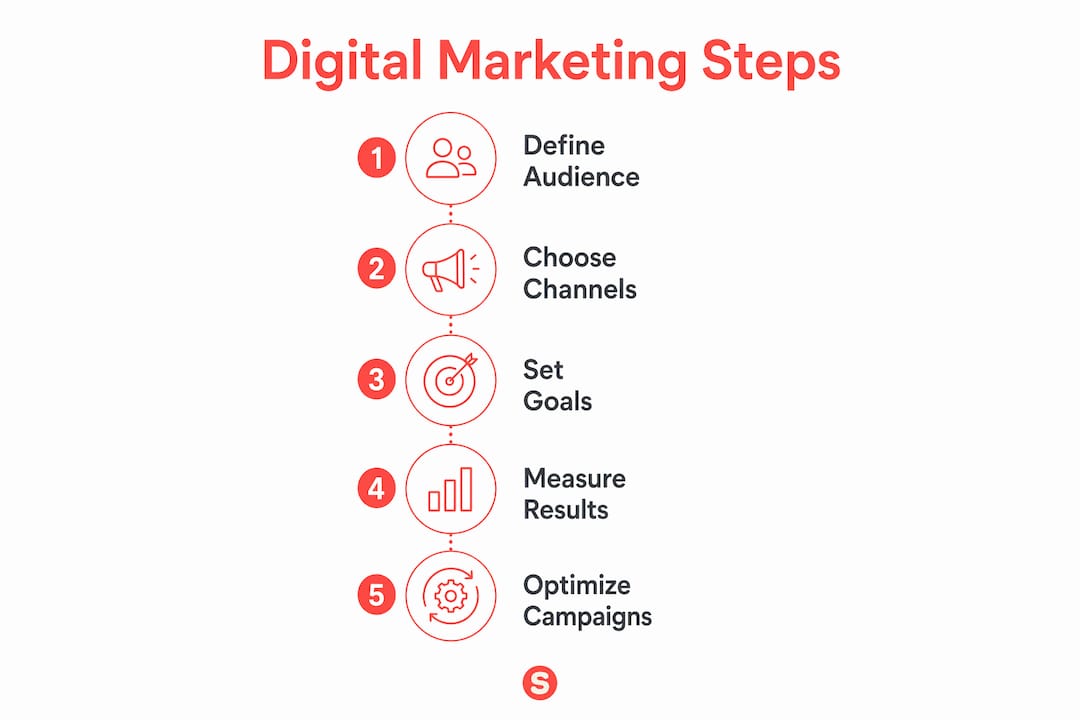
Once you know your audience, match your channels to their behavior. The table below compares the most common digital marketing channels for local businesses:
| Channel | Primary benefit | Best use case |
|---|---|---|
| SEO and Google Business Profile | Long-term organic visibility | Capturing customers actively searching for your category |
| Social media (Instagram, TikTok) | Brand awareness and community building | Showcasing products, culture, and customer stories |
| Email marketing | Direct customer retention | Loyalty programs, promotions, and re-engagement |
| Paid digital ads (Google, Meta) | Immediate targeted reach | New customer acquisition and event promotion |
| Review platforms (Yelp, Google Reviews) | Trust and local credibility | Converting undecided customers researching options |
Measurement is where most businesses fall short. Connecting marketing with sales improves conversion because it closes the loop between what your marketing promises and what your business delivers. Use a restaurant ROI calculator to quantify what each channel actually returns before scaling spend.
The practical sequence looks like this: set a specific goal (more weeknight reservations, higher average check, more repeat visits), choose one or two channels to test, run campaigns for 30 days, measure against your goal, and adjust. Avoid running five channels at once with no clear metrics. Depth beats breadth when you are building capability.
For restaurants specifically, the digital marketing checklist approach works well because it forces you to confirm the basics are in place before layering on complexity. A complete Google Business Profile, consistent NAP (name, address, phone) data across directories, and at least one active social channel are the foundation everything else builds on.
Key takeaways
Digital marketing is the most measurable, adjustable, and cost-effective way for local businesses to build brand visibility and convert customer interest into revenue.
| Point | Details |
|---|---|
| Digital marketing is a strategic asset | Treat analytics, CRM, and social media as business capabilities, not just ad tools. |
| Measurement drives results | Track funnel metrics from impressions to conversions, not just follower counts. |
| Literacy gaps limit impact | Invest in team training and organizational readiness before adding new platforms. |
| Channel choice must match audience | Match SEO, email, social, and paid ads to where your specific customers spend time. |
| Integration unlocks ROI | Connect marketing data to sales and CRM systems to see which campaigns drive real revenue. |
The uncomfortable truth about digital marketing most guides skip
I have worked with enough business owners to know that the biggest mistake is not choosing the wrong channel. It is treating digital marketing as a one-time project rather than an ongoing business function. You set up an Instagram account, post for three weeks, see no immediate flood of customers, and conclude it does not work. That is not a marketing failure. That is a patience and process failure.
The businesses I have seen grow consistently through digital marketing share one trait: they treat it the way they treat their kitchen operations. They show up every day, they measure what matters, and they adjust when something is off. They do not expect a single campaign to change everything. They build systems.
The research on SME innovation and performance confirms this. Digital marketing capabilities compound over time. A business that has been building its email list, refining its SEO, and learning from its analytics for two years has a structural advantage over a competitor that just launched a campaign. That advantage is not about budget. It is about accumulated knowledge and customer data.
One more thing worth saying directly: digital marketing works differently depending on your existing business context. If you already have strong community relationships and word-of-mouth, digital marketing amplifies that. If you are starting from scratch, it builds the foundation. Either way, the customer engagement strategies that work are the ones built around your specific customers, not copied from a generic playbook.
— Barthelemy
How Sorbey helps local businesses put this into practice
Sorbey is built specifically for restaurants and local businesses that want the benefits of digital marketing without the complexity of managing five separate tools.
Sorbey brings together analytics, targeted campaigns, and ROI tracking in one place, so you can see what is working and act on it without a dedicated marketing team. Whether you are trying to fill more tables on slow nights, build a loyal customer base, or compete with larger chains on local search, Sorbey’s restaurant marketing solutions are designed around the real challenges local operators face. You get the data clarity and channel reach this article describes, without the learning curve of piecing it together yourself.
FAQ
What is digital marketing, exactly?
Digital marketing is the promotion of a brand through internet-based channels including search engines, social media, email, and websites. It differs from traditional marketing by enabling real-time measurement and audience targeting.
Why do businesses need digital marketing to grow?
Digital marketing enables businesses to reach targeted audiences cost-effectively and measure results daily, making it the most efficient path to brand visibility and customer acquisition for most businesses today.
How does digital marketing improve customer engagement?
Digital marketing creates engagement at every stage of the buyer journey through SEO, social media, email, and paid ads. Connecting these channels to CRM and sales data deepens the customer relationship beyond a single transaction.
What is the biggest challenge in adopting digital marketing?
Digital marketing literacy and organizational readiness are the primary barriers. Training helps, but leadership buy-in and clear role assignment matter just as much as the tools themselves.
How do I measure whether digital marketing is working?
Measure metrics at each funnel stage: impressions for awareness, click-through rates for interest, and conversion rates for revenue impact. Linking your marketing platform to your sales or reservation data gives you the clearest picture of actual ROI.
Recommended
Potrebbe interessarti anche

Best Restaurant Loyalty Programs 2026: ROI Guide
Discover the best restaurant loyalty programs 2026 that boost repeat visits. Learn how Sorbey’s platform can transform your guest data strategy!

Why Mobile Marketing Matters for Business Growth
Discover why mobile marketing matters for business growth. Learn how optimizing for mobile drives traffic, conversions, and customer retention.

SF Dim Sum Restaurant Marketing Checklist for 2026
Transform your SF dim sum with our 2026 marketing checklist. Optimize your profile, showcase dishes, and attract customers fast!