
Blog
Why Is Online Branding Important for Restaurants?
Discover why is online branding important for restaurants. Build trust, enhance visibility, and attract more diners with effective digital branding.

Why Is Online Branding Important for Restaurants?
TL;DR:
- Online branding manages a restaurant’s digital identity to build trust, recognition, and loyalty among customers.
- It influences diners’ decisions through consistent visuals, a strong website, and active review management.
Online branding is the strategic management of a restaurant’s identity and reputation across every digital touchpoint to build trust, recognition, and customer loyalty. For small and mid-sized restaurant owners, this means every interaction a diner has with your business online, from your Google My Business listing to your Instagram photos to your Yelp review responses, shapes whether they walk through your door. Digital branding shapes perception across every online channel and determines how customers discover and remember you. Restaurants that treat online branding as optional are handing that first impression to competitors who take it seriously.
Why is online branding important for small restaurants?
Online branding gives small and mid-sized restaurants the same credibility that large chains spend millions to build. Consistent online presence builds trust faster, increases customer loyalty, improves conversion rates, and separates you from every other local spot competing for the same diners. That is not a minor advantage. That is the difference between a full dining room and empty tables on a Tuesday night.

The importance of online branding goes well beyond having a Facebook page. Your brand lives in the speed of your website, the tone of your review replies, the consistency of your logo across platforms, and the quality of your food photos on Instagram. Each of these touchpoints either reinforces or erodes the impression you are making before a single customer sits down.
Here is what strong digital branding delivers for restaurant owners:
- Trust at first glance. A professional website and consistent visuals signal that you run a serious operation.
- Better search visibility. Strong brand presence increases branded searches and engagement signals that indirectly boost your SEO rankings.
- Customer loyalty. Diners who feel connected to your brand return more often and refer others.
- Competitive separation. A distinct identity makes you memorable in a crowded local market.
- More direct bookings. A well-branded website converts visitors into reservations without paying a third-party commission.
- Efficient marketing spend. Consistent branding makes every ad, post, and email more effective because customers already recognize you.
Pro Tip: Set up Google Alerts for your restaurant’s name. You will catch mentions, reviews, and press coverage the moment they appear, giving you a chance to respond before a negative impression spreads.
How does online branding influence a diner’s decision?
Consumers research restaurants online before deciding where to eat, making your digital presence the first real conversation you have with a potential customer. That conversation happens without you in the room. What they find, and how it makes them feel, determines whether they book a table or keep scrolling.
The decision-making process follows a predictable path. Understanding it helps you place your brand at every step.
- Search. A diner types “Italian restaurant near me” into Google. Your Google My Business profile, photos, and star rating are the first things they see. A complete, well-branded profile wins the click.
- Website visit. They land on your site. Professional design and clear branding increase trust and improve the customer experience, leading to higher conversion rates. A slow, cluttered, or off-brand site sends them back to Google.
- Social media check. They scan your Instagram or Facebook. Consistent visuals and an active presence signal that the restaurant is alive, cared for, and worth visiting.
- Review reading. They read your Google and Yelp reviews. Active reputation management on these platforms builds customer confidence and increases the likelihood they choose you.
- Reservation decision. They decide to book. A branded, easy-to-use booking experience on your own website closes the loop without friction.
Emotional connection drives the final choice. Brand storytelling, whether through a compelling “About Us” page, behind-the-scenes Instagram Reels, or a chef’s personal story, creates familiarity before the diner ever tastes your food. Familiarity reduces hesitation. Hesitation is what sends customers to your competitor.
What are the critical components of a strong restaurant online brand?
Building a strong online brand requires getting several foundational elements right at the same time. Strength in one area does not compensate for weakness in another.
Your website is your brand’s home base
A website is the central brand hub for controlling your narrative, presenting your menu, and capturing direct bookings. Unlike Instagram or Yelp, you own it completely. Algorithm changes, platform fee increases, and policy shifts cannot touch what lives on your own domain. Every restaurant that relies entirely on third-party platforms is building on rented land.
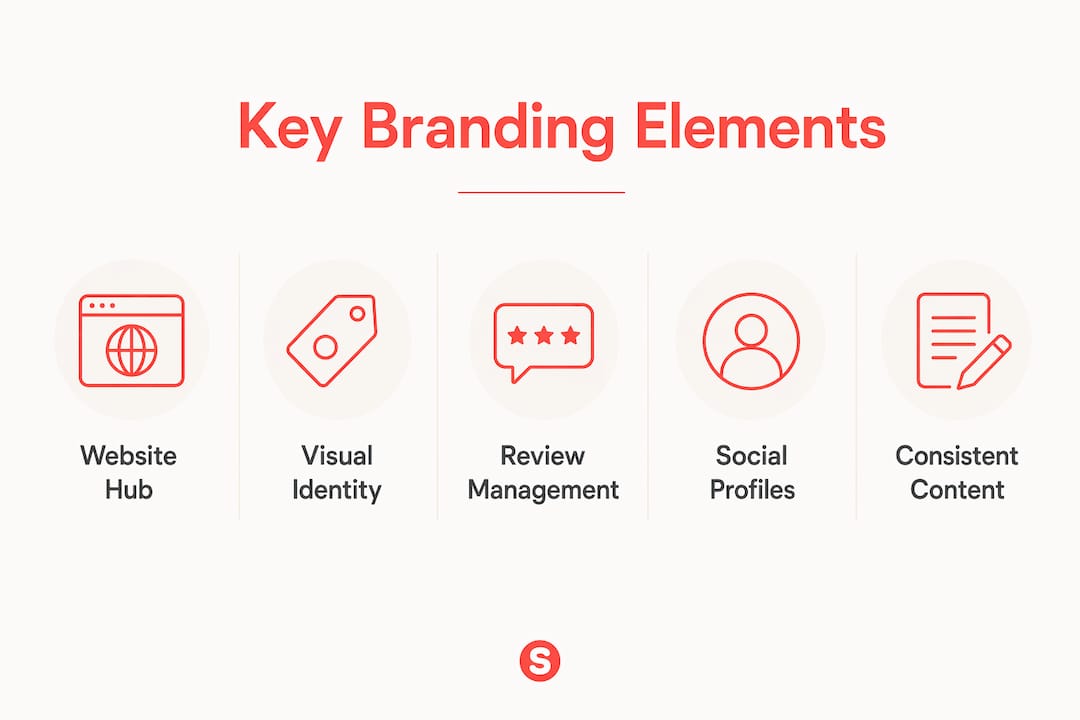
Visual identity must be consistent everywhere
Your logo, color palette, and typography should look identical on your website, your menus, your social profiles, and your email newsletters. Inconsistency signals disorganization. Consistency signals professionalism. Diners notice the difference even when they cannot articulate why.
Pro Tip: Create a one-page brand guide with your exact logo files, hex color codes, and approved fonts. Share it with anyone who creates content for your restaurant, including photographers, designers, and social media managers.
The table below shows the core branding components and their direct impact on your restaurant’s digital presence.
| Branding component | Impact on your restaurant |
|---|---|
| Professional website | Controls brand narrative, enables direct bookings, avoids third-party fees |
| Consistent visual identity | Builds recognition and signals professionalism across all channels |
| Active social media presence | Drives engagement, showcases food and atmosphere, builds community |
| Review platform management | Builds trust, demonstrates responsiveness, influences new customer decisions |
| SEO and content marketing | Increases organic visibility and positions you as a local authority |
| Brand storytelling | Creates emotional connection and differentiates you from generic competitors |
Review management on Google and Yelp is not optional. Responding to reviews, both positive and negative, is a visible act of brand management. Every response is read by future customers, not just the person who left the review.
How can you measure whether your online branding is working?
Measuring the impact of online branding is more concrete than most restaurant owners expect. Digital channels provide real-time, measurable data that lets you track what is working and adjust what is not. Traditional advertising never offered that level of feedback.
Track these indicators consistently:
- Website traffic. Google Analytics shows how many people visit your site, where they come from, and which pages they spend time on. A rise in direct traffic means your brand is becoming recognizable.
- Branded search volume. When people search your restaurant’s name specifically, that is a signal of brand awareness. Google Search Console tracks this for free.
- Social media engagement. Likes, comments, shares, and saves on Instagram and Facebook show whether your content is connecting with your audience.
- Review scores and response rates. Track your average star rating on Google and Yelp monthly. Monitor how quickly you respond to reviews. Speed and tone both affect perception.
- Direct booking ratio. If more reservations come through your own website versus third-party platforms like OpenTable, your branding is driving direct customer relationships.
- Repeat visit behavior. Loyalty programs and email list growth are measurable proxies for brand loyalty.
Brand trust and digital engagement are the most influential factors for customer loyalty, according to research on digital branding strategies. That means the metrics above are not vanity numbers. They are direct indicators of future revenue.
The most overlooked metric is the ratio of new customers to returning customers. A strong brand keeps people coming back. If your new customer numbers are high but repeat visits are low, your brand is not creating the connection it needs to.
Key Takeaways
Online branding is the single most controllable factor in how diners perceive and choose your restaurant before they ever visit.
| Point | Details |
|---|---|
| Own your website | Your site is the only digital asset you fully control, protecting you from platform changes and third-party fees. |
| Consistency builds trust | Matching visuals, tone, and messaging across all channels signals professionalism and increases customer confidence. |
| Reviews are brand moments | Every response on Google and Yelp is read by future customers and shapes their decision to visit. |
| Measure what matters | Track branded search volume, direct bookings, and repeat visits to gauge real branding effectiveness. |
| Branding drives loyalty | Restaurants with consistent digital identities retain customers longer and generate more word-of-mouth referrals. |
The mistake I see restaurant owners make most often
Most restaurant owners I talk to think branding means updating their logo or posting more on Instagram. That misunderstanding costs them real money. Branding includes every customer digital touchpoint, from how fast your website loads to how you phrase a reply to a one-star review. A beautiful logo on a slow, confusing website does not build trust. It breaks it.
The restaurants I have seen grow consistently share one habit: they treat their website as their primary marketing asset, not an afterthought. They update their menus there first. They push reservations through it. They write about their story, their sourcing, their team. That content compounds over time in search rankings and in customer memory.
The risk of over-relying on Instagram or delivery apps is real. Platforms change their algorithms. Commission rates go up. An account can get flagged or suspended. When that happens, restaurants with no owned digital presence have no fallback. The ones with strong websites and email lists barely notice.
My advice is simple. Get your website right before you worry about your posting frequency. Then build your review management practice. Then layer in social media as amplification, not as your foundation. Branding is not a campaign. It is the ongoing work of making sure every digital interaction reflects the experience you deliver in your dining room.
— Barthelemy
How Sorbey helps restaurants build a stronger online brand
Building a consistent online brand across your website, social media, and review platforms takes time and coordination. Sorbey brings all of that together in one place for local restaurants.
Sorbey is built specifically for small and mid-sized restaurants that need to manage their digital presence without hiring a full marketing team. From reputation management to customer engagement tools, Sorbey handles the operational side of branding so you can focus on your kitchen and your guests. If you are ready to take your restaurant’s online identity seriously, explore what Sorbey offers and see how it fits your operation.
FAQ
What is online branding for a restaurant?
Online branding is the management of a restaurant’s identity, reputation, and customer experience across all digital channels, including its website, social media, and review platforms. Every digital interaction shapes how potential diners perceive and choose your restaurant.
How does online branding help attract more customers?
Consistent branding across search, social, and review sites builds the trust and familiarity that drive dining decisions. Diners are more likely to choose a restaurant whose digital presence feels professional, active, and credible.
What are the effects of poor online branding for restaurants?
Poor online branding leads to lower search visibility, weaker customer trust, and higher dependence on third-party platforms that charge commissions and control your customer relationships. Inconsistent or neglected digital presence sends potential diners to competitors.
How often should a restaurant update its online branding?
Visual identity should stay consistent for years, but content, photos, menus, and review responses need regular attention. Treat your website and Google My Business profile as living assets that reflect your current offerings and standards.
Which platforms matter most for restaurant online branding?
Google My Business, your own website, Instagram, and Yelp are the four platforms that most directly influence diner decisions. A strong presence on all four, with consistent visuals and messaging, covers the majority of the customer research journey.
Recommended
Potrebbe interessarti anche

Best Restaurant Loyalty Programs 2026: ROI Guide
Discover the best restaurant loyalty programs 2026 that boost repeat visits. Learn how Sorbey’s platform can transform your guest data strategy!

Why Mobile Marketing Matters for Business Growth
Discover why mobile marketing matters for business growth. Learn how optimizing for mobile drives traffic, conversions, and customer retention.

SF Dim Sum Restaurant Marketing Checklist for 2026
Transform your SF dim sum with our 2026 marketing checklist. Optimize your profile, showcase dishes, and attract customers fast!