
Blog
How to Attract Customers to Your Restaurant in 2026
Discover how to attract customers to your restaurant in 2026. Boost engagement with tailored marketing strategies and grow your audience today.
How to Attract Customers to Your Restaurant in 2026
TL;DR:
- Attracting restaurant customers requires focusing on one core marketing channel at a time to maximize results. Starting with direct outreach provides fast feedback and builds customer relationships before expanding into digital strategies. Consistent measurement and word-of-mouth develop sustainable growth and long-term loyalty.
Attracting customers is the process of engaging target audiences through tailored marketing, personalized interactions, and optimized touchpoints to convert prospects into loyal patrons. For restaurant owners, this means combining search visibility, direct outreach, paid advertising, and word-of-mouth into a coordinated system. Customer acquisition strategies fall into four core buckets: Search, Advertising, Direct, and Word-of-Mouth. Each channel plays a different role depending on where your restaurant is in its growth. The good news is you do not need all four at once to see real results.
How to attract customers: the four core methods
Every restaurant’s path to a full dining room runs through one or more of these four acquisition channels. Understanding each one helps you spend time and money where it counts.
-
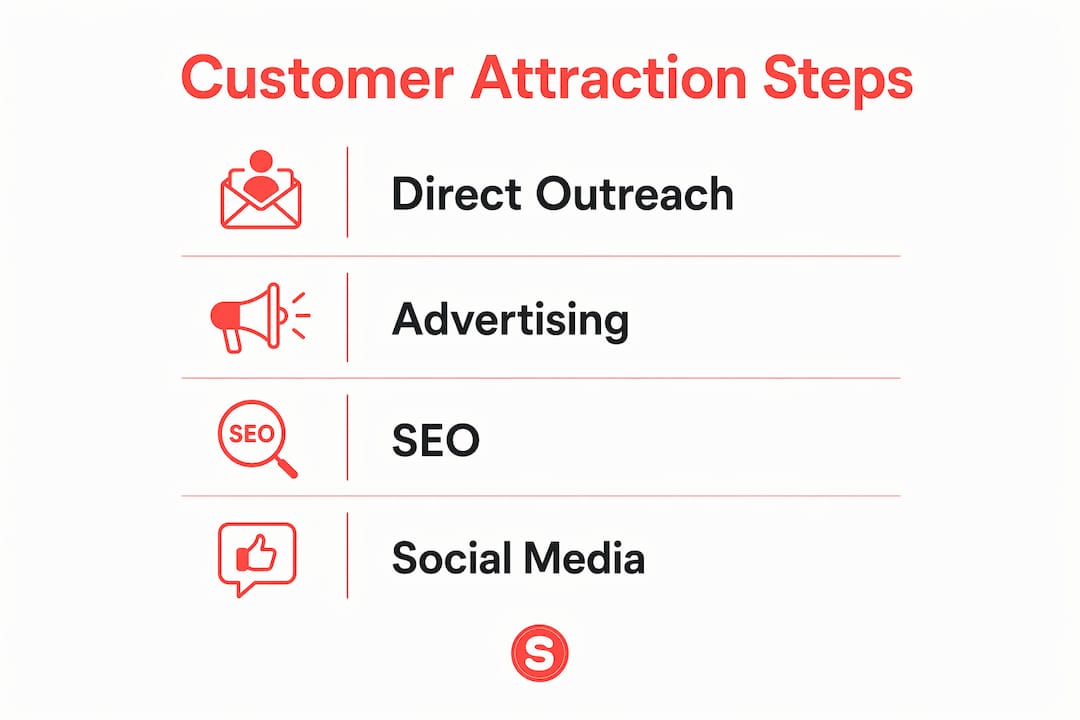
Search. Local SEO puts your restaurant in front of people actively looking for a place to eat. Google Business Profile, keyword-optimized menu pages, and consistent NAP (name, address, phone) data across directories all feed this channel. The catch: search takes 6–12 months to produce reliable results. That timeline makes it a long-term investment, not a quick fix.
-
Advertising. Paid social ads on Instagram and Facebook, Google Local Ads, and promoted posts deliver immediate visibility. Advertising works best when you know your audience segment well enough to write a message that speaks directly to their craving or occasion.
-
Direct outreach. This is the most underused channel in the restaurant industry. It means personally contacting potential customers, local businesses, community groups, or food bloggers before you spend a dollar on ads. Direct outreach gives you real feedback fast.
-
Word-of-mouth. A guest who tells three friends about your pasta is worth more than a paid impression. Word-of-mouth scales when the experience is genuinely memorable and when you actively create moments worth sharing.
Early-stage restaurants should prioritize Direct and Advertising for quick feedback. SEO becomes more valuable once you have validated what your guests actually want. Layering channels in this order prevents wasted budget and scattered effort.
Pro Tip: Pick one channel and run it for 30 days before adding a second. Restaurants that try to master all four at once rarely master any of them.
How can direct outreach help you gain new customers fast?
Direct outreach is the fastest way to get your first paying guests and validate your concept. Most restaurant owners skip it because it feels uncomfortable. That discomfort is exactly why it works: your competitors are not doing it.

The most effective framework is simple. Conduct five meaningful, back-and-forth conversations with potential customers every day. Five daily conversations over 20 days produces roughly 100 monthly touchpoints and a conversion rate around 5%. That is five new customers per month from personal effort alone, with zero ad spend.
Here is how to execute direct outreach for a restaurant:
-
Identify your beachhead segment. Do not try to attract everyone. Narrow your focus to the smallest group with an urgent, specific need your restaurant solves better than anyone nearby. For example: office workers within a five-minute walk who need a fast, quality lunch.
-
Find where they gather. LinkedIn groups, neighborhood Facebook groups, local Slack communities, and office building lobbies are all valid. Pick one.
-
Open with a problem, not a pitch. Message something like: “We noticed there aren’t many quick lunch spots near [office park]. What do you usually do for lunch?” This starts a real conversation.
-
Listen before you sell. The goal of the first conversation is information, not a reservation. Ask what they wish existed. Their answers sharpen your messaging for every channel that follows.
-
Make a specific offer. After two or three exchanges, invite them to try your restaurant with a concrete incentive. A free appetizer or a 20% first-visit discount removes the risk of trying somewhere new.
Pro Tip: Keep a simple spreadsheet tracking every conversation: date, name, what they said, and outcome. After 20 days, patterns emerge that no survey could reveal.
Manual outreach before automation reveals what messaging resonates and what falls flat. Running paid ads before this step means spending money to amplify an unvalidated message.
What digital marketing strategies draw in more restaurant guests?
Digital marketing for restaurants works best when it responds to customer behavior rather than a calendar. The common mistake is blasting the same post every Tuesday regardless of what guests are actually doing. Behavior-triggered communication delivers messages at the moment a customer is most likely to act, which produces stronger engagement than scheduled blasts.
Local SEO and your Google Business Profile
Your Google Business Profile is the single highest-return digital asset a restaurant owns. Keep hours accurate, respond to every review, upload fresh photos weekly, and add menu items with descriptions that include local keywords. A profile with recent photos and active responses ranks higher in local map packs than a dormant one with five-star ratings.
Social media content that triggers action
Post content tied to real customer moments: a guest’s birthday, a sold-out special, a behind-the-scenes prep video. These posts generate shares because they feel authentic. Generic “Come visit us!” posts generate almost nothing. Mobile marketing strategies for food and beverage brands show that short-form video and story formats consistently outperform static image posts for reach and saves.
Paid advertising targeting
Geo-targeted ads on Instagram and Facebook let you reach people within a specific radius of your restaurant. The most effective targeting combines location with behavioral signals: people who follow food accounts, who have recently searched for restaurants, or who have visited similar venues. Start with a small daily budget and test two ad creatives before scaling the winner.
| Digital channel | Best use case | Time to results |
|---|---|---|
| Google Business Profile | Local search visibility | 30–90 days |
| Instagram/Facebook ads | Immediate foot traffic | 1–7 days |
| Email marketing | Repeat visit campaigns | 7–14 days |
| Local SEO (website) | Long-term organic traffic | 6–12 months |
Consolidating your customer data into a single platform makes all of these channels more effective. When your email list, social followers, and reservation data live in one place, you can send the right message to the right person at the right time.
How can word-of-mouth and referrals drive sustainable growth?
Word-of-mouth is the most trusted form of marketing a restaurant can earn. A recommendation from a friend carries more weight than any ad. The challenge is that most restaurants wait for it to happen organically instead of building systems that make it happen consistently.
-
Make the experience worth sharing. A dish that looks stunning on a plate, a server who remembers a regular’s order, or a surprise dessert on a birthday: these are the moments guests photograph and post. Design at least one “shareable moment” into every visit.
-
Ask at the right time. The best moment to ask for a referral or review is immediately after a guest expresses satisfaction. A server saying “We’d love it if you shared your experience online” right after a compliment converts far better than a follow-up email three days later.
-
Build a simple referral program. Give existing guests a reason to bring someone new. A “bring a friend, both get a free dessert” offer costs little and creates a clear social script. Guests know exactly what to say when inviting someone.
-
Manage your online reputation actively. Encouraging authentic reviews from satisfied guests builds the social proof that converts a curious browser into a first-time visitor. Respond to negative reviews within 24 hours with a specific, non-defensive reply.
-
Create a loyalty loop. Guests who feel recognized return more often and refer more freely. A simple punch card or digital loyalty program gives people a reason to come back before they have fully decided to.
Pro Tip: Train your front-of-house staff to identify happy guests and ask for referrals in the moment. One genuine ask from a server beats ten automated review-request emails.
Customer engagement built on real interactions, not just promotions, produces the kind of loyalty that generates referrals without you having to ask every time.
What common mistakes stop restaurants from winning new customers?
The most common reason restaurants struggle to attract guests is not a bad product. It is scattered effort across too many channels with no clear measurement.
-
Spreading too thin. Mastering one channel before adding a second produces better results than running five channels at half effort. Pick the channel most likely to reach your beachhead segment and work it until it produces consistent results.
-
Inconsistent messaging. Your Instagram bio, Google Business Profile, and in-restaurant signage should tell the same story. When they conflict, guests lose trust before they even walk in.
-
Ignoring behavioral signals. Sending a promotion to every guest on the same day, regardless of their last visit or order history, wastes budget and annoys loyal customers. Use reservation and order data to trigger relevant messages.
-
Skipping measurement. Track at least three acquisition KPIs: new guest count per week, source of first visit (how did they hear about you?), and repeat visit rate within 60 days. These three numbers tell you what is working and what is not.
“Customer engagement is not only marketing’s responsibility. Every touchpoint, from the host stand to the check presentation, shapes whether a guest returns and whether they tell someone else.” This means your kitchen, your servers, and your social media manager all share the same goal.
Omnichannel consistency from online presence to in-person experience is what separates restaurants with loyal regulars from those constantly chasing new faces.
Key Takeaways
The most effective way to attract restaurant customers combines direct outreach for fast feedback, one mastered digital channel for scale, and a referral system that turns satisfied guests into your best marketing asset.
| Point | Details |
|---|---|
| Start with direct outreach | Five daily conversations over 20 days yields roughly 100 touchpoints and measurable conversions. |
| Pick one channel first | Master a single acquisition channel before layering a second to avoid scattered results. |
| Use behavioral triggers | Send messages based on guest actions, not calendar dates, for stronger engagement. |
| Build referral moments | Design one shareable experience per visit and ask for referrals immediately after a compliment. |
| Measure three KPIs | Track new guest count, first-visit source, and 60-day repeat rate every week. |
What I’ve learned about attracting restaurant customers that most guides miss
Most marketing advice for restaurants focuses on tactics: post more, run ads, get reviews. What it misses is the order of operations. The restaurants I’ve seen grow fastest all did the same thing first. They talked to people before they spent money.
Behavioral engagement changed how I think about retention. Sending a “we miss you” email to every lapsed guest on the same day is lazy and ineffective. Sending a personalized message triggered by 30 days of inactivity, referencing what that guest actually ordered, is a different thing entirely. The technology to do this is accessible to any restaurant owner today.
The hardest lesson is this: a full dining room is not built by marketing alone. It is built by every person on your team, every plate that leaves the kitchen, and every interaction a guest has before they even walk through the door. The restaurants that understand this do not just attract customers. They keep them.
— Barthelemy
How Sorbey helps restaurants attract and keep more guests
Attracting guests is only half the work. Keeping them coming back is where real growth happens.
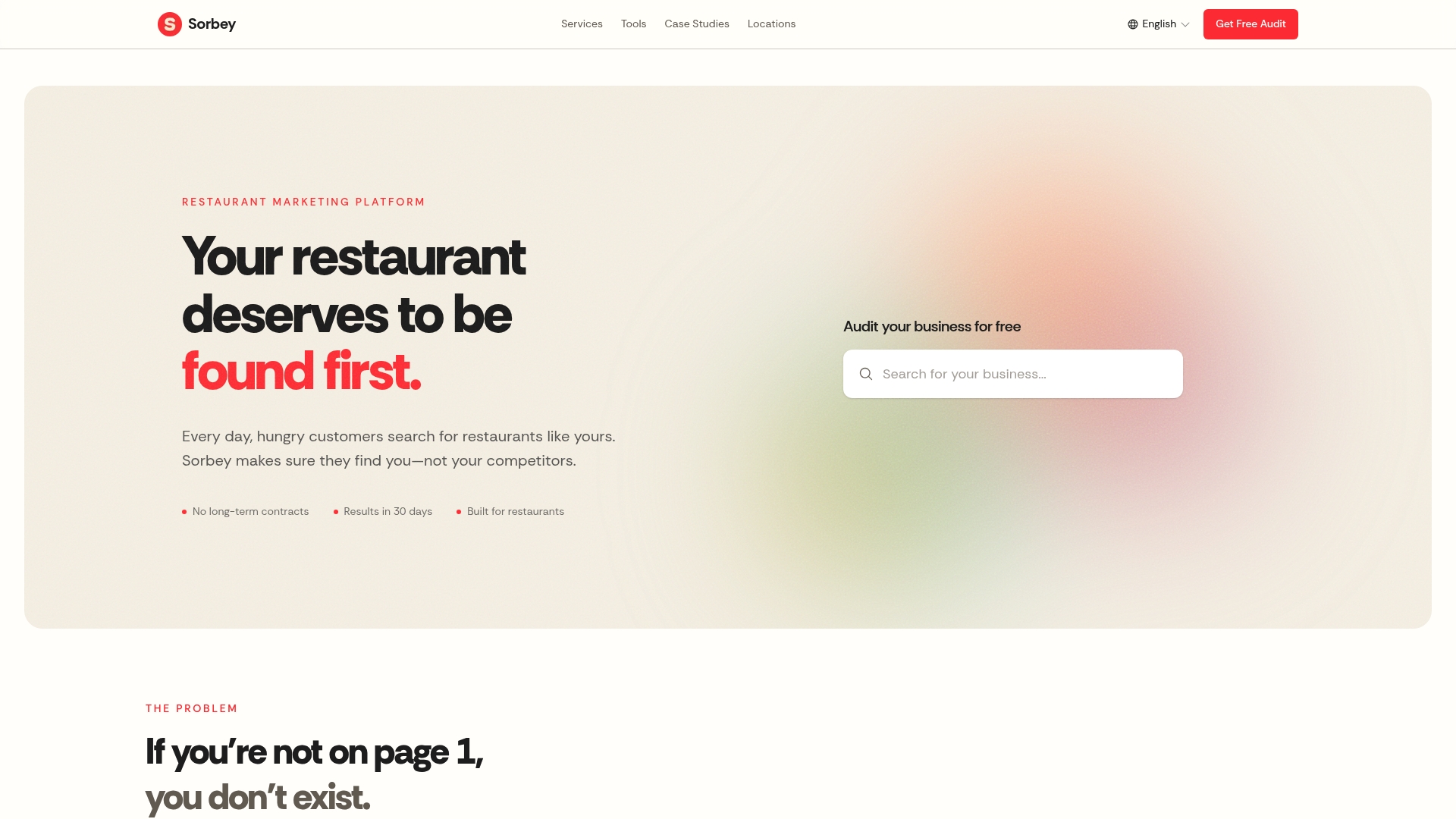
Sorbey is an all-in-one marketing platform built specifically for local restaurants. It brings together mobile marketing, customer engagement tools, and loyalty program management in a single place, so you stop juggling disconnected apps and start seeing the full picture of your guest relationships. From behavior-triggered messaging to restaurant marketing solutions that connect your online presence to your in-dining experience, Sorbey gives restaurant owners the tools to act on data without needing a marketing team. If you want to attract local diners and build lasting loyalty, Sorbey is built for exactly that.
FAQ
How to attract customers to a new restaurant quickly?
Direct outreach is the fastest method. Conduct five personal conversations daily with potential guests in your target area, and pair this with geo-targeted social ads for immediate visibility.
What is the most effective customer engagement strategy for restaurants?
Behavior-triggered messaging outperforms calendar-based blasts. Send promotions and follow-ups based on what a guest ordered or when they last visited, not on a fixed schedule.
How many marketing channels should a restaurant use at once?
Start with one channel and master it before adding a second. Spreading effort across multiple channels simultaneously reduces results on all of them.
How do referral programs work for restaurants?
A simple “bring a friend, both receive a reward” offer gives existing guests a clear reason and a social script to invite someone new, generating low-cost acquisition from trusted sources.
How long does local SEO take to attract restaurant customers?
Local SEO typically takes 6–12 months to produce consistent organic traffic. Use direct outreach and paid ads while your SEO presence matures.
Recommended
You might also like
Best Restaurant Loyalty Programs 2026: ROI Guide
Discover the best restaurant loyalty programs 2026 that boost repeat visits. Learn how Sorbey’s platform can transform your guest data strategy!
Why Mobile Marketing Matters for Business Growth
Discover why mobile marketing matters for business growth. Learn how optimizing for mobile drives traffic, conversions, and customer retention.
SF Dim Sum Restaurant Marketing Checklist for 2026
Transform your SF dim sum with our 2026 marketing checklist. Optimize your profile, showcase dishes, and attract customers fast!