
Blog
Local marketing strategies for restaurant growth in 2026
Learn the top local marketing strategies for urban restaurants in 2026, from Google Business Profile and reviews to AI, voice search, and geo-targeted ads.
Local marketing strategies for restaurant growth in 2026
TL;DR:
- Local marketing is essential for attracting nearby customers and building trust online.
- The 4 Ps framework (product, price, place, promotion) guides effective local marketing strategies.
- Consistent management of Google profiles, reviews, and community engagement drive long-term success.
Nearly 97% of consumers read online reviews before visiting a local business, which means your food could be extraordinary and your dining room still empty if people can’t find you or trust you online. Great cooking gets customers to come back. Local marketing is what gets them through the door the first time. For urban restaurant owners competing on every block, this guide breaks down the core frameworks, the channels that actually move the needle, and the modern tactics like AI and voice search that are reshaping how diners discover where to eat in 2026.
Table of Contents
- Understanding local marketing and why it matters
- Essential components: The 4 Ps of local restaurant marketing
- Key local marketing channels: What works best in 2026
- Strategic nuances: From reviews to AI and voice search
- Putting it all together: Creating your local marketing plan
- Our take: The hidden secrets behind local restaurant success
- Ready to grow? How Sorbey can power your local marketing
- Frequently asked questions
Key Takeaways
| Point | Details |
|---|---|
| Master the 4 Ps | Adapt product, price, place, and promotion strategies to match your local customer base. |
| Prioritize online reviews | Make Google Business reviews central to your marketing for trust and visibility. |
| Embrace new tech | Implement AI and voice search tactics to reach more local diners. |
| Consistency is key | Steady, ongoing efforts beat occasional promotions for long-term success. |
Understanding local marketing and why it matters
Local marketing means every strategy you use to attract customers who are physically close to your restaurant. It’s not about running national campaigns or chasing viral moments. It’s about being the obvious choice when someone two blocks away opens their phone and searches for a place to eat.
For urban restaurants, this matters more than ever. You’re competing with dozens of other spots on the same street, and the margin for being overlooked is razor thin. Local marketing closes that gap by making your restaurant visible, trustworthy, and relevant to the people most likely to walk in.
The 4 Ps framework gives you a structured way to think about this:
- Product: What you serve and how it connects to local tastes and culture
- Price: How your pricing reflects neighborhood expectations and drives trial
- Place: Where and how customers find and access you, online and offline
- Promotion: The channels and messages you use to reach your local community
“97% of diners read reviews before choosing where to eat. If your online presence doesn’t reflect the quality of your food, you’re losing customers before they ever arrive.”
Think of local marketing as your restaurant’s reputation engine. It’s always running, whether you’re managing it or not. The question is whether you’re steering it.
Now that we’ve established why local marketing matters, let’s look at how restaurants can put these principles into practice.
Essential components: The 4 Ps of local restaurant marketing
The 4 Ps aren’t just a business school concept. For urban restaurants, they’re a practical checklist you can apply every quarter.
Product means localizing what you offer. Source ingredients from nearby farms, name dishes after neighborhood landmarks, or build a seasonal menu around what’s fresh and local. Customers notice when a restaurant feels rooted in the community rather than dropped in from a franchise template.
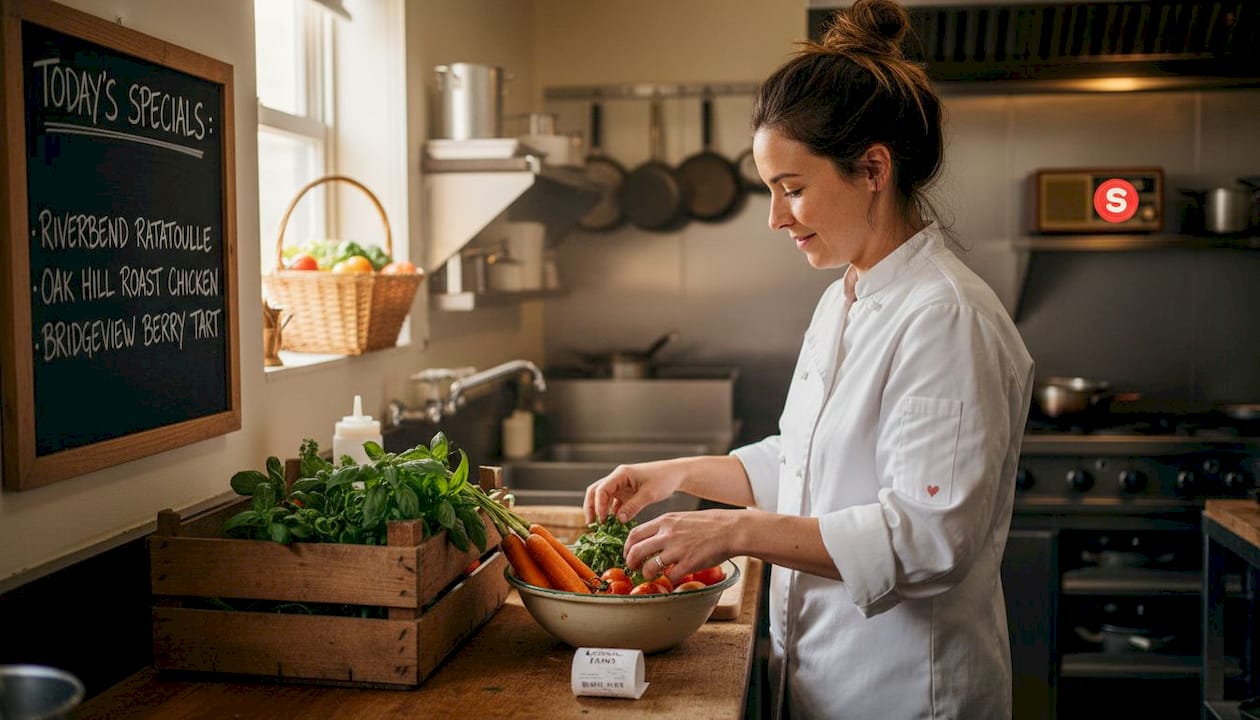
Price is about neighborhood fit. A happy hour deal aimed at the office crowd two blocks away, a lunch special for construction workers nearby, or a family bundle for weekend foot traffic are all examples of value promotions that speak directly to your immediate audience.
Place covers both physical and digital visibility. Your signage, your presence on Google Maps, your listing on delivery platforms, and even how easy it is to find parking all fall under place. If a customer can’t find you easily, a competitor will fill that gap.
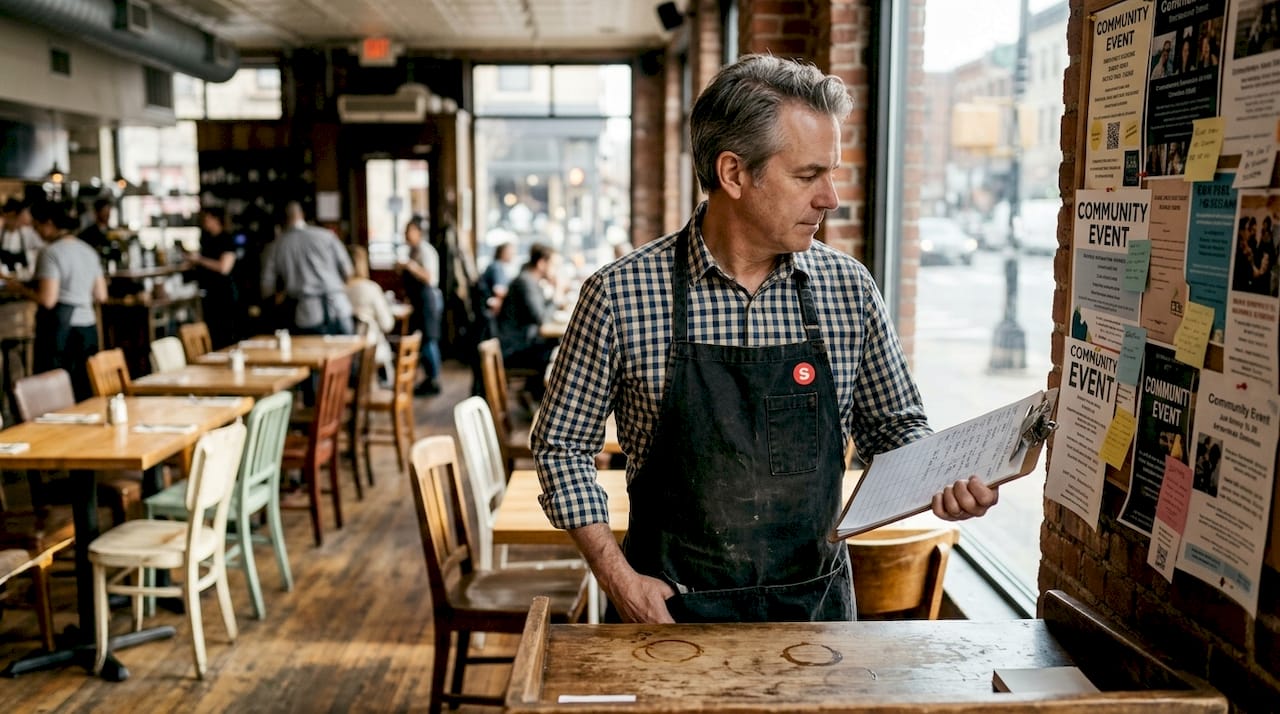
Promotion is where most owners spend their energy, but it works best when it’s hyper-local. Think community event sponsorships, partnerships with nearby businesses, flyers in apartment lobbies, and a steady stream of responses to online reviews.
| Factor | Chain restaurants | Independent restaurants |
|---|---|---|
| Product | Standardized menu | Locally adapted, flexible |
| Price | National promotions | Neighborhood-specific deals |
| Place | Corporate-managed listings | Owner-managed, more personal |
| Promotion | Big ad budgets | Community events, word of mouth |
Independents have a real advantage here. You can move faster, personalize more, and build genuine community ties that chains simply can’t replicate.
Pro Tip: Consistency in your marketing efforts matters far more than perfection. A Google profile updated every week beats a flawless profile updated once a year.
With the 4 Ps as a foundation, the next step is choosing the right marketing channels and tools for your restaurant.
Key local marketing channels: What works best in 2026
Not all channels are created equal. Some drive new foot traffic. Others build loyalty. Knowing which does which saves you time and money.
Google Business Profile (GBP) is the single most important free tool available to you. It’s the first thing most diners see when they search for restaurants nearby. A well-optimized restaurant Google Business guide shows up in the local map pack, displays your hours, photos, menu, and reviews all in one place. The ROI on this is unmatched because it costs nothing but time.
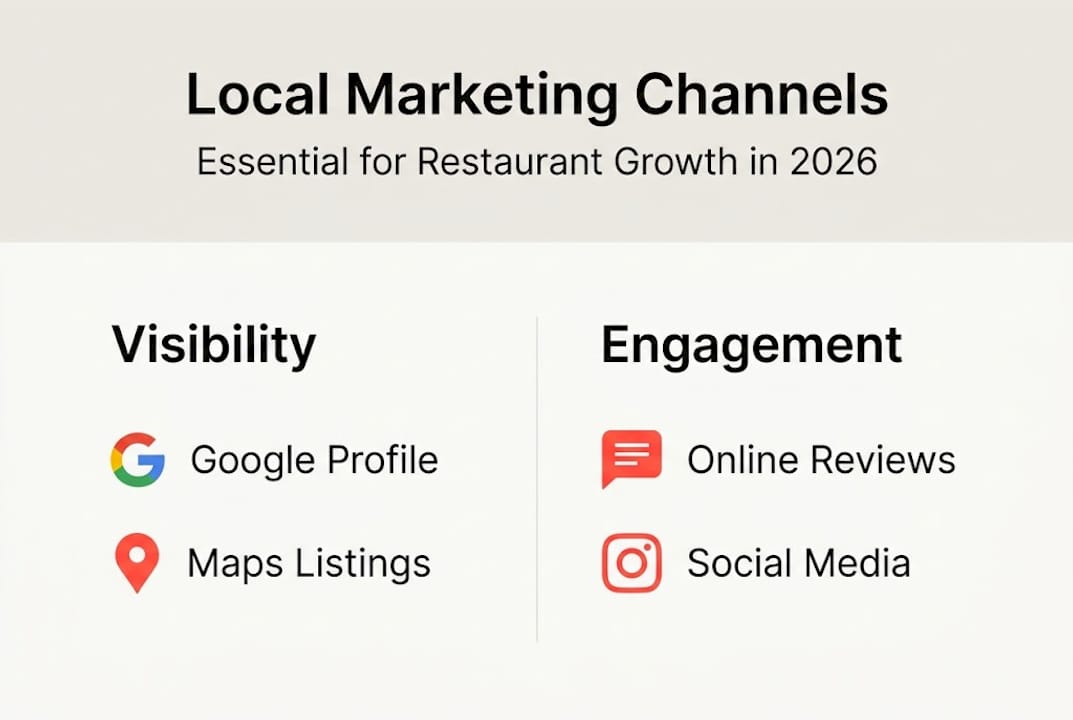
Online reviews are directly tied to revenue. 97% of local consumers read reviews before choosing a restaurant, and a one-star increase on Yelp has been linked to meaningful revenue gains. Make asking for reviews a standard part of your service flow.
Social media works differently than most owners expect. It’s better for retention and community building than for acquiring brand-new customers. Use it to show behind-the-scenes moments, celebrate regulars, and promote events.
Geo-targeted ads and voice search for restaurants are rising fast. More diners are now using voice assistants to find places to eat, which changes how you need to structure your online content.
Here’s a step-by-step approach to optimizing your core local channels:
- Claim and fully complete your Google Business Profile, including photos, hours, and menu
- Set up a system to ask satisfied customers for Google reviews after each visit
- Respond to every review, positive or negative, within 24 hours
- Schedule at least one community-facing event or promotion per month
- Run geo-targeted ads during peak decision-making hours, typically lunch and late afternoon
- Learn how to optimize Google My Business to stay ahead of algorithm changes
Choosing the best channels is just the start. Next, it’s about refining your tactics and integrating nuances that give you a competitive edge.
Strategic nuances: From reviews to AI and voice search
The mechanics of local marketing are straightforward. The nuances are where most restaurants either pull ahead or fall behind.
Reviews require active management. Responding quickly to a negative review shows potential customers that you care. Thanking someone publicly for a glowing review reinforces good behavior and makes that reviewer feel valued. Train your staff to mention reviews naturally at the end of a great meal.
AI and voice search are no longer optional. AI-driven local discovery is reshaping how diners find restaurants in 2026. When someone asks their phone “best tacos near me,” the algorithm pulls from your GBP data, your website content, and your review sentiment. If any of those are outdated or inconsistent, you lose the recommendation.
For voice search optimization tips, the key is writing content in natural, conversational language. Your menu descriptions, your About page, and your GBP answers should all sound like how a real person talks, not like a keyword list.
Geo-located ads work best for bottom-funnel searches, meaning people who are already hungry and deciding where to go right now. A well-placed restaurant geo advertising campaign during dinner hours can drive immediate foot traffic at a surprisingly low cost.
Here’s how to implement each nuance:
- Set a weekly reminder to check and respond to all new reviews
- Audit your GBP listing monthly for accuracy in hours, photos, and menu items
- Write your website FAQ section in question-and-answer format to capture voice queries
- Partner with a neighboring business for a cross-promotion event each quarter
- Study McDonald’s local marketing lessons to understand how even large chains localize their approach
Pro Tip: Update your Google Business Profile at least once a week with a new photo or post. Frequent updates signal to Google’s AI that your business is active, which improves your ranking in local search results.
These modern approaches are just one side of local marketing. To really excel, it’s key to view your efforts as an integrated, ongoing process.
Putting it all together: Creating your local marketing plan
A local marketing plan doesn’t need to be a 40-page document. It needs to be something you and your team will actually follow.
Start by combining everything covered so far into a simple weekly and monthly rhythm. Your Google Business Profile gets updated weekly. Reviews get responses within 24 hours. Social media posts go out three to four times a week. One community event or promotion gets planned each month. Geo-ads run during your peak decision windows.
Consistency in your marketing outweighs occasional perfection. A restaurant that shows up reliably in local search results, responds to every review, and runs a neighborhood event every month will outperform one that launches a brilliant campaign once and then goes quiet.
Here are the key steps to build your plan:
- Set up and fully optimize your Google Business Profile this week
- Assign one team member to own social media posting and review responses
- Schedule a recurring monthly community event or neighborhood promotion
- Launch a low-budget geo-targeted ad campaign and track results for 30 days
- Review your marketing metrics every quarter and adjust based on what’s working
- Set one specific, measurable goal per quarter, such as gaining 20 new Google reviews or increasing weekday lunch covers by 15%
Pro Tip: Small, achievable quarterly goals are more powerful than big annual ambitions. They keep your team motivated and give you clear data to learn from.
With these steps, you can move from theory to practice and see measurable improvements in foot traffic and engagement.
Our take: The hidden secrets behind local restaurant success
After working with local restaurants across competitive urban markets, one pattern stands out clearly. The owners who struggle with local marketing are almost never failing because they picked the wrong ad platform. They’re failing because they let the basics slip.
An outdated Google profile. Unanswered reviews sitting for weeks. A social media page that hasn’t been touched in months. These aren’t small oversights. They’re the reason a diner chooses the competitor across the street.
The contrarian truth is that paid ads only work when your foundational assets are solid. If your Google reviews matter most and your listing is incomplete, you’re paying to send people to a weak first impression. Fix the foundation first.
“A perfect launch means little if you don’t maintain your presence. Local marketing is the art of showing up, every day.”
The restaurants that win long-term aren’t the ones with the biggest budgets. They’re the ones that show up consistently, respond to every customer, and treat their community like a relationship worth investing in.
Ready to grow? How Sorbey can power your local marketing
Building a local marketing engine takes time, and most restaurant owners are already stretched thin running the kitchen and managing staff. That’s exactly where Sorbey restaurant marketing services step in.
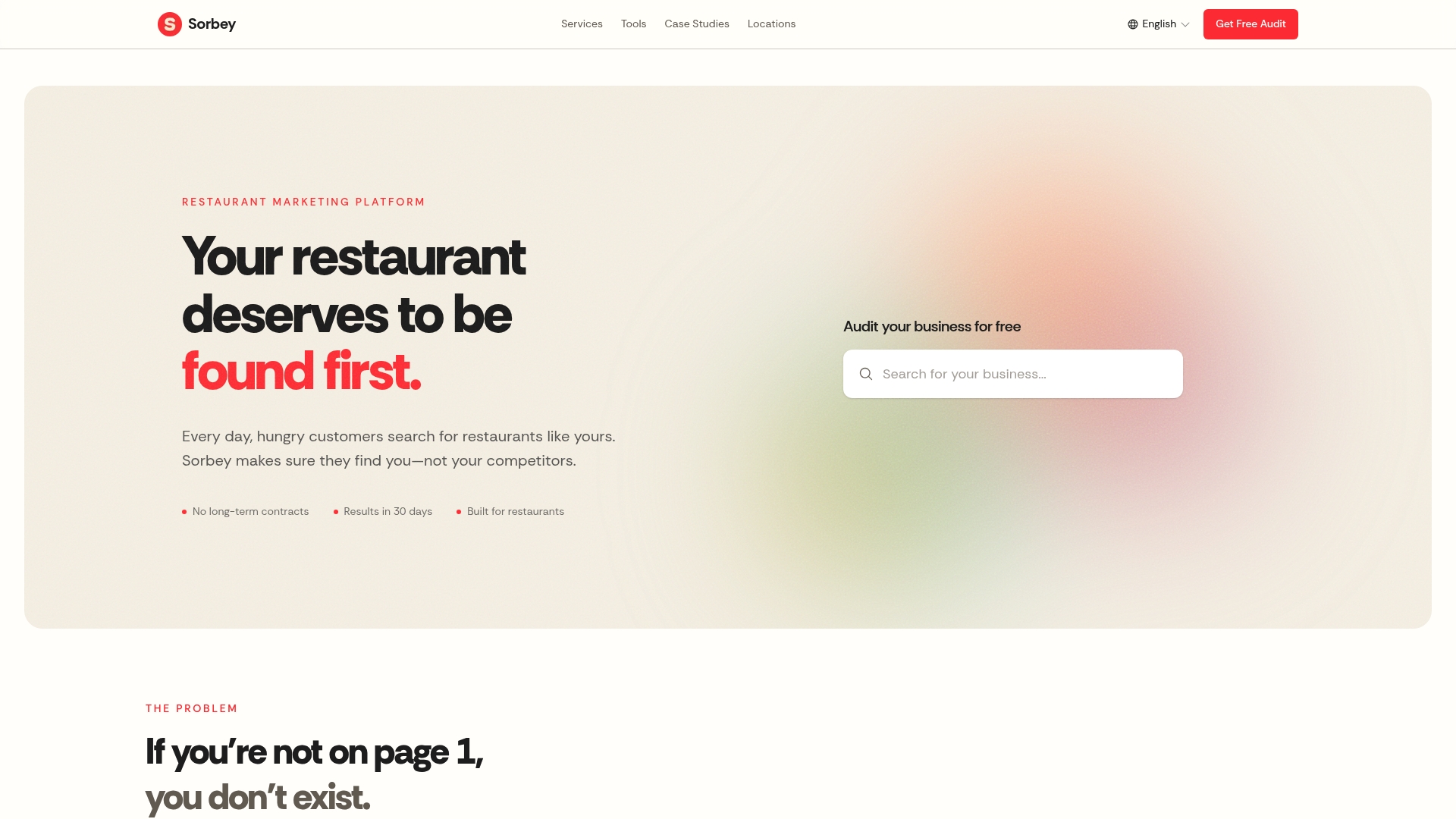
Sorbey handles the heavy lifting so you can stay focused on food and hospitality. From Google Business Profile optimization and geo-targeted ad campaigns to review management and AI-ready content, every service is built specifically for local restaurants. You get a full marketing system without needing to hire a full marketing team. If you’re ready to stop guessing and start growing, explore what Sorbey can do for your restaurant today.
Frequently asked questions
What is local marketing for restaurants?
Local marketing means targeting your promotional efforts to customers in your immediate area, using tactics like online reviews, local ads, and community partnerships. The 4 Ps framework covering product, price, place, and promotion gives you a practical structure to organize these efforts.
Why should urban restaurants focus on Google Business Profile?
Google Business Profile is often the first impression for diners and is free, high ROI, and trusted by 97% of local customers who read reviews before deciding where to eat. Keeping it accurate and active is the single highest-return action most restaurants can take.
How can AI and voice search improve my restaurant’s visibility?
AI and voice search ensure your restaurant shows up for natural language queries like “best tacos near me,” which is critical as voice-driven discovery becomes the dominant way diners find local spots in 2026.
What are the top three local marketing tactics for 2026?
Focus on optimizing your Google Business Profile, cultivating positive online reviews consistently, and using hyperlocal promotions like community events and geo-targeted ads to capture diners at the moment they’re ready to decide.
Recommended
You might also like

Best Restaurant Loyalty Programs 2026: ROI Guide
Discover the best restaurant loyalty programs 2026 that boost repeat visits. Learn how Sorbey’s platform can transform your guest data strategy!

Why Mobile Marketing Matters for Business Growth
Discover why mobile marketing matters for business growth. Learn how optimizing for mobile drives traffic, conversions, and customer retention.

SF Dim Sum Restaurant Marketing Checklist for 2026
Transform your SF dim sum with our 2026 marketing checklist. Optimize your profile, showcase dishes, and attract customers fast!