
Blog
Examples of Restaurant Loyalty Programs That Actually Work
Discover effective examples of restaurant loyalty programs that truly engage customers. Learn what sets the best apart and boosts revenue!
Examples of Restaurant Loyalty Programs That Actually Work
TL;DR:
- Choosing the right loyalty program involves balancing simplicity, personalized rewards, and operational feasibility to effectively drive repeat business. Effective programs reduce friction, utilize scarce exclusive drops, and rely on consistent data to foster long-term customer loyalty. Independent and small restaurants can succeed with low-tech, high-impact strategies like card-linked rewards and targeted re-engagement offers.
Picking the right loyalty program is one of the most consequential marketing decisions you’ll make for your restaurant. Too complex, and guests won’t bother. Too generic, and it blends into the noise. The best examples of restaurant loyalty programs share a common thread: they reduce friction, reward behavior that actually drives revenue, and make guests feel like insiders rather than points-collectors. This article breaks down how real programs work, what separates the strong ones from the forgettable ones, and how to identify which model fits your operation.
Table of Contents
- Key takeaways
- What to look for in examples of restaurant loyalty programs
- Real-world restaurant rewards program examples worth studying
- Loyalty program features and performance comparison
- Choosing the right program for your restaurant
- My honest take on what actually moves the needle
- How Sorbey helps restaurants build loyalty programs that stick
- FAQ
Key takeaways
| Point | Details |
|---|---|
| Frequent small rewards win | Programs that deliver rewards often keep guests coming back more reliably than big occasional payoffs. |
| Operational simplicity matters | Programs that complicate checkout or require heavy staff training tend to underperform even when the rewards are great. |
| Tiering builds aspirational loyalty | Structured tiers with annual resets let restaurants forecast liability and give guests a reason to spend more. |
| Drops drive engagement spikes | Limited-edition exclusive rewards tap into scarcity psychology and generate social buzz beyond standard points. |
| Personalization deepens retention | Rewards tied to a guest’s actual ordering habits outperform generic free-item offers in long-term retention. |
What to look for in examples of restaurant loyalty programs
Before you study specific programs, you need a filter. Not every loyalty structure that works for a national chain will transfer to your concept or customer base. Here are the criteria worth applying:
- Points structure and earning rate. How many points per dollar? Is the earning rate tiered by status? Higher earning rates like 50 points per dollar feel generous but require careful redemption thresholds to stay profitable.
- Enrollment friction. Programs requiring app downloads and lengthy sign-ups lose guests at the door. Card-linked enrollment, where guests earn points just by paying with a registered card, dramatically increases participation rates.
- Redemption flexibility. Can guests redeem on any visit, or are they locked into specific items? Rigid redemption rules reduce perceived value.
- POS and omni-channel integration. Fragmented loyalty data between your app, kiosks, and in-store creates inconsistent experiences that frustrate both customers and staff.
- Data and personalization. Does the platform capture what guests order so you can send relevant offers? Generic blasts underperform compared to targeted ones.
- Financial sustainability. What is your estimated rewards liability at scale? Programs with automatic reward triggers need forecasting models before launch.
- Engagement mechanics. Beyond points, does the program create moments of excitement through drops, surprises, or status recognition?
Pro Tip: Before benchmarking against chain restaurant loyalty programs comparison data, audit your own POS capabilities first. A sophisticated tiering model is useless if your system can’t track member spend across channels.
Real-world restaurant rewards program examples worth studying
These programs represent a cross-section of restaurant types, reward structures, and operational approaches. Each one has something specific to teach.
Lawry’s VIP Rewards
Lawry’s runs a clean tiered points program where members earn 1 to 1.2 points per dollar depending on their tier (VIP, VIP Prime, or VIP Platinum). Every 250 points triggers an automatic $25 reward with no manual redemption required. Tiers reset on a calendar year basis from January 1 to December 31, which gives members a clear window to earn status and gives the restaurant a predictable annual liability cycle. Membership goes inactive after 18 months without a transaction, which protects the program from carrying dead liability.
The lesson here is structure. Annual tier resets combined with automatic rewards remove ambiguity for the guest and forecasting complexity for the operator.
Chipotle’s Rewards on Repeat
Chipotle relaunched its program in April 2026 as “Rewards on Repeat,” a significant redesign focused on frequency and flexibility. The program delivers monthly free bonus rewards, recurring Freepotle promotions, a birthday reward with a 30-day redemption window, and easier overall redemption options. It is available across the US and Canada (excluding Quebec).
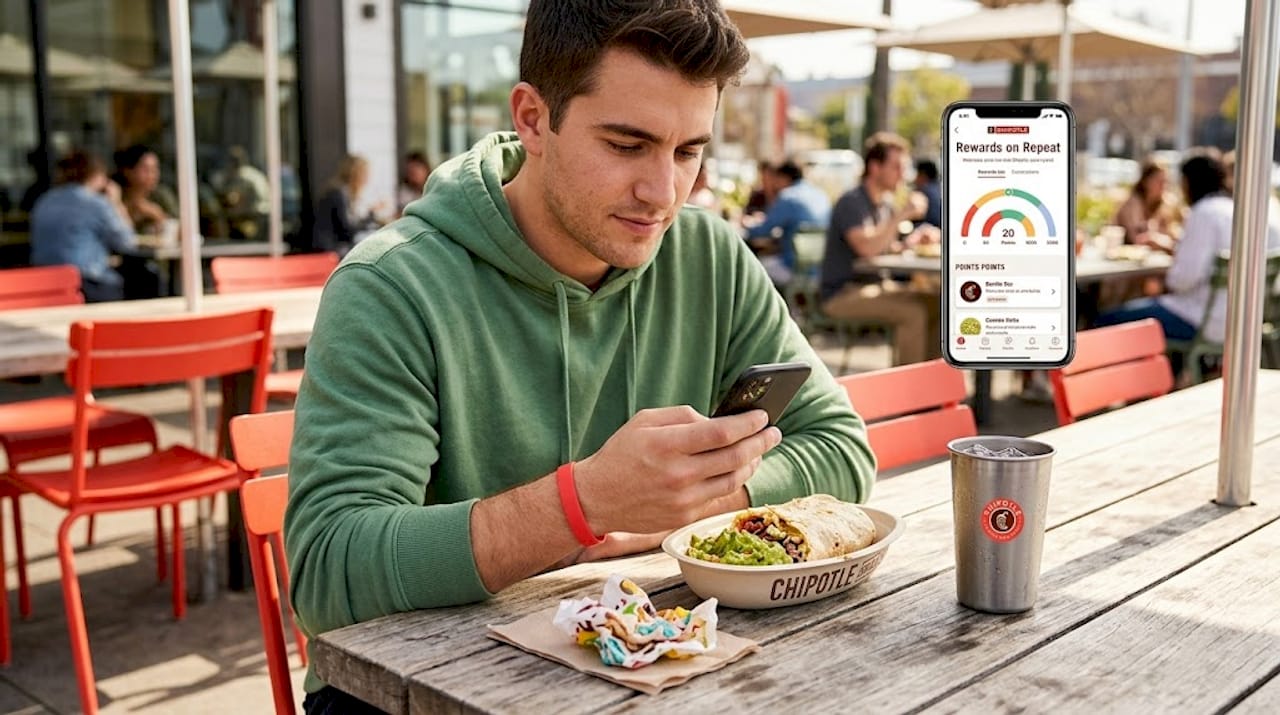
The redesign reflects a deliberate shift toward higher visit frequency by giving guests reasons to come back monthly, not just when they’ve accumulated enough points. That cadence keeps the brand top of mind and rewards habitual behavior rather than waiting for a big redemption moment.
King Taco’s loyalty program
King Taco’s program stands out for its earning generosity and clear operational guardrails. Guests earn 50 points per dollar spent, with points expiring six months after they are added. Redemption requires the guest to show a linked mobile number at checkout or through the app, capped at one qualifying item per day. The daily redemption limit is a smart operational guardrail that prevents abuse without creating friction for casual guests.
The mobile number redemption method is worth noting for independent operators. It eliminates the need for a physical card while keeping the in-store experience simple for staff.
Taco Bell and Wendy’s drops model
Both chains have integrated limited-edition “drops” into their loyalty programs, borrowing from sneaker culture. Taco Bell runs Taco Tuesday Drops and Wendy’s offers weekly exclusive swag for members only. A Queue-it consumer survey found that 45% of consumers are attracted by scarcity and 48% by exclusivity, which explains why these drops consistently outperform standard double-points promotions in engagement metrics.
Drops require scheduled inventory and campaign management to avoid stockouts, but the payoff in social buzz and repeat visits justifies the effort for brands with an active member base.
Independent restaurant approaches
Not every strong loyalty concept requires an app or a national budget. Independent restaurants use simple, effective perks like a free dessert during the guest’s birthday month, a 20% food discount on their dining anniversary, and “we miss you” discounts for guests who haven’t visited in 60 or 90 days. These programs often run through email or SMS platforms and require minimal POS integration.
The card-linked earning model deserves particular attention for independents. Guests register a credit or debit card, earn automatically on every visit, and never need to remember an app. Enrollment friction drops significantly, and participation rates climb.
Pro Tip: For independent restaurants, a simple three-tier approach works well: a birthday reward, a visit-frequency reward (like a free item after five visits), and a re-engagement offer. You can build local loyalty with those three elements alone before adding complexity.
Loyalty program features and performance comparison
Here is a side-by-side look at how these programs stack up across the metrics that matter most for operators.
| Program | Earning rate | Reward type | Tier structure | Key differentiator | Reported ROI signal |
|---|---|---|---|---|---|
| Lawry’s VIP Rewards | 1 to 1.2 pts per $1 | Auto $25 reward per 250 pts | 3 tiers, annual reset | Predictable automatic rewards | Forecasted via annual tier cycle |
| Chipotle Rewards on Repeat | Points based | Monthly free drops, birthday reward | Not tiered | Frequent touchpoints, monthly drops | High repeat visit frequency |
| King Taco | 50 pts per $1 | Free menu items | Not tiered | High earning rate, mobile redemption | Daily redemption cap limits liability |
| Taco Bell / Wendy’s drops | Standard points | Exclusive merchandise, food drops | Standard | Scarcity and exclusivity mechanics | Strong engagement spikes |
| Independent (best practice) | Varies | Free dessert, discounts, re-engagement | Optional | Low tech, high personalization | Up to 33% ROI at best-in-class programs |
The ROI spread across restaurant loyalty programs is wide. Domino’s achieves around 33% ROI while McDonald’s sits in the 11% to 20% range, illustrating how program design and reward generosity directly affect financial outcomes.
Choosing the right program for your restaurant
The best program is the one your operation can actually execute consistently. Here is how to match structure to situation:
- Small or independent restaurants should start with low-tech, high-touch programs. A birthday reward and a visit-frequency punch card (digital or physical) gives you data and repeat visits without complex tech.
- Mid-size or growing concepts benefit from a points-plus-tiers model where personalized rewards based on order history can be introduced as the customer database grows.
- Chains and franchises have the volume to make drops and tiered programs financially viable. The key is omni-channel consistency so a guest earns the same way whether they order in-store, through an app, or on a third-party platform.
- Tech-averse operations should prioritize mobile number or card-linked redemption over app-dependent programs. Fewer steps mean more enrolled members.
- Budget-conscious operators should focus first on re-engagement offers, which have a clear ROI because they target lapsed customers who already know and like you.
Pro Tip: Pilot your loyalty program with a single location or a limited customer segment before rolling it out fully. Collect redemption data, watch your average check size change, and adjust the earning rate before you lock it in program-wide. You can use free restaurant tools to model projected rewards liability before launch.
Successful restaurant loyalty strategies also require an honest look at your staff’s ability to support the program. A program your team can’t explain at the counter will fail regardless of how well it’s designed.
My honest take on what actually moves the needle
I’ve spent years watching restaurants build loyalty programs with the best intentions and end up with frustration on both sides of the counter. Here is what I keep coming back to.
The programs that perform best are not the most generous. They are the most consistent. Guests do not need a $25 reward every visit. They need to trust that the reward will show up when it’s supposed to. Lawry’s automatic reward trigger is a perfect example of this. When points hit 250, the reward applies. No redemption codes, no staff confusion, no “I thought I had enough points” conversations.
I’ve also seen too many operators chase complexity before they have the data to justify it. Tiering makes sense once you know what your top 20% of guests actually spend annually. Before that, a two-tier system (member vs. non-member) is enough to drive behavior.
The drop model genuinely excites me as a unique loyalty concept for restaurants with a strong brand identity. The scarcity mechanic works because it creates a reason to open the app or visit the restaurant that has nothing to do with hunger. That is powerful. But it requires campaign discipline, and most independent restaurants are not ready for that operationally until they have other fundamentals in place.
The uncomfortable truth is that most loyalty programs underperform not because the reward is wrong but because the data is fragmented. Fix your data infrastructure first. Then design rewards around what guests actually order.
— Barthelemy
How Sorbey helps restaurants build loyalty programs that stick
Sorbey is built specifically for local restaurants that want professional-grade marketing without an agency retainer. If the loyalty program examples in this article gave you ideas but you’re unsure how to execute them with your current setup, Sorbey’s restaurant marketing solutions cover the full lifecycle: program design, customer data integration, automated campaign management, and performance tracking. You get the tools to run birthday rewards, re-engagement offers, and even drop-style promotions without stitching together five different platforms. Sorbey makes it practical for independent operators and growing chains alike to run loyalty strategies that were previously only accessible to national brands.
FAQ
How do restaurant loyalty programs work?
Guests earn points or rewards based on purchases, then redeem them for free items, discounts, or exclusive perks. Programs track behavior through apps, mobile numbers, or linked cards.
What are the most common restaurant loyalty program ideas?
The most common structures include points-per-dollar programs, tiered status systems, punch cards, birthday rewards, and limited-edition drops. The right choice depends on your concept size and tech capabilities.
How do drops differ from standard loyalty rewards?
Drops are time-limited, exclusive items or experiences available only to loyalty members, designed to create urgency. Consumer data shows 48% of consumers are drawn by exclusivity, making drops more engaging than traditional double-points promotions.
What ROI can restaurants expect from loyalty programs?
ROI varies significantly. Best-in-class programs like Domino’s report around 33% ROI, while others like McDonald’s see 11% to 20%, depending on reward structure and redemption rates.
Can small restaurants run effective loyalty programs without an app?
Yes. Card-linked earning and mobile number-based redemption work well for independents. Simple programs like birthday discounts and re-engagement offers require minimal technology and consistently deliver measurable results.
Recommended
Potrebbe interessarti anche

Best Restaurant Loyalty Programs 2026: ROI Guide
Discover the best restaurant loyalty programs 2026 that boost repeat visits. Learn how Sorbey’s platform can transform your guest data strategy!

Why Mobile Marketing Matters for Business Growth
Discover why mobile marketing matters for business growth. Learn how optimizing for mobile drives traffic, conversions, and customer retention.

SF Dim Sum Restaurant Marketing Checklist for 2026
Transform your SF dim sum with our 2026 marketing checklist. Optimize your profile, showcase dishes, and attract customers fast!