
Blog
How analytics transform your restaurant marketing results
Discover the role of analytics in restaurant marketing and learn how data-driven strategies can enhance your marketing success and profitability.

How analytics transform your restaurant marketing results
TL;DR:
- Analytics-driven marketing is essential for restaurant growth and maximizing ROI.
- Four core analytics types are customer, sales, campaign, and social analytics.
- Small restaurants can quickly benefit by acting on simple data insights and avoiding overwhelm.
Most restaurant owners trust their gut when it comes to marketing. They run a promotion because it feels right, post on social media when inspiration strikes, and assume loyal customers will keep coming back. The problem is, gut instinct doesn’t scale, and it doesn’t tell you which $500 ad campaign brought in new tables and which one quietly wasted your budget. Analytics-driven marketing is the hidden engine behind restaurants that grow consistently, and this guide will show you exactly how to put it to work.
Table of Contents
- Why analytics matter for restaurant marketing
- Core types of analytics every restaurant should use
- Turning data into smarter marketing strategies
- Recent analytics trends driving restaurant success
- What most restaurants get wrong about analytics
- Elevate your marketing with Sorbey’s analytics solutions
- Frequently asked questions
Key Takeaways
| Point | Details |
|---|---|
| Analytics drive results | Restaurants using analytics consistently see better marketing performance and ROI. |
| Start simple | Customer and sales analytics are easy entry points with big impact. |
| From data to action | Turning insights into personalized strategies boosts customer engagement and repeat visits. |
| Follow the latest trends | AI, predictive analytics, and remarketing are redefining restaurant marketing success. |
| Accessible to all | Even small restaurants can leverage analytics for fast wins and competitive advantage. |
Why analytics matter for restaurant marketing
The restaurant industry runs on tight margins. A few percentage points of waste in your marketing budget can mean the difference between a profitable quarter and a stressful one. That’s why the shift from gut-feel decisions to data-driven strategy isn’t just a trend. It’s a competitive necessity.
When you rely on instinct alone, you’re making bets. Analytics lets you make investments. You learn which customer segments respond to which offers, which days drive the most foot traffic, and which menu items are quietly underperforming despite being fan favorites on paper. These aren’t small details. They’re the levers that move revenue.
Here’s what restaurants that embrace analytics can actually measure and act on:
- Customer behavior patterns: When guests visit, how often they return, and what makes them leave without booking again
- Campaign attribution: Which specific ad, email, or social post drove a measurable reservation or order
- Revenue per marketing dollar: The actual return on every dollar you spend promoting your restaurant
- Seasonal demand shifts: How to staff, stock, and market around predictable highs and lows
“Restaurants leveraging analytics see improved targeting and measurable ROI, making data adoption one of the fastest-growing priorities in the industry.”
The numbers back this up. Studies show that 70% of top-performing restaurants use analytics to guide their marketing decisions, compared to just 30% of underperformers. That gap tells a story. The restaurants winning in competitive markets like New York, Chicago, Los Angeles, and Miami aren’t just creative. They’re strategic, and data is their strategy.
The good news is that analytics tools have become dramatically more accessible. You don’t need a data science team or a six-figure software budget. The right platform, paired with the right mindset, puts powerful insights within reach for any restaurant operation.
Core types of analytics every restaurant should use
Not all analytics are created equal. For restaurant marketing, there are four core categories worth understanding. Each one answers different questions and drives different kinds of decisions.
Customer analytics tells you who your guests are. Age, location, visit frequency, average spend. This is the foundation of personalization. Without it, you’re marketing to everyone, which often means reaching no one effectively.
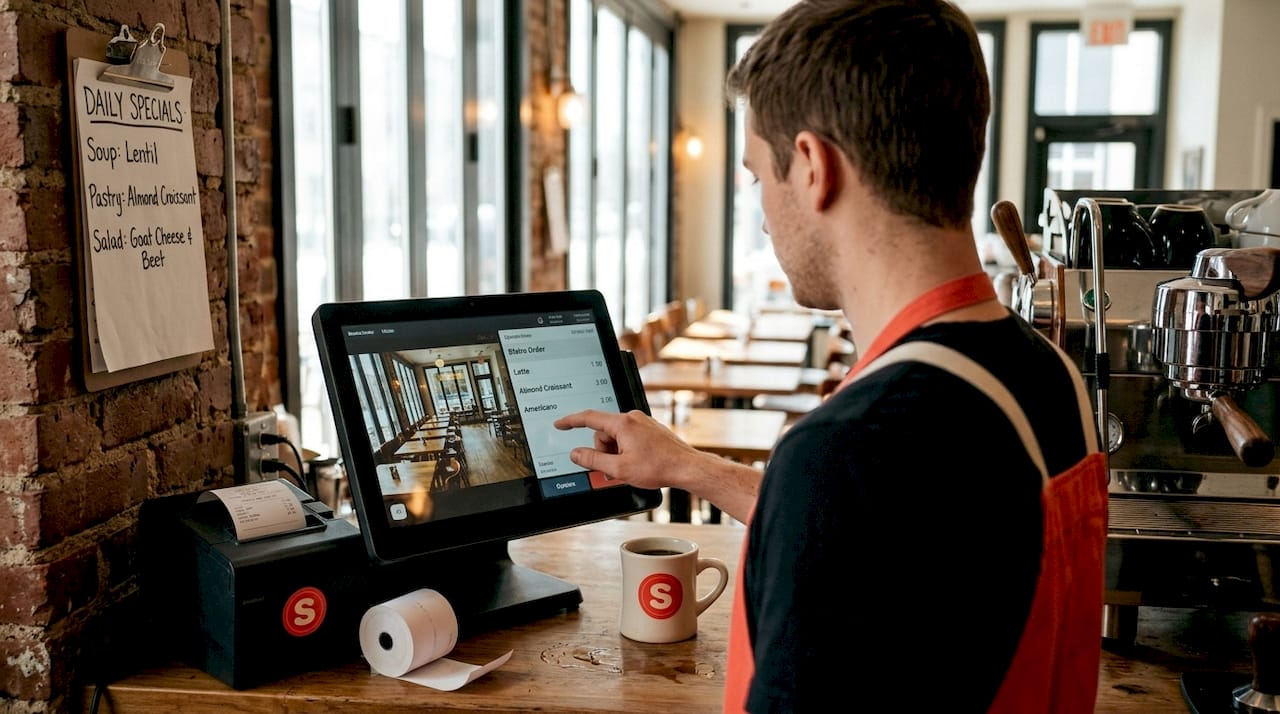
Sales analytics reveals what’s working on your menu and when. Which items drive the most revenue? Which promotions actually move covers? Sales and customer data analysis uncover winning menu items and promotion timing, so you stop guessing which specials are worth running.
Campaign analytics measures the performance of your marketing efforts directly. Open rates on emails, click-through rates on ads, conversion rates from social posts. These numbers tell you what’s earning its place in your strategy and what needs to be cut.
Social analytics tracks sentiment and engagement across platforms. Are guests posting about their experience? Are reviews trending positive or negative? Social signals are often the earliest warning system for problems and the clearest signal of what’s resonating with your audience.
Here’s a quick comparison to see what each type covers:
| Analytics type | Key questions answered | Typical metrics |
|---|---|---|
| Customer analytics | Who are my guests? How loyal are they? | Visit frequency, lifetime value, demographics |
| Sales analytics | What sells best? When do we peak? | Revenue per item, cover counts, time-of-day trends |
| Campaign analytics | Which marketing works? What’s the ROI? | Click-through rate, conversion rate, cost per acquisition |
| Social analytics | What do guests say online? What’s trending? | Sentiment score, engagement rate, review volume |
Getting started doesn’t require complexity. Most restaurants can begin with their POS (point-of-sale) system data and Google Analytics on their website. Add an email marketing platform with reporting built in, and you already have a meaningful data foundation to work from.
Pro Tip: Don’t try to master all four analytics categories at once. Pick the one most connected to your current marketing challenge, run it for 60 days, and let those insights shape your next campaign before expanding to another category.
Turning data into smarter marketing strategies
Data is only valuable when it changes what you do. Collecting numbers without acting on them is just noise. Here’s a practical sequence for moving from raw data to real marketing decisions:
- Gather your data from POS, email, social media, and your website in one place. Even a spreadsheet works to start.
- Identify patterns rather than outliers. Trends over time matter more than a single spike or dip.
- Segment your audience based on what the data reveals. New guests, lapsed guests, and high-frequency regulars each need different messaging.
- Build campaigns around segments. A reactivation email for guests who haven’t visited in 90 days performs very differently from a loyalty reward for your weekly regulars.
- Track campaign results against a clear benchmark. Use a restaurant marketing ROI calculator to measure whether your campaigns are producing real returns.
- Iterate. Every campaign teaches you something. Apply those lessons to the next one.
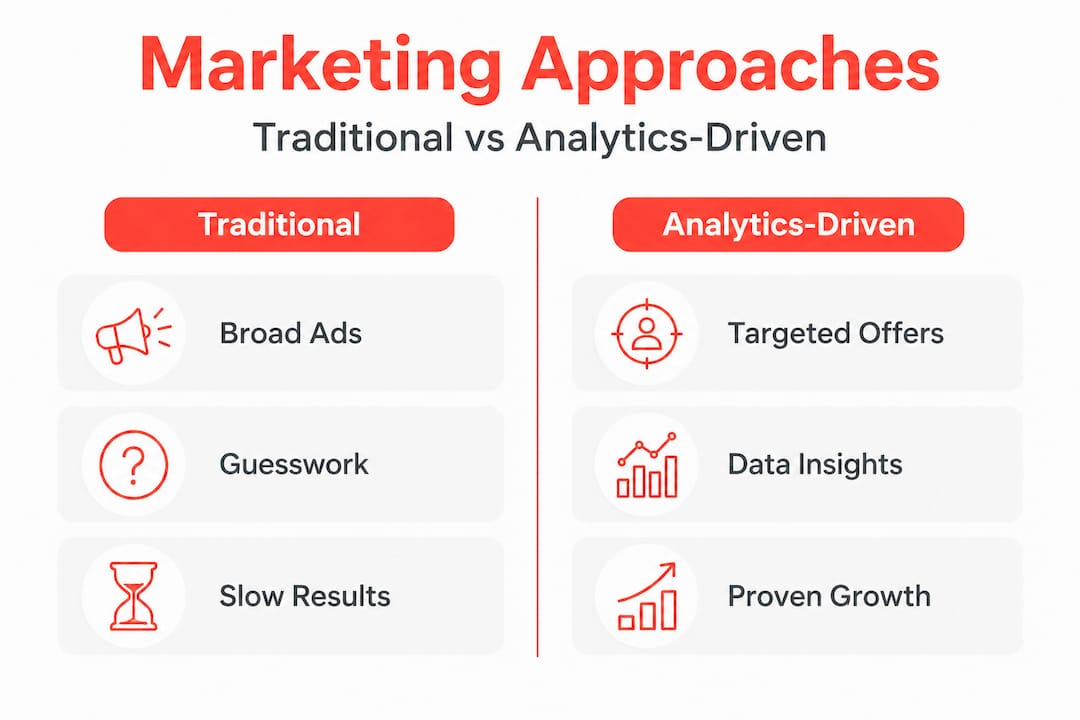
The contrast between traditional and analytics-driven marketing is stark when you lay them side by side:
| Approach | Traditional marketing | Analytics-driven marketing |
|---|---|---|
| Audience targeting | Broad, demographic-based | Segmented by behavior and data |
| Campaign decisions | Based on past experience or trends | Based on current performance data |
| Budget allocation | Equal across channels | Weighted toward highest-ROI channels |
| Success measurement | Vague (more traffic, more buzz) | Precise (cost per cover, revenue lift) |
| Iteration speed | Slow, seasonal adjustments | Fast, campaign-by-campaign refinement |
One of the highest-value applications is remarketing. Advanced analytics reveal personalization opportunities that boost loyalty and repeat visits. For example, if a guest orders your prix fixe dinner on a Friday night, you can target them with a similar offer the following month, specifically on a Friday, with messaging referencing the experience they already loved. That’s not marketing. That’s a conversation.
Pro Tip: Always test two versions of a campaign, even if the change is small (like a different subject line or a different image). Live analytics feedback will tell you within days which version is working, so you can put more budget behind the winner.
Recent analytics trends driving restaurant success
The tools and techniques available to restaurant marketers are advancing fast. Staying aware of what’s emerging keeps you ahead of competitors who are still running last year’s playbook.
AI-driven predictive analytics is moving from enterprise-only to accessible for mid-sized operators. These tools analyze historical data to forecast demand, predict when a customer is likely to churn (stop visiting), and recommend the best time to send a promotional offer. Some platforms can predict a slow Tuesday three weeks out and trigger a targeted promotion automatically.
Location-based marketing is changing how city restaurants attract new guests. Geofencing (creating a virtual boundary around a location) lets you serve targeted ads to people physically near your restaurant or near a competitor. For restaurants in dense urban markets, this precision is game-changing.
Real-time analytics dashboards allow marketing managers to make decisions mid-campaign rather than waiting for a post-mortem report. If an Instagram ad isn’t driving clicks by hour six, you can pause it, adjust the creative, and relaunch the same day.
Restaurants are leveraging digital analytics for dynamic pricing and targeted remarketing, practices that were once only possible for hotel chains and airlines. Now, a single-location restaurant in Chicago can use the same data playbook.
Here are the key trends worth tracking right now:
- AI-powered demand forecasting: Reduce food waste and staff smarter by predicting covers with higher accuracy
- Unified customer profiles: Combining POS, email, and social data into a single guest record for true 1:1 personalization
- Dynamic remarketing ads: Serving guests ads featuring the exact dishes they’ve ordered before
- Sentiment analysis: Automated monitoring of reviews and social mentions to catch reputation issues in real time
- Zero-party data collection: Asking guests directly for preferences through loyalty programs, so you don’t rely entirely on inferred data
Restaurants that adopted real-time analytics into their marketing operations reported measurable sales lifts, with some operators seeing 15 to 25% improvements in campaign conversion rates compared to static campaign approaches. These aren’t outliers. They’re becoming the new baseline for competitive restaurant marketing.
What most restaurants get wrong about analytics
Here’s an uncomfortable truth: most restaurant operators who say they “use analytics” are really just looking at last month’s sales report. That’s not analytics. That’s bookkeeping with better formatting.
Real analytics is forward-looking. It tells you what’s likely to happen and gives you the tools to influence that outcome. Staring at revenue totals after the fact is a lagging indicator, meaning it tells you what already happened. The best analytics blend lagging data (what happened) with leading indicators (what’s likely to happen next), so you can actually get ahead of problems rather than react to them.
The second big mistake is assuming analytics require a big operation to be worthwhile. That’s simply wrong. Even small and mid-sized restaurants report fast wins from analytics adoption. A 40-seat bistro in Austin can use a free Google Analytics account, a basic email platform, and their POS exports to build a functional data practice in a weekend.
“The restaurants that move the fastest on analytics aren’t the ones with the biggest budgets. They’re the ones willing to act on a single insight instead of waiting for perfect information.”
The third mistake is paralysis. Too many operators collect data and then feel overwhelmed by it, so they do nothing. The antidote is simple: commit to acting on just one insight per month. Maybe your data shows that guests who receive a birthday email spend 30% more on their next visit. Act on that. Build the birthday email. Measure it. That single win builds the confidence and momentum to tackle the next insight.
The restaurants we see growing fastest in competitive urban markets share one trait. They’re not intimidated by numbers. They start with what they have, act on what they learn, and add complexity only after the basics are working well. A solid digital marketing checklist can help you identify where to start and which data points matter most in your current stage of growth.
Elevate your marketing with Sorbey’s analytics solutions
Sorbey brings everything you’ve read in this guide into one place, built specifically for restaurant owners and marketing managers who want results without the complexity. Whether you’re just starting to explore what your data can tell you or you’re ready to build advanced segmentation and remarketing campaigns, Sorbey’s platform scales with you.
Explore restaurant marketing services designed to help local restaurants compete smarter using data, or start immediately with free restaurant analytics tools that give you a clear picture of what’s working right now. Sorbey’s tools are built for operators, not data scientists, so you get actionable insights without the learning curve. The restaurants seeing the biggest gains from analytics are the ones that started. Let Sorbey help you take that first step and keep building from there.
Frequently asked questions
What are the benefits of using analytics in restaurant marketing?
Analytics-driven marketing produces measurable improvements in ROI and targeting, helping restaurants make smarter decisions with every marketing dollar they spend.
Which restaurant analytics should I start with?
Start by tracking customer data, sales trends, and campaign performance. Sales and customer data analysis offers actionable insights for fast wins without requiring advanced tools.
How do analytics boost repeat customers?
Analytics enable personalized offers and remarketing strategies that bring guests back more often by serving them relevant, timely messages based on their actual behavior.
Are analytics suitable for small restaurants?
Absolutely. Smaller operators report fast wins from even basic analytics adoption, often seeing meaningful improvements within the first 60 to 90 days of consistent data tracking.
What analytics trends should I watch?
Focus on AI-based demand forecasting, location analytics, and dynamic remarketing for improved campaign targeting and stronger conversion rates across all your marketing channels.
Recommended
Potrebbe interessarti anche

Best Restaurant Loyalty Programs 2026: ROI Guide
Discover the best restaurant loyalty programs 2026 that boost repeat visits. Learn how Sorbey’s platform can transform your guest data strategy!

Why Mobile Marketing Matters for Business Growth
Discover why mobile marketing matters for business growth. Learn how optimizing for mobile drives traffic, conversions, and customer retention.

SF Dim Sum Restaurant Marketing Checklist for 2026
Transform your SF dim sum with our 2026 marketing checklist. Optimize your profile, showcase dishes, and attract customers fast!