
Blog
Menu optimization guide: boost profits and delight customers
Learn how to optimize your restaurant menu with data-driven steps to boost profit margins, increase customer engagement, and build long-term guest loyalty.
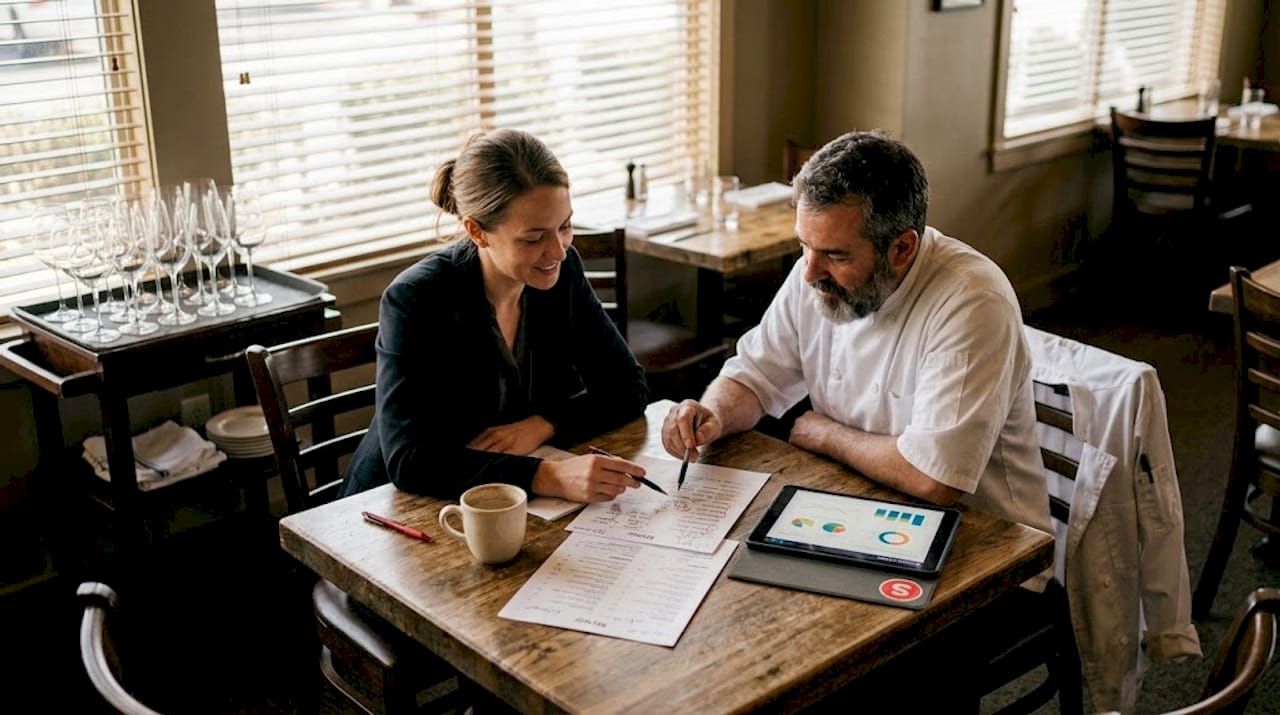
Menu optimization guide: boost profits and delight customers
TL;DR:
- Effective menu optimization balances guest preferences with restaurant profitability through data analysis and strategic layout.
- Regular review and incremental adjustments, grounded in sales data and guest feedback, sustain long-term menu success.
- Prioritizing high-margin, popular dishes and updating descriptions enhances guest engagement and boosts margins.
Your menu is your most powerful sales tool, and most restaurants are leaving serious money on the table by not treating it that way. A poorly structured menu confuses guests, buries your best dishes, and quietly drains your margins every single service. Menu optimization directly impacts restaurant profits and customer engagement, yet most owners only think about it when something is clearly broken. This guide walks you through every step of the process, from gathering the right data to making smart, strategic changes that keep guests coming back and your bottom line growing.
Table of Contents
- Understand the impact of menu optimization
- Gather your tools and data to get started
- Step-by-step: Optimize your menu for engagement and profits
- Avoid common mistakes and monitor results
- Why most menu optimization advice falls short
- Elevate your menu with expert help
- Frequently asked questions
Key Takeaways
| Point | Details |
|---|---|
| Menu drives profits | Smart menu changes can boost both margins and guest satisfaction significantly. |
| Data is essential | Knowing your sales and costs before making changes helps ensure successful optimization. |
| Iterate and monitor | The best results come from making adjustments regularly and tracking performance. |
| Expert support available | Tools and services can simplify the menu optimization process for busy restaurant teams. |
Understand the impact of menu optimization
Menu optimization is the practice of balancing what guests love with what makes your restaurant money. It is not just about cutting underperforming dishes or adding trendy items. It is a structured process that looks at sales data, food costs, and guest behavior to make every item on your menu earn its place.
Smart menu design can boost profits and increase customer engagement in ways that go far beyond a simple price increase. When you understand which dishes drive margin and which ones just take up space, you can build a menu that works harder for you every shift.
Guest psychology plays a bigger role than most managers realize. Studies in menu engineering, a method developed to categorize dishes by popularity and profitability, show that strategic placement of high-margin items in visual “sweet spots” on a menu can increase their order rate significantly. Guests rarely read a menu top to bottom. They scan, and your layout either guides them toward your best items or leaves it to chance.
Here is a quick look at how menu categories break down in menu engineering:
| Category | High popularity | Low popularity |
|---|---|---|
| High margin | Stars (promote these) | Puzzles (reposition or reprice) |
| Low margin | Plowhorses (reduce cost or reprice) | Dogs (consider removing) |
Restaurants that have restructured their menus around this framework consistently report stronger check averages and less food waste. The menu optimization benefits are real and measurable, not just theoretical.
Key areas where optimization makes a direct difference:
- Profit margins: Removing low-margin, low-popularity items reduces food cost percentage.
- Guest satisfaction: Cleaner, easier-to-read menus reduce decision fatigue.
- Order mix: Strategic placement drives guests toward items you want to sell.
- Staff efficiency: Fewer menu items often means faster prep and fewer errors.
Your restaurant website best practices should mirror these same principles online, since many guests preview your menu digitally before they ever walk through your door.
Gather your tools and data to get started
To make meaningful changes, you need the right foundation. Before you redesign a single section or retire a dish, you need hard data in front of you.
Analyzing menu data is the foundation of profitable design changes, and the good news is that most of what you need is already sitting in your systems. You just need to pull it together.
Here are the core data sources you should gather before starting:
- POS (point-of-sale) reports: Item-level sales volume, revenue per dish, and time-of-day trends.
- Food cost breakdowns: Ingredient costs per dish, ideally as a percentage of menu price.
- Customer feedback: Online reviews, comment cards, and direct staff observations.
- Competitor menus: What nearby restaurants charge for similar items and how they structure their offerings.
- Inventory reports: Which ingredients are used across multiple dishes (this affects cost efficiency).
Once you have this data, you need somewhere to work with it. Your options range from simple to sophisticated:
| Tool type | Benefits | Limitations |
|---|---|---|
| Spreadsheets | Free, flexible, familiar | Time-consuming, manual errors |
| POS analytics | Integrated, real-time data | Limited to sales metrics |
| Menu engineering software | Automated categorization, visual reports | Subscription cost |
| AI-powered tools | Fast insights, pattern recognition | Learning curve |
The restaurant menu tools available today make this process far faster than it used to be. Even a basic spreadsheet comparing item sales volume against food cost percentage will reveal patterns you probably did not know existed.

Pro Tip: Run your POS report for at least 90 days of sales data before drawing conclusions. A single week or even a month can be skewed by seasonal demand, local events, or promotions. The more data you have, the more confident you can be in your decisions.
Do not skip the qualitative data either. What your servers hear from guests every night is valuable intelligence that no spreadsheet captures.
Step-by-step: Optimize your menu for engagement and profits
Once you have your tools and data, you are ready to start making impactful changes. Here is a clear workflow to follow:
-
Analyze current menu sales and cost data. Pull your 90-day POS report and build a simple table showing each item’s sales volume and food cost percentage. This gives you the raw material for every decision that follows.
-
Categorize items using menu engineering. Sort every dish into one of the four categories: Stars, Puzzles, Plowhorses, or Dogs. Be honest. Emotional attachment to a dish your chef loves but guests rarely order is one of the most common profit killers.
-
Apply menu engineering principles. Menu redesigns should prioritize high-margin and popular dishes. Place your Stars in the top-right of each menu section, use boxes or bold text to draw the eye, and write descriptions that emphasize flavor and experience rather than just listing ingredients.
-
Redesign layout and descriptions. Limit each section to 7 items or fewer. Research consistently shows that more choices lead to decision paralysis, which means guests take longer to order and often default to the safest, not the most profitable, option. Rewrite descriptions for your Stars to make them irresistible.
-
Test before full rollout. Introduce changes gradually. Run a soft launch with your regulars or test a revised section for two weeks before printing new menus across all locations.
Here is a before-and-after snapshot of what this process can look like:
| Item | Before (food cost %) | Action taken | After (food cost %) |
|---|---|---|---|
| Grilled salmon | 38% | Repriced, moved to featured spot | 29% |
| Caesar salad | 22% | Kept, improved description | 22% |
| Mushroom risotto | 41% | Removed | Removed |
| Signature burger | 27% | Promoted as Star | 27% |
Pro Tip: Use your servers as a test group. Brief them on the changes and ask for guest reactions during the first week. Their feedback is faster and cheaper than a formal survey.
You can also optimize your restaurant digital experience by applying the same principles to your online menu, since digital menus drive a growing share of ordering decisions.
Avoid common mistakes and monitor results
Optimizing your menu is not a one-time task. Here is how to avoid setbacks and track your progress over time.
The most common mistakes restaurants make during menu optimization:
- Changing too much at once. Overhauling the entire menu in one go confuses regulars and makes it impossible to know which change drove which result.
- Ignoring customer feedback. Data tells you what is happening. Guest feedback tells you why. You need both.
- Unclear pricing. Prices that end in odd numbers, lack visual hierarchy, or are displayed inconsistently signal a lack of professionalism and can suppress orders.
- Skipping the follow-up. Most restaurants make changes and never measure the outcome. This is where the real value gets lost.
- Seasonal blind spots. Failing to adjust for seasonal ingredient costs can turn a Star into a Plowhorse overnight.
“Small, controlled changes tracked against clear KPIs are how the most profitable restaurants manage their menus. One change at a time, measured over 30 to 60 days, beats a full redesign every time.”
Continuous menu review ensures long-term profitability, and the metrics you track should be consistent every cycle. Focus on these key performance indicators:
- Item sales mix: Which dishes are being ordered more or less after changes.
- Average check size: Is it trending up after you promoted your Stars?
- Food cost percentage: Are your margins improving across the board?
- Guest satisfaction scores: Online reviews and direct feedback after the update.
- Table turn time: Simpler menus often speed up ordering and improve table efficiency.
Set a calendar reminder to review these numbers every 30 days. Treat it like a financial review, not an afterthought.
Why most menu optimization advice falls short
Most guides you find online focus on the quick wins: change your menu colors, use prettier fonts, add a few mouthwatering photos. These things matter, but they are not what drives sustained profit growth. The restaurants that see lasting results treat optimization as an ongoing routine, not a one-time project.
Here is the uncomfortable truth: most owners do the work once, see a modest improvement, and move on. Six months later, food costs have crept back up, a few underperformers have snuck back onto the menu, and the gains have evaporated. Real optimization requires a rhythm. Monthly data reviews, seasonal adjustments, and a willingness to keep questioning what is on the plate and why.
There is also a surprising upside to this discipline. When you are consistently reviewing data, you start to notice guest patterns that spark genuinely creative ideas. A dish that sells well only on weekends might inspire a limited weekend special. A long-term menu strategy built on real data actually gives your team more creative freedom, not less, because you know what your guests respond to.
Stop treating your menu like a document and start treating it like a living part of your business.
Elevate your menu with expert help
For those looking to fast-track results or need expert backup, here is where to start. Knowing what to change is one thing. Having the tools and support to act on it quickly is another.
Sorbey’s restaurant marketing services are built specifically for local restaurants that want to grow smarter, not just harder. From data-driven menu strategy to digital presence optimization, the platform gives you everything in one place. You can also start right now with free restaurant tools designed to surface insights fast, without needing a data team. Whether you want to run the numbers yourself or get custom guidance, Sorbey AI solutions are ready to support your next menu cycle and every one after that.
Frequently asked questions
What is menu optimization and why is it important for restaurants?
Menu optimization is the process of refining each dish for profit and engagement, leading to higher sales and stronger customer loyalty over time.
How often should I review and update my restaurant menu?
Review your menu at least twice a year, but track key metrics monthly to catch needed changes early. Continuous review is what separates consistently profitable menus from stagnant ones.
Which data points are most critical when optimizing a menu?
Focus on item sales volume, food cost percentage, and customer feedback. Menu data analytics are the starting point for every effective optimization decision.
What common mistakes should I avoid in menu redesign?
Avoid changing too many items at once and never skip tracking the results. Making changes without tracking outcomes is the most common reason optimization efforts fail to stick.
Recommended
Potrebbe interessarti anche

Best Restaurant Loyalty Programs 2026: ROI Guide
Discover the best restaurant loyalty programs 2026 that boost repeat visits. Learn how Sorbey’s platform can transform your guest data strategy!

Why Mobile Marketing Matters for Business Growth
Discover why mobile marketing matters for business growth. Learn how optimizing for mobile drives traffic, conversions, and customer retention.

SF Dim Sum Restaurant Marketing Checklist for 2026
Transform your SF dim sum with our 2026 marketing checklist. Optimize your profile, showcase dishes, and attract customers fast!