
Blog
Proven restaurant marketing types to boost revenue
Discover the most effective restaurant marketing types for city restaurants. Compare ROI, tactics, and strategies to grow revenue and retain more customers.

Proven restaurant marketing types to boost revenue
Running a restaurant in a major U.S. city means competing against hundreds of options within a few city blocks. The marketing landscape is wide open, with digital ads, loyalty programs, social media, community events, and more all competing for your budget and attention. Not every tactic delivers equal results, and choosing the wrong mix can drain resources without moving the needle. This guide breaks down the core types of restaurant marketing, what each one actually delivers in ROI, and how to match strategies to your specific concept so you can make smarter decisions starting today.
Table of Contents
- How to evaluate restaurant marketing strategies
- Digital marketing: Visibility and engagement
- Promotional tactics: Offers, events, and contests
- Retention and loyalty strategies: Repeat business engine
- Community engagement: Partnerships and local events
- Comparing restaurant marketing types: What works for whom
- Transform your restaurant marketing with the right tools
- Frequently asked questions
Key Takeaways
| Point | Details |
|---|---|
| ROI comes first | Retention and loyalty deliver 3x more ROI compared to new customer acquisition strategies. |
| Digital leads results | SEO, review management, and automated email/SMS grow traffic and engagement in city markets. |
| Mix and match | The best marketing blends digital, promotional, loyalty, and community tactics for sustained customer growth. |
| Segment matters | Tailor marketing types based on concept—fine dining, fast-casual, and family/casual each require different approaches. |
| Avoid margin killers | Carefully balance discounts and promotions to protect profitability and brand image. |
How to evaluate restaurant marketing strategies
Before spending a single dollar, you need a decision framework. The four criteria that matter most are ROI potential, segment fit, market relevance, and how well a tactic integrates with your daily operations. A loyalty program that requires staff training and POS integration is a different investment than a boosted Instagram post.
Here is what the numbers say about where to focus first:
- Retention vs. acquisition: Retention brings 3.3x ROI compared to customer acquisition, making it the highest-leverage starting point for most restaurants.
- Budget baseline: Most restaurants allocate 3-6% of revenue to marketing, with new openings sometimes pushing to 7-10%, according to marketing budget benchmarks.
- Segment needs vary: Fine dining leans on PR and exclusivity. Fast-casual needs speed and social reach. Family and casual concepts benefit most from community presence and value-driven offers.
- Integration matters: A promotion that your POS system cannot track is a promotion you cannot optimize.
Pro Tip: Before building your marketing calendar, run through a digital marketing checklist to confirm your foundational assets (website, Google profile, email list) are in place. Retention-first strategies only work when the basics are solid.
Digital marketing: Visibility and engagement
Digital marketing is the backbone of any city restaurant’s growth plan. It covers local SEO, review management, email and SMS campaigns, social media, and paid advertising. Each channel serves a different purpose, but they work best when connected.
Local SEO means optimizing your Google Business Profile so you show up when someone searches “best tacos near me” at 7 p.m. on a Friday. Local SEO drives 48% of traffic to restaurant websites, and 92% of diners read reviews before choosing where to eat. That means your review management strategy is not optional. Responding to reviews, flagging fake ones, and actively requesting feedback from happy guests are all part of the job. For a deeper look at getting found online, the restaurant online promotion guide covers the full picture.
Email and SMS are the highest-ROI digital channels available. Email delivers $42 for every $1 spent, and SMS open rates sit at 90%, making it one of the most direct lines to your guests. Automation makes both scalable without adding headcount.
| Channel | Avg. ROI | Best use case |
|---|---|---|
| Email marketing | $42 per $1 | Loyalty, re-engagement, events |
| SMS campaigns | 45% conversion | Flash deals, reservation reminders |
| Google Ads | $1.95 avg. CPC | New customer acquisition |
| Social media (organic) | Brand awareness | Community building, UGC |
| Local SEO | Long-term traffic | Ongoing visibility |
For paid ads, geo-targeted Google and Meta campaigns let you reach people within a specific radius of your location, which is critical in dense urban markets. Check the digital marketing benchmarks to see how your spend compares to industry averages. The search engine optimization guide and restaurant SEO trends 2026 are both worth bookmarking for ongoing reference.
Pro Tip: Connect your POS system to your loyalty and SMS platform. When a guest hits a spend threshold, an automated message goes out with a reward. No manual work, and the conversion rate is significantly higher than a generic blast.
Promotional tactics: Offers, events, and contests
Promotions drive foot traffic and create buzz, but they carry real risks if used carelessly. The goal is to use offers strategically, not as a crutch.
Effective promotional formats include:
- Happy hour and time-limited deals: Drive traffic during slow periods without training guests to expect discounts at peak times.
- Themed events: Wine dinners, trivia nights, and chef’s table experiences create premium experiences that justify full pricing.
- Contests and giveaways: Social media contests build your follower base and generate user content, both of which have lasting value.
- Calendar-based offers: Tie promotions to holidays, local events, or seasonal ingredients to keep them feeling fresh and relevant.
The risk with promotions is margin erosion. Avoid over-discounting by setting clear rules: a promotion should either bring in a new customer segment or reward an existing loyal one. Discounting to fill seats on a Tuesday is very different from a loyalty reward that brings back a guest who has not visited in 60 days.
Acquiring a new customer costs 5 to 7 times more than retaining an existing one. A 5% increase in customer retention can boost profits by up to 95%. Build your promotional calendar around retention triggers, not just acquisition.
For more on structuring offers without hurting your brand, the restaurant marketing best practices and online restaurant promotion resources offer practical frameworks.
Retention and loyalty strategies: Repeat business engine
If digital marketing gets guests in the door, retention keeps them coming back. This is where the real profit lives.
Loyalty programs are the most direct retention tool. Structured programs can boost repeat visit rates by 2.5x compared to non-members, and the cost per visit drops significantly over time. Points-based systems, visit rewards, and tiered memberships all work, but the key is making the program easy to join and easy to use.
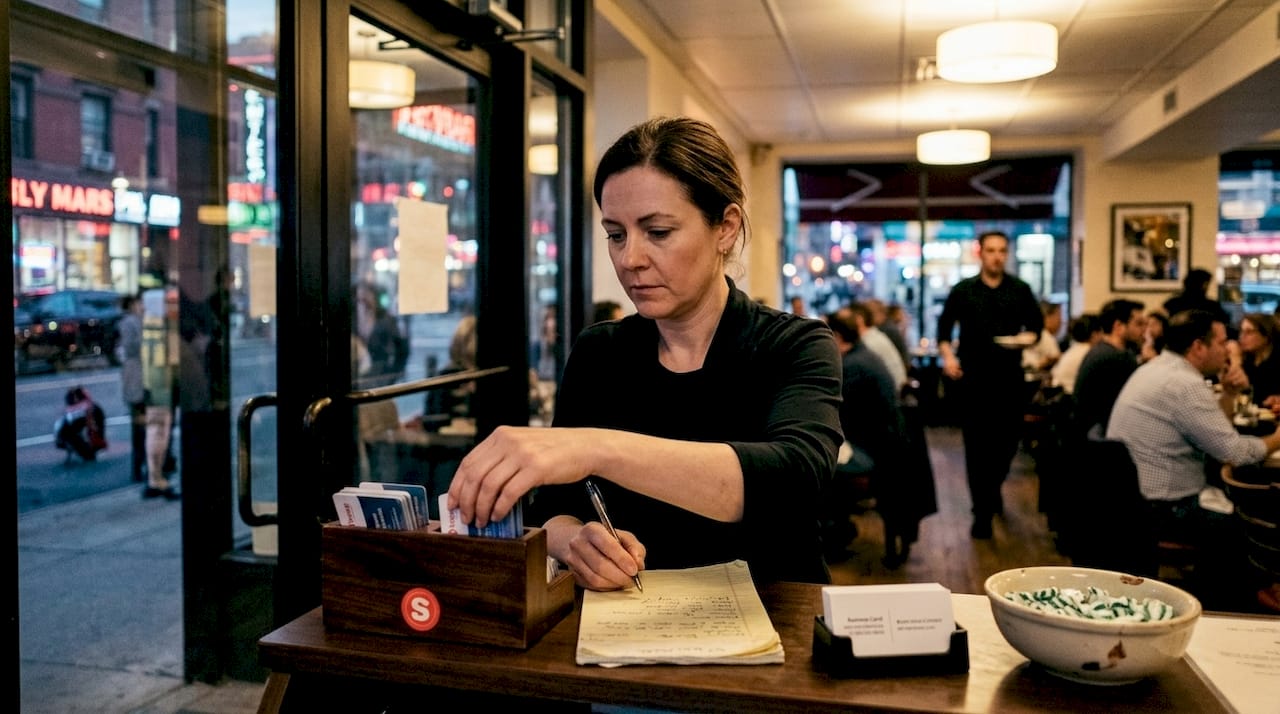
Personalized communication takes retention further. When you segment your guest list by behavior (last visit date, average spend, favorite menu items) rather than just demographics, your messages become relevant instead of generic. A guest who orders vegetarian dishes every time does not need a promotion for your new burger.
Key retention benchmarks to track:
- SMS conversion rate: 45%
- Email conversion rate: 42%
- Retention ROI vs. acquisition: 3.3x higher
- Email marketing ROI: 4,200% ($42 per $1 spent)
AI-driven automation makes behavior-triggered messaging scalable. A guest who has not visited in 45 days gets a personalized “we miss you” offer. A guest who just hit their 10th visit gets a surprise upgrade. These moments build emotional loyalty, not just transactional loyalty. The restaurant marketing checklist includes a retention audit you can run on your current setup. For broader strategy context, retention marketing strategies covers the full lifecycle approach.
Pro Tip: Segment your guest list by recency, frequency, and spend. Your top 20% of guests likely drive 60-70% of revenue. Market to them differently than to first-time visitors.
Community engagement: Partnerships and local events
City restaurants that feel like part of the neighborhood build a loyalty that no ad campaign can replicate. Community engagement is a long-term play, but it compounds over time.
Tactics that work:
- Local business partnerships: Cross-promote with nearby gyms, boutiques, or theaters. A pre-show dinner deal with the theater two blocks away costs nothing and drives consistent traffic.
- Event sponsorship: Sponsor a neighborhood 5K or a local school fundraiser. Your brand gets visibility with a highly local, engaged audience.
- Co-marketing with neighborhood groups: Partner with local food bloggers, neighborhood associations, or business improvement districts to amplify your reach without paid media spend.
- Hosting community events: Open mic nights, local artist showcases, or cooking classes turn your space into a community hub.
Community engagement builds loyalty and visibility in ways that paid advertising cannot. For casual and family restaurants especially, being known as “the neighborhood spot” is a competitive advantage that is very hard to copy.
The SEO for community marketing guide explains how local events and partnerships can also improve your search rankings when covered online. More ideas are available in the community marketing ideas resource, and the restaurant marketing insights blog covers emerging tactics regularly.
Comparing restaurant marketing types: What works for whom
Not every strategy fits every concept. Here is a practical comparison to help you match tactics to your restaurant type.
| Marketing type | Est. ROI | Best for | Watch out for |
|---|---|---|---|
| Local SEO | High, long-term | All types | Requires consistent upkeep |
| Email/SMS | Very high (4,200%) | All types | List quality matters |
| Paid ads | Medium, fast | Fast-casual, new openings | Budget can scale quickly |
| Loyalty programs | 3.3x retention ROI | All types | Complexity kills adoption |
| Promotions/events | Variable | Casual, family | Margin erosion risk |
| Community engagement | High, long-term | Casual, family, neighborhood | Slow to build |
| PR and influencer | High for brand | Fine dining | Hard to measure directly |
By restaurant type, the priorities shift significantly. Fine dining invests in PR, exclusive partnerships, and high-touch loyalty. Fast-casual focuses on social media, short-form video, delivery platform presence, and quick promotions. Family and casual concepts get the most from community events, value-driven offers, and local SEO.
The most common mistake city restaurant owners make is spreading budget too thin across every channel. Pick two or three tactics that match your concept and your team’s capacity, execute them well, and measure results before expanding.
Transform your restaurant marketing with the right tools
Knowing which marketing types work is only half the battle. The other half is having the right systems to execute, track, and optimize without burning out your team.
Sorbey’s restaurant marketing services are built specifically for local restaurants that want to run smarter campaigns without hiring a full agency. From loyalty automation to local SEO, the platform connects your marketing channels in one place. Use the free marketing budget calculator to see exactly how much you should be spending by channel, and the marketing ROI calculator to measure what is actually working. When your tools are aligned with your strategy, every dollar you spend works harder.
Frequently asked questions
What is the most effective type of restaurant marketing in cities?
Local SEO, review management, and retention strategies consistently deliver the highest ROI for urban restaurants. Optimizing your Google Business Profile captures the 48% of traffic driven by local searches, while email and SMS automation lock in repeat visits.
How much should a restaurant budget for marketing?
Most restaurants invest 3-6% of revenue in marketing, with new openings sometimes reaching 7-10%. The majority of that budget, typically 60-80%, should go toward digital channels.
How do loyalty programs impact restaurant sales?
Loyalty programs can boost repeat visits by 2.5x and deliver a 3.3x higher ROI compared to acquisition-focused spending. The key is keeping the program simple enough that guests actually use it.
Should traditional marketing still be used?
Traditional marketing still has a role, especially for local visibility and special events. The best approach is to blend both digital and traditional tactics, with digital as the foundation and traditional as a complement for specific campaigns.
What marketing types suit fine dining vs fast-casual?
Fine dining prioritizes PR, exclusive partnerships, and high-touch loyalty programs. Fast-casual relies on social media, video content, delivery platform presence, and quick-turn promotions to drive volume and frequency.
Recommended
Potrebbe interessarti anche

Best Restaurant Loyalty Programs 2026: ROI Guide
Discover the best restaurant loyalty programs 2026 that boost repeat visits. Learn how Sorbey’s platform can transform your guest data strategy!

Why Mobile Marketing Matters for Business Growth
Discover why mobile marketing matters for business growth. Learn how optimizing for mobile drives traffic, conversions, and customer retention.

SF Dim Sum Restaurant Marketing Checklist for 2026
Transform your SF dim sum with our 2026 marketing checklist. Optimize your profile, showcase dishes, and attract customers fast!