
Blog
Restaurant branding explained: boost engagement and stand out
Learn what restaurant branding really means and how to use it to boost customer engagement, build loyalty, and stand out in competitive urban markets.
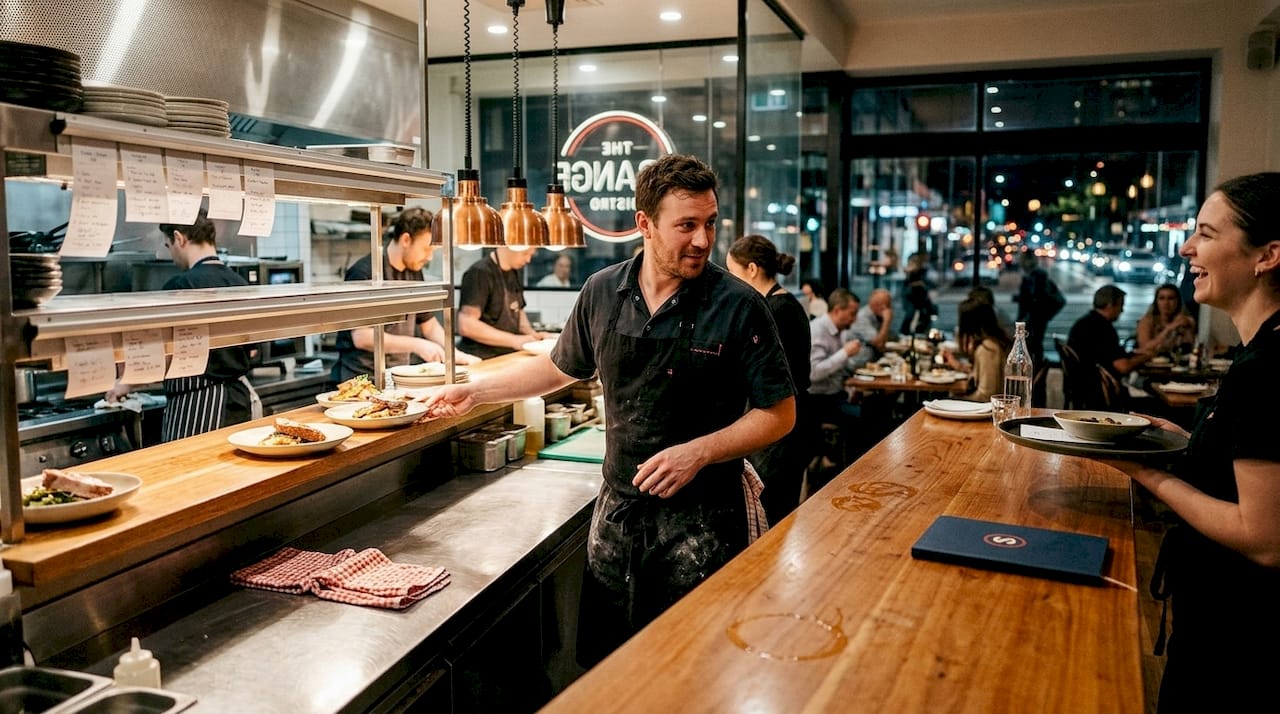
Restaurant branding explained: boost engagement and stand out
TL;DR:
- Restaurant branding shapes customer perception through visual identity, atmosphere, and storytelling.
- Consistent branding and emotional connection foster loyalty beyond just great food.
- Effective branding is a gradual, intentional process that emphasizes storytelling and customer engagement.
Your food might be exceptional, your chef award-winning, and your location prime real estate in a busy city block. Yet if customers can’t immediately understand who you are and why they should choose you, you’ll lose them to the place across the street with a clearer story. Restaurant branding is one of the most misunderstood tools in the industry. Many owners treat it as an afterthought, something to tackle after the menu is set and the doors are open. This guide breaks down what restaurant branding actually means, why it matters more than most people realize, and exactly how you can use it to drive real customer engagement and long-term growth.
Table of Contents
- What is restaurant branding?
- Core elements of a successful restaurant brand
- Branding in action: How leading restaurants engage customers
- Building a brand your customers will love and remember
- Why most restaurant rebrands fail (and what actually works)
- Take your restaurant branding to the next level
- Frequently asked questions
Key Takeaways
| Point | Details |
|---|---|
| Branding is holistic | It includes your restaurant’s story, visuals, service, and every customer interaction—not just your logo. |
| Consistency builds trust | Aligning every aspect of your brand creates memorable experiences that encourage repeat business. |
| Evolve with your audience | Monitoring feedback and involving customers in your brand story are crucial for long-term success. |
| Measure impact | Use data from engagement and reviews to refine and prove your branding efforts work. |
What is restaurant branding?
Restaurant branding is the complete picture your business paints in a customer’s mind before they even sit down. It’s not just your logo or your color palette. It’s the sum of every interaction, every visual cue, every piece of copy on your website, and every conversation your staff has with a guest. When someone walks past your restaurant, glances at your Instagram, or reads a review on Yelp, they’re forming an impression. Branding is what shapes that impression intentionally.
At its core, branding answers one question: Why should someone choose you? That answer has to be consistent everywhere. Branding is more than a logo or color scheme. It’s the cohesive story and experience customers have at every touchpoint, from your takeout packaging to the music playing during dinner service.
Here are the core components that make up a restaurant brand:
- Visual identity: Logos, color palette, typography, menu design, signage, and uniforms
- Brand voice: The tone you use in emails, social media posts, and on your website
- Atmosphere: Lighting, decor, music, and the overall feeling guests get when they walk in
- Customer experience: How staff greet guests, handle complaints, and make people feel valued
- Story and mission: Why your restaurant exists, what it stands for, and who it serves
A common misconception is that branding is only for large chains with big marketing budgets. That’s simply wrong. Independent restaurants in cities like New York, Chicago, and Los Angeles often build stronger emotional connections with customers than national brands, precisely because their story feels real and personal.
“A brand is what people say about you when you’re not in the room.” This applies to restaurants just as much as Fortune 500 companies.
Effective restaurant branding strategies build loyal customers who don’t just return, they recommend you to friends, post about you online, and defend you when a competitor opens nearby. That kind of loyalty doesn’t come from great food alone. It comes from a brand that makes people feel something.
Core elements of a successful restaurant brand
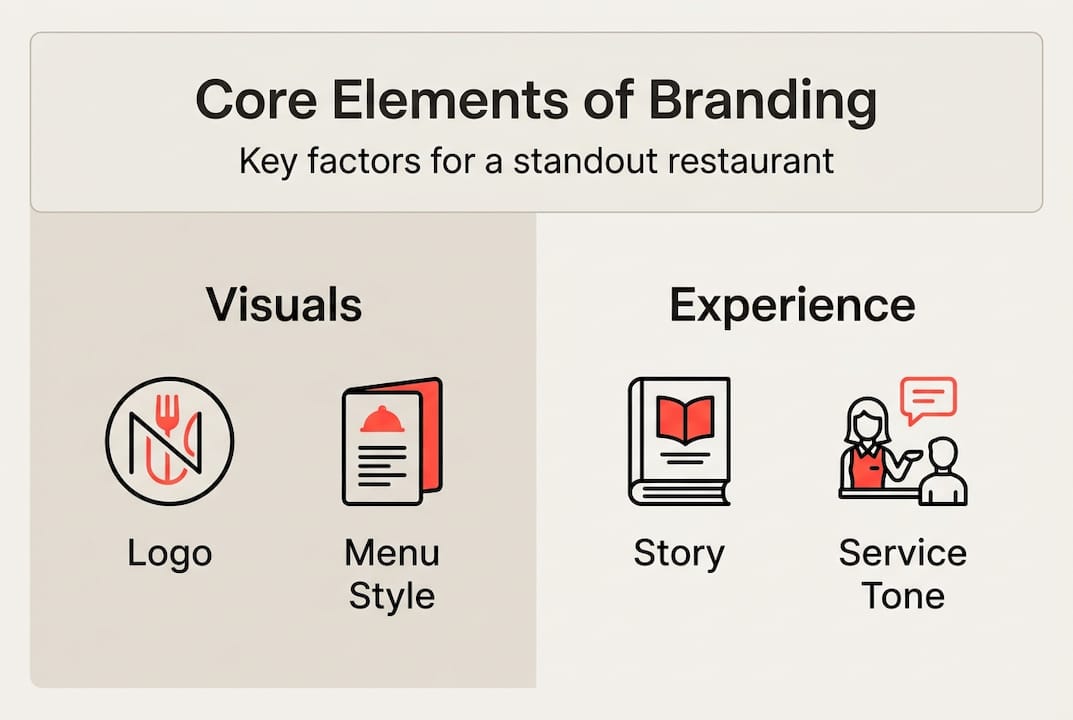
Now that you understand what restaurant branding means, let’s break it into the building blocks that actually drive results. There are two categories of brand elements: visual and emotional. Both matter equally.
Visual identity includes your logo, color palette, menu layout, website design, and even your staff uniforms. These elements create instant recognition. When someone sees your colors or font, they should immediately think of your restaurant.
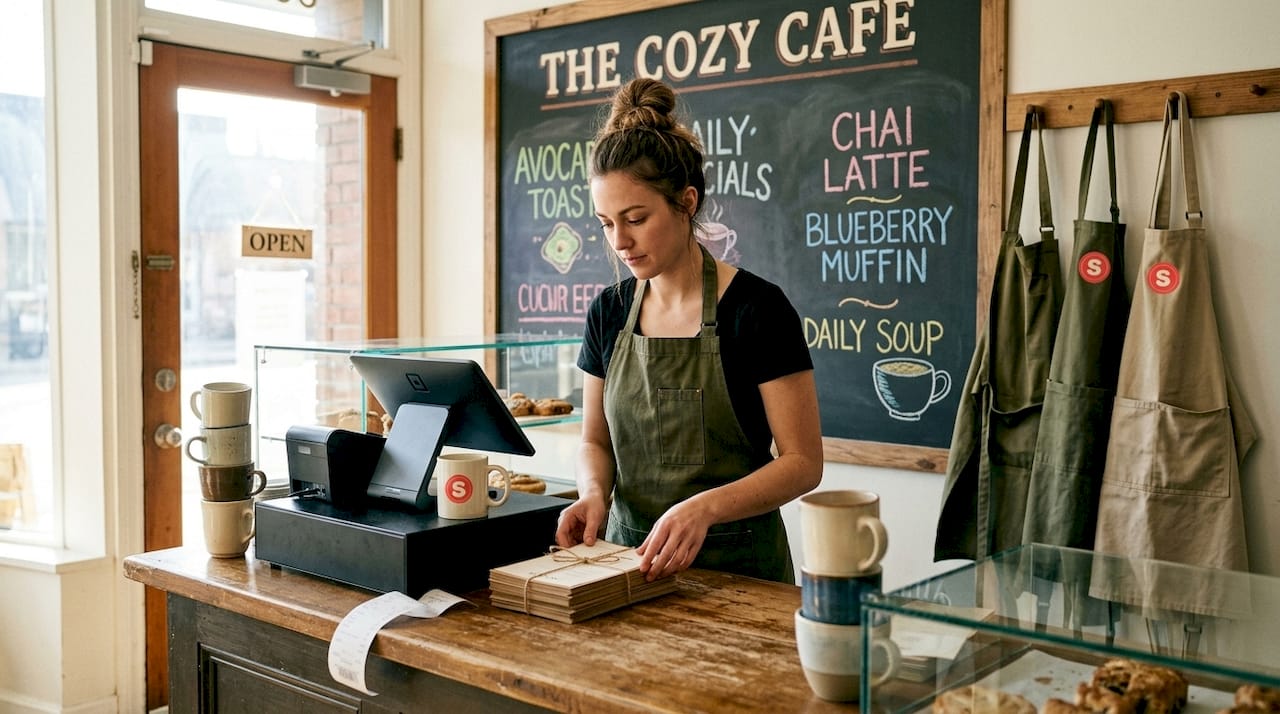
Emotional identity is harder to see but more powerful. It includes your origin story, your values, your service philosophy, and the vibe you create. A restaurant that plays vinyl records, sources ingredients from local farms, and trains staff to remember regulars’ names is communicating something specific about who they are. That’s emotional branding.
Here’s a quick comparison to show the difference between a strong brand and a confused one:
| Element | Strong brand | Confused brand |
|---|---|---|
| Visual identity | Consistent across all platforms | Different look on each channel |
| Staff behavior | Reflects brand values clearly | Inconsistent guest experience |
| Menu design | Matches overall tone and story | Generic, no personality |
| Online presence | Cohesive voice and visuals | Random posts, no clear message |
| Customer loyalty | High repeat visit rate | Low retention, price-driven only |
Your playlist, your staff’s language, even the way your menu is written all reflect your brand. Gradual brand evolution and storytelling protect customer loyalty far better than sudden overhauls. Customers build emotional connections over time, and those connections are fragile when change happens too fast.
Paying attention to hospitality branding trends can help you stay relevant without losing your core identity. The key is adapting thoughtfully, not chasing every new trend.
Pro Tip: Start with your story and values before you design a single visual element. Ask yourself: What do we believe in? Who are we serving? What feeling do we want guests to leave with? Every brand decision should flow from those answers.
For restaurants in dense urban markets, standing out means being specific. Generic branding blends into the background. Strong branding ideas for urban markets lean into neighborhood identity, cultural roots, and community values.
Branding in action: How leading restaurants engage customers
Understanding the pieces of branding is one thing. Seeing how real restaurants use them to build loyal audiences is where it gets practical.
In New York City, restaurants like Carbone and Superiority Burger have built cult followings not just through food, but through a deeply consistent brand experience. Carbone’s retro Italian-American aesthetic, from the red sauce menu to the tuxedoed servers, tells a complete story. Superiority Burger’s tiny, no-frills space and hand-drawn signage communicate exactly who they are: unpretentious, creative, and community-focused.
In Chicago, spots like Au Cheval built their brand around a very specific promise: the best diner burger, period. Every element, from the dark bar lighting to the no-reservation policy, reinforces that identity.
Here’s how to apply lessons from these case studies to your own restaurant:
- Identify your brand promise. What one thing can every customer count on when they visit you?
- Audit your current touchpoints. Walk through your restaurant as a first-time customer. Does everything you see and hear match your intended brand?
- Align your online presence. Your Google profile, website, and social media should all tell the same story.
- Train your team. Staff are your most powerful brand ambassadors. They need to understand and embody your brand values.
- Measure and adjust. Track repeat visits, monitor online reviews, and watch your social engagement rates.
Branding efforts that use metrics monitoring are more likely to succeed long-term. Data tells you what’s resonating and what’s falling flat.
Building branded search for restaurants means customers actively look for you by name, not just by cuisine type. That’s a powerful signal of brand strength. Pair that with smart repeat customer remarketing and you have a system that keeps guests coming back.
Pro Tip: Tell your brand story through food, environment, and marketing materials simultaneously. When all three say the same thing, your brand becomes unforgettable.
Building a brand your customers will love and remember
Having learned what works from successful restaurants, here’s a simple path to build a brand that’s both memorable and genuinely loved by your customers.
Start by defining your core brand promise. This is the one experience every single customer can count on, every visit, every time. It might be warmth, speed, creativity, or authenticity. Whatever it is, it needs to be specific and deliverable.
Follow these steps to move from vision to rollout:
- Write your brand story. Two to three sentences about who you are, why you opened, and what you stand for.
- Define your visual identity. Choose colors, fonts, and design elements that reflect your story.
- Audit every customer touchpoint. Menu, decor, website, social media, staff uniforms, and packaging.
- Train your team on brand values. Every person on staff should be able to explain what your restaurant is about.
- Launch gradually. Introduce changes in phases so loyal customers feel included, not blindsided.
- Collect feedback actively. Use surveys, review responses, and direct conversations to understand how guests perceive your brand.
Here’s a quick checklist of touchpoints to audit and align:
- Menu language and design
- Interior decor and signage
- Staff greeting scripts and service style
- Website copy and photography
- Social media tone and visuals
- Email and text marketing messages
- Takeout packaging and receipts
Success comes from evolving your story with customer input and closely monitoring feedback metrics. Your brand is not a one-time project. It’s a living thing that grows with your audience.
Optimizing your operations alongside your brand also pays off. Investing in restaurant service optimization ensures your guest experience matches the promise your brand makes.
Pro Tip: Invite your regulars into your brand story. Ask for their input when you’re considering changes. When customers feel ownership, they become your most loyal advocates.
Use branding strategy tips and urban branding innovation resources to keep your approach fresh without losing your core identity.
Why most restaurant rebrands fail (and what actually works)
Here’s what most branding advice gets wrong: it treats branding like a project with a start and end date. You hire a designer, get a new logo, update your Instagram, and call it done. That approach almost never works.
Rebranding failures are common when brands lose track of their core story and their customers’ emotional connection. The Cracker Barrel situation is a perfect example of what happens when a brand tries to evolve too fast without bringing its audience along for the ride.
Real branding is a slow, intentional process. The restaurants that build lasting loyalty do it by telling a consistent story over years, not weeks. They make small, deliberate updates. They listen to their community. They don’t chase trends just because a competitor did.
The strongest brands we’ve seen in urban markets aren’t the flashiest ones. They’re the ones with a clear point of view that never wavers, even as the menu changes or the team grows. Storytelling and metrics matter far more than a fresh coat of paint on your logo.
If you want to build real brand resilience, focus on brand engagement methods that deepen customer relationships over time. That’s the work that actually moves the needle.
Take your restaurant branding to the next level
You now have a clear picture of what restaurant branding really means and how to put it into practice. The next step is execution, and that’s where having the right support makes a real difference.
Sorbey specializes in all-in-one marketing for restaurants in competitive urban markets. From building your visual identity to running data-driven campaigns that bring customers back, our restaurant marketing services are built for the realities of running a busy restaurant. Whether you’re starting from scratch or refining an existing brand, the Sorbey AI solutions platform gives you practical, measurable tools to grow your presence and keep guests coming back. Let’s build something your customers will love.
Frequently asked questions
Why does restaurant branding matter more than just having great food?
Branding sets expectations that differentiate you from competitors, shaping customer loyalty and choice long before a single dish is served. Great food keeps people coming back, but branding is what gets them in the door the first time.
What are the biggest mistakes to avoid when rebranding a restaurant?
Abrupt changes without customer input and losing your core story often result in lost loyalty and branding failures. Always involve your audience and roll out changes gradually to protect the emotional connections you’ve built.
How can I measure if my restaurant branding is working?
Track engagement metrics like repeat visits, online reviews, and social mentions. Monitoring metrics is key to branding success and helps you identify what’s resonating with your audience.
Does my branding need to be completely unique to succeed?
You don’t need to be radically different, but your brand should be recognizable, consistent, and tell a story that resonates with your target audience. Consistency and storytelling matter far more than being unlike anything else on the market.
Recommended
- Top Restaurant Branding Strategies to Boost Engagement | Sorbey Blog | Sorbey
- Meilleures Stratégies de Branding Restaurant pour Booster l’Engagement | Sorbey Blog | Sorbey
- Innovative restaurant branding ideas to stand out in urban markets | Sorbey Blog | Sorbey
- Boost Restaurant Brand Awareness: A Step-by-Step Guide
Potrebbe interessarti anche

Best Restaurant Loyalty Programs 2026: ROI Guide
Discover the best restaurant loyalty programs 2026 that boost repeat visits. Learn how Sorbey’s platform can transform your guest data strategy!

Why Mobile Marketing Matters for Business Growth
Discover why mobile marketing matters for business growth. Learn how optimizing for mobile drives traffic, conversions, and customer retention.

SF Dim Sum Restaurant Marketing Checklist for 2026
Transform your SF dim sum with our 2026 marketing checklist. Optimize your profile, showcase dishes, and attract customers fast!