How Instagram Boosts Google Rankings for Restaurants in 2025
Nov 4, 2025
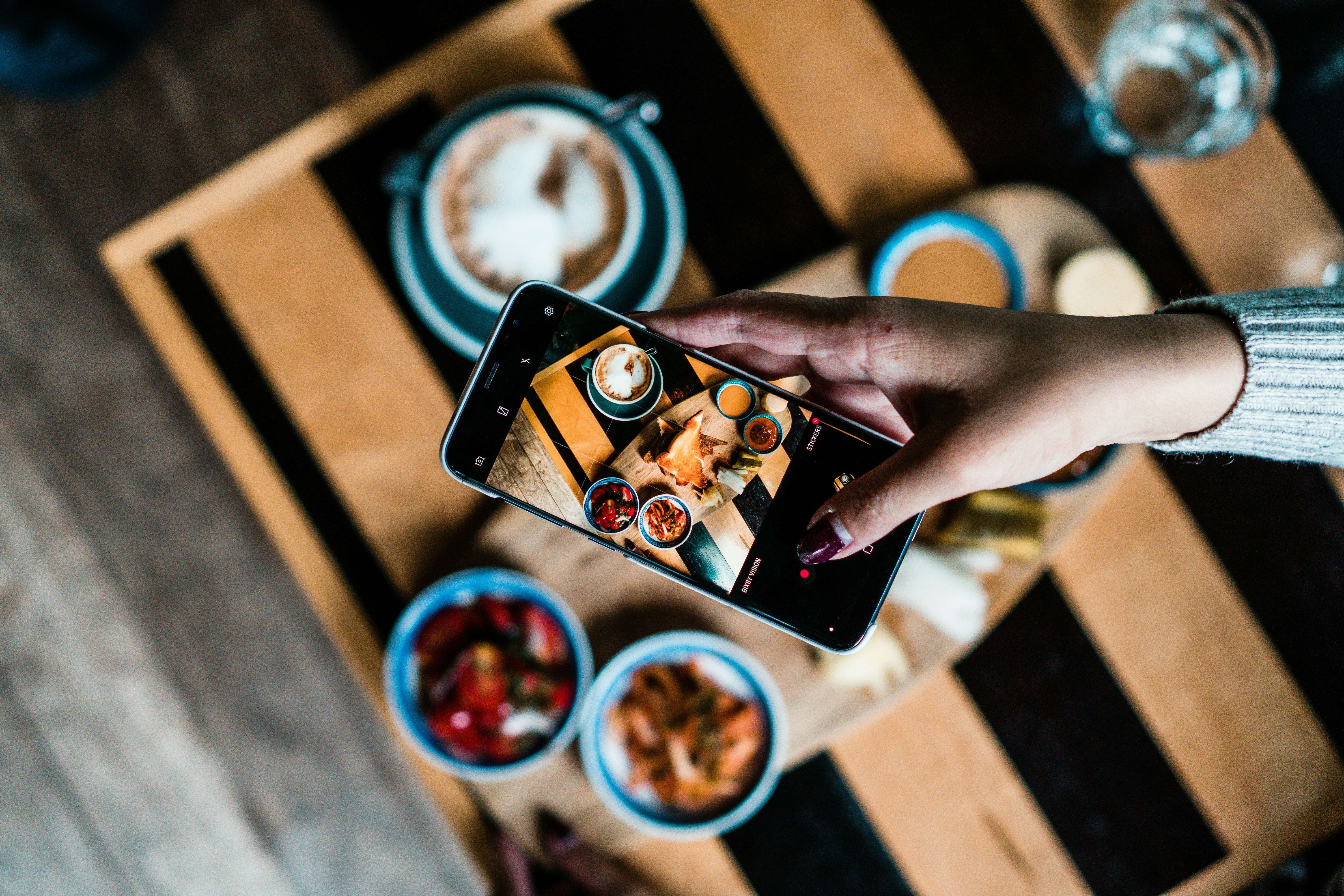
In July 2025, Meta surprised everyone by announcing that professional and public Instagram posts would now be indexed by search engines (Google, Bing, etc.). In other words, an Instagram post can now appear among the top results of an online search for a relevant keyword. This is a major turning point for local businesses, especially restaurants, as Instagram is known to be the most "foodie" social network of all. This development makes Instagram a valuable new tool for the search engine optimization (SEO) of restaurants. It brings a host of new opportunities, but also requires adopting new practices to take advantage of it.
In this article, we explain how Instagram SEO works on Google, how to optimize your Instagram pages and posts to benefit from it, and what best practices to implement to attract more customers with this new feature. Analysis.
Instagram and SEO: how does it work?
For your Instagram content to appear on Google, it must first be read and indexed by search engines. This process, known as indexing, is constantly evolving with the pace of digital usage. And in 2025, it follows a key trend: more and more internet users are using social media as a search engine. According to recent studies, nearly one in four users now prefers social media as their primary source for online searches, and this proportion is nearing one in two among Generation Z. No wonder Google is adapting by integrating Instagram content into its results!
Specifically, since July 10, 2025, Google's algorithms and their counterparts can "crawl" (analyze) public Instagram content: photos, carousels, and Reels are eligible for indexing. Your professional Instagram posts can thus appear in Google queries, including relevant local searches for your establishment, or show up in Google Images.
However, there are significant technical limitations: search engines cannot read the visual content of an image or video itself (except textual elements like potential subtitles). Therefore, the SEO of Instagram relies mainly on the texts and the structure associated with visual content: the post's caption, hashtags, titles or potential subtitles, location tags, etc., are all elements that Google can interpret. Conversely, Stories, private messages, and comments are not indexed (however, likes and comments contribute to a post's popularity, which can indirectly improve its visibility).
It is important to note that certain conditions must be met for your Instagram posts to be indexed by Google. According to the criteria announced by Meta:
Photos and videos must have been posted after January 1, 2020. (In other words, content that is too old is not considered.)
The account holder must be over 18 years old.
The Instagram account must be public.
The account must be a professional or creator account (business account).
If your account is not yet professional, it is time to switch to business mode to take advantage of this increased visibility. Note that indexing Instagram content is enabled by default if you meet these conditions (it is possible to disable this option in the privacy settings, but doing so would deprive you of a significant advantage in terms of SEO).
Why can Instagram boost the SEO of your restaurant?
What benefits can your restaurant derive from the indexing of Instagram posts on Google? Here are the main reasons why this new feature is a real opportunity for restaurants:
1. Your content gains visibility (and potentially customers).
Historically, Instagram was a relatively closed ecosystem: no ability to integrate links in posts, content not visible outside the platform, and users had to follow you to regularly see your posts... In short, increasing your visibility on Instagram required time and some tricks. Now, the indexing changes the game: your Instagram posts can reach an audience far beyond your current followers. An internet user who doesn’t know you and searches for "brunch restaurant Lyon" on Google might come across one of your appetizing Instagram photos in the results. The result: you can gain new followers more easily – among them, potential future customers for your establishment.
2. Your Instagram posts have a longer lifespan.
Until now, the lifespan of a post on Instagram was relatively short (a few days of engagement, then it would fade into the feed's oblivion). With the appearance on Google, content you published months or years ago could resurface and find a second life. If you have been managing your restaurant’s Instagram account since at least January 2020, your longevity works in your favor: this content history gives you a certain authority, just as an old well-ranked website accumulates credibility. Particularly if some of your past posts were very successful (many likes, comments, shares), there is a good chance they will appear in favorable positions on search engines. Your past investment in Instagram continues to pay off over the long term.
3. A multiplier effect with your digital ecosystem.
The indexing of Instagram on Google fits into a larger trend: that of global local SEO. The more digital communication levers you activate, the more results you will obtain in terms of online visibility. In other words, Instagram complements an ecosystem that already includes your website, your Google Business Profile (formerly Google My Business), online customer reviews, and possibly other social networks. By consistently feeding all these channels, you maximize the impact of each (sometimes referred to as an omnichannel strategy). For example, a well-optimized Google profile coupled with an active and now indexed Instagram account will mean that, in a local search, the user will see both your business listing (with address, hours, reviews) and perhaps a compelling Instagram post. This convergence increases your chances of attracting clicks and, ultimately, customers to your restaurant. It can also be bet that other platforms will follow: why not TikTok content indexed soon? Restaurants that take the lead on all these digital fronts will have an edge in capturing online attention.
10 tips to optimize your Instagram posts for Google
Automatic indexing does not guarantee that your posts will rank at the top of the results. As with the SEO of a website, you will need to optimize your Instagram content to give yourself the best chances. Here are 10 best practices and tips to apply now to your restaurant's Instagram accounts:
Take stock of your current visibility
Before changing anything, start by evaluating the performance of your (or your) Instagram account(s).
What is your average engagement rate?
What types of posts work best?
Have you recently gained followers thanks to specific content?
Also take the time to look at where your competitors stand on Instagram. Our initial audit will help you identify your weaknesses and strengths, so you can focus your optimization efforts where they are most needed.
Maintain a consistent identity (especially for groups)
If you manage multiple establishments or a franchise, ensure that all your Instagram accounts share a coherent editorial line.
Same brand name (or very close), same tone of communication, harmonized visuals... and ideally, common keywords related to your offerings.
For example, if you have three pizzerias in different cities, make sure to use similar terms to describe your specialties in each bio or post (#neapolitanpizza, #woodfiredoven, etc.). This consistency helps algorithms grasp your field of activity and universe more quickly.
However, beware of duplicate content: avoid copying and pasting text from your website or brochure word for word into your Instagram captions, as this risks creating duplicate content that is not appreciated in SEO. Draw inspiration from it, yes, but rephrase in your own words for each post.
Optimize your Instagram bio
Think of your Instagram profile biography as an SEO homepage. It is often the first (and maybe the only) thing some users will see coming from Google, and it is one of the elements that search engines read to understand who you are.
Therefore, use this strategic space to clearly describe your establishment by including your main keywords:
Type of cuisine, specialties, neighborhood or city, particular strengths (e.g., gourmet burger, sunny terrace, vegan option, free parking, etc.)
Your hours
And don’t forget a link to your reservation system, website, or online menu—Instagram allows you to include a clickable link in your bio.
A well-filled bio can greatly improve your relevance on certain queries (like organic Italian restaurant Bordeaux for example).
If you have several links to share (reservations, menu, delivery...), use tools like Linktree or Beacons to create a single link to a multi-link page. These additional links may not be directly “SEO juice” for Google, but they provide a path for converted visitors to learn more or take action, while strengthening the overall ecosystem of your online presence.
Favor high-performing publication formats
Not all Instagram posts are equal, both in the eyes of the Instagram algorithm and in terms of appeal to Google.
Currently, Reels (short videos) and Carousels (multiple images) are the formats that generate the most engagement on Instagram—they are favored by the platform, thus reaching more users.
Moreover, a popular post is more likely to rank well in Google results. Using these “favorite” formats is therefore an indirect SEO lever.
Furthermore, they offer intrinsic advantages for SEO: a carousel allows you to develop content through multiple visuals and texts, creating a rich and thematic post (which Google particularly appreciates, as it provides context and varied keywords around the same subject).
A Reel with subtitles (embedded text or captions) is doubly interesting: it captures the attention of users on Insta and provides Google with text to index (the subtitles being readable, just like the Reel's description).
In short, to improve the popularity and readability of your posts, focus on these dynamic formats. For example, instead of a single photo of your new dish, why not create a carousel “zoom on our homemade desserts” with 5 photos and descriptions, or a Reel interviewing the chef in the kitchen with subtitles?
Add a location to each of your posts
Local SEO is crucial for a restaurant, and Instagram offers a simple tool to work on it: the location tag. With each post, remember to tag the place (city, neighborhood, or specific location) related to your content.
For example, if you post a photo of one of your dishes in your Paris establishment, geolocate it in Paris or YourRestaurant - Paris 5th. These geotags clearly inform Google of the geographical area concerned by your content. Thus, on a search like “best brunch Bordeaux”, a post with “Bordeaux” as its location will carry more weight.
For highly competitive location keywords (e.g., pizza Lyon, cocktail bar Marseille), this is a small plus that can make a difference in reinforcing the local relevance of your post.
Polish the text of your captions (without over-optimization)
On Instagram, the caption accompanying your visual is no longer just there to entertain your followers—it is also text that Google will analyze. Therefore, it is advisable to naturally include relevant keywords in your captions.
For example, instead of a caption that says “Sunday vibes 🌞🍹”, which is vague, you could write “Sunday brunch on the terrace: homemade pancakes and vitamin-packed cocktails on the menu!”.
This way, you gain keywords like Sunday brunch, terrace, homemade pancakes, cocktails… which better match user searches.
Nevertheless, be careful to remain natural and focused on the user experience: a caption must primarily interest and entice (to like, comment, or come to you…).
Do not fall into the trap of keyword stuffing by accumulating a cumbersome list of SEO terms. It is unnecessary to repeat “Italian restaurant Paris” 10 times or fit all your menu dishes into the same caption! Just focus on 2 or 3 main keywords, and write a coherent text that is pleasant to read.
In summary, write your captions for humans while keeping Google in mind.
Use relevant and moderate hashtags
Hashtags on Instagram function like clickable keywords, and now they also serve as indicators for SEO.
Use them in a strategic manner: integrate 2 to 5 hashtags per post, choosing terms directly related to your publication and activity.
For example, for a special sushi photo from your menu in Paris, hashtags like #sushitime, #sushiparis, #japanese restaurant will add more value than overly generic tags like #food or #yummy.
An overly popular but vague hashtag does not really improve your targeted visibility (there is too much content and it does not convey anything specific to Google about you).
Prefer hashtags that are a bit more long-tail and descriptive (location, type of cuisine, signature dish name…).
In the same way, avoid mixing unrelated hashtags in a single post: stay focused on one theme per publication.
This thematic consistency, from hashtags to visual and textual content, will strengthen the algorithm's understanding of your posts.
Create content that answers internet users' questions
An astute way to attract traffic from Google is to align some of your Instagram posts with frequent queries.
Think about the questions your customers or prospects may have and turn them into content. For example: “How to choose the right wine to pair with cheese?”, “The 5 secret ingredients of our beef bourguignon”, “What dessert to offer for Valentine's Day?”.
A carousel can very well become a mini practical guide that answers a given question, slide by slide. This type of post has a good chance of surfacing when an internet user poses the same question to Google.
To find inspiration, do not hesitate to use Google yourself: type a keyword related to your restaurant (e.g., Lebanese cuisine Toulouse) and look at the “Frequently Asked Questions” sections or “Other suggested questions” by the engine. You will see what people are searching for regarding this topic (e.g., “What is the best Lebanese specialty?”, “Popular vegetarian Lebanese dish”, etc.).
These insights can fuel your ideas for “SEO-friendly” posts. By creating content that provides real added value (answering a question, giving advice, telling the story of a dish...), you not only please the algorithm but also enhance engagement and loyalty among your community.
Use alternative text (alt text) for your images and videos
The alternative text is a descriptive field often overlooked on Instagram but extremely useful. Originally, it is an accessibility feature—allowing one to describe an image for visually impaired individuals or in case of loading issues. However, this same text also helps search engines understand the visual content!
Instagram allows you to manually add alternative text to each photo/video (via Advanced Settings at the time of posting). Take advantage of it!
If you do not use this field, Instagram generates a basic alt text automatically, which is not always optimized. It is better to personalize this description with your keywords. For example, rather than leaving “Image may contain: 1 person, food”, you could write “Server presenting a gourmet vegan burger at restaurant X, Paris”.
This type of description, rich in relevant details, will help Google to better index your image in the appropriate results (including in Google Images).
Additionally, if you upload your visuals from your phone or computer, remember to rename the image/video file with keywords before sending it to Instagram. A file named pizza-margherita-napoli.jpg will have more impact than an obscure IMG_8356.jpg. It's a small effort in advance, invisible to users, but it counts for your SEO.
In summary, treat your Instagram images like those on your website: give them a descriptive and useful alt tag (or file name).
Post regularly and highlight your past content
In social media (like in SEO), consistency is often synonymous with success. It is better to publish at a modest but steady pace (for example, 2 to 3 times a week) rather than sporadically.
An active and updated account sends a positive signal—to your followers as well as to the algorithm. This indicates that your establishment is dynamic, attentive to its community, and multiplies the opportunities to appear on Google (more posts, thus potentially more entry points to you).
Moreover, take a look in the rearview mirror: identify your best past posts (those that generated the most engagement). These gems can still work for you.
Check if any of these posts already appear on Google by typing associated keywords. If not, you can try to retroactively optimize them: add a location tag if it wasn't done, slightly edit the caption to include an important missing keyword, or even re-post the visual in an updated form (a throwback in stories, a repost in the carousel “Our essentials,” etc.).
The idea is not to overhaul everything or spam but to leverage what has already proven successful. In web SEO, it is known that updating old content can breathe new life into rankings; similarly, on Instagram, bringing attention back to content that worked well (without necessarily making drastic changes) can pay off.
Carefully test these optimizations on your most popular old posts and see if it influences their visibility on Google.
This is a trial phase; each account may have different results, but it is worth trying.
In conclusion: Instagram + SEO, the winning recipe
For restaurateurs, the indexing of Instagram by Google is excellent news, provided that it is approached with method and common sense. As we have seen, it is primarily about applying the classic principles of SEO to your practices on Instagram:
Consistency of information,
Content rich in relevant keywords,
Regularity in posting,
Use of all the features offered (hashtags, location, alt text...) to help search engines understand and highlight your establishment.
In a word, think "SEO" every time you create an Instagram post, while keeping in mind that this post must primarily please users.
This combination of technical optimization and quality content is key to boosting your visibility.
Finally, remember that SEO is a game of patience and ecosystem. Instagram does not replace the rest; it complements it.
Continue to nurture your presence on Google (your website, your reviews, your business listing), all while feeding Instagram with passion and strategy. It is the synergy of all these digital levers that will ensure that, tomorrow, a user looking for a restaurant finds your establishment—and not the one next door—whether it be a classic Google result or an Instagram post integrated into search results.
By applying these tips, you put all the chances on your side to attract more followers… and more customers at the table.
Happy Instagram SEO, and enjoy your future visitors!


Read more articles from our Blog
7 concrete actions to optimize your restaurant photos
Dec 15, 2025

How local SEO will change in 2025
Dec 10, 2025
The 3 steps to stay visible on ChatGPT and LLM in 2025
Dec 3, 2025
AI is transforming research – How independent restaurants can adapt and thrive
Nov 7, 2025

7 SEO mistakes made by 70% of independent restaurants in 2025 (and how to fix them)
Oct 17, 2025
Responding to negative reviews: turning an incident into an opportunity for visibility for your restaurant
Oct 14, 2025

Why Local SEO Is Vital for Restaurants in 2025
Oct 10, 2025
How to ask a customer to leave a Google review online?
Oct 9, 2025
How ChatGPT Influences Local SEO in 2025, and What Restaurants Should Do to Stay Visible
Oct 6, 2025

Responding to restaurant customer reviews: 10 tips for restaurant managers and marketing executives
Oct 3, 2025
Cross-platform SEO: the new key to visibility for restaurants in 2025
Oct 1, 2025

SEO for Restaurants: How to Be Found and Chosen Online
Sep 29, 2025
ChatGPT for Restaurants: How to Appear in the First Recommendations
Sep 27, 2025

10 Proven Restaurant Marketing Ideas to Drive More Sales
Sep 22, 2025
Restaurant Marketing Guide
Sep 15, 2025
