Responding to negative reviews: turning an incident into an opportunity for visibility for your restaurant
Oct 14, 2025
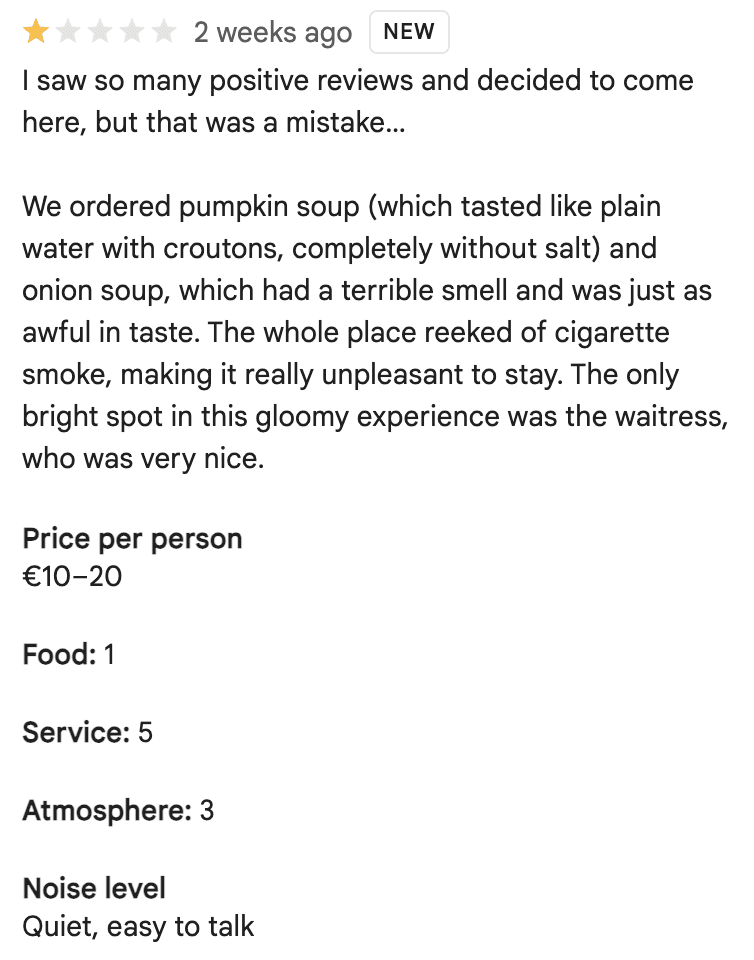
Learn to transform each negative review into a strategic asset. In 2025, knowing how to respond means boosting your local visibility, your reputation, and your position in AI results.
1. Introduction
A dissatisfied customer is not a crisis. But it does have a real impact.
What if the way you respond is worth more than the review itself?
In 2025, a negative comment is no longer just a bad rating: it directly influences your local SEO, your AI recommendations (ChatGPT, Google, Perplexity…) and the perception of your brand.
Responding smartly sends a double signal:
💬 to customers: "we're listening"
🤖 to algorithms: "we are alive, active, and trustworthy".
Because deep down, the real question is no longer "How to avoid negative reviews?" but "How to turn them into content that boosts your restaurant?"
2. Why negative reviews are an opportunity
On Google, TripAdvisor, or even ChatGPT, algorithms evaluate the quality of your local presence and how you interact with your customers.
A restaurant that responds to its reviews (good or bad) is perceived as active, attentive, and credible.
In 2025, AI no longer just "indexes": it recommends. And to be recommended, you need to show that you are attentive, improving, and consistently engaged.
A well-managed negative review can:
Humanize your establishment.
Generate indexable content (every response is text that Google reads!).
Create positive signals for ChatGPT, Perplexity, and local AIs.
3. Golden rules before responding
Before responding, keep these principles in mind:
Respond quickly, ideally within 48 hours.
Stay human, avoid canned responses (“We are sorry for the inconvenience…”).
Apologize sincerely, even if the review seems unfair.
Offer a concrete solution, a commercial gesture, an invitation, a direct contact.
Never delete a review, respond calmly and transparently.
4. Step-by-step process for responding well
Step | Action | SEO Tips / AI impact |
|---|---|---|
1 | Read the review carefully to understand the grievances | Note the words used by the customer (e.g. “cleanliness”, “wait time”, “quality”) |
2 | Start with an empathetic and apologetic statement | “I understand your disappointment, we are sincerely sorry…” |
3 | Calmly recontextualize without denying | “That night, we were very busy / in training / etc.” |
4 | Propose a concrete solution | “We offer you a coffee / a discount / a new reservation” |
5 | Invite to contact offline | For example: “Please contact us at our email address or Instagram" |
6 | Thank them for the feedback and ensure follow-up | For example: “Thank you for your feedback, it helps us improve. See you soon at the restaurant!” |
SEO / AI Tips: naturally include a local keyword if possible (“restaurant [city]”), use clear, short, and relevant phrases because AIs often read review responses to judge local reputation.
5. Concrete examples
Example A
Customer review: “The cooking of my steak was overdone and the server never came back. Very disappointed.”
Suggested response:
“Hello [First Name], I am sorry that your dish did not meet your expectations. Many of our customers are very satisfied with our steak, so your feedback is valuable and helps us improve. To compensate, we invite you to come back and try our famous steaks again in Paris. If you wish, please contact me directly at [number / email] so that we can do better next time. Thank you for taking the time to write to us, and we hope to welcome you again and offer you a perfect experience.”
Example B
Review: “Slow service, cold ambiance.”
Response:
“Hello [First Name], thank you for sharing your feelings. I understand that the wait time may have frustrated your evening. We are adjusting our staff schedules to avoid this and have already taken your feedback into consideration. I would like to offer you a drink on your next visit. Please write to us on our Instagram page, and we will ensure a better service next time.”
The key is to remain personal and offer a guarantee of improvement.
6. How to boost your visibility through your response
SEO optimized response: the response itself is indexable content. Use key phrases (“experience”, “quality”, “customer service”) based on your keywords and the city.
Systematic integration into reviews: respond to all negative (and even positive) reviews — it sends a signal of active management.
Share or repost: transform your best responses (read, polite, educational) into LinkedIn, Instagram posts, or carousels, showing how you transform a dissatisfied customer into an ambassador.
Use responses as FAQs: some recurring critiques can become FAQ sections on your site (e.g. “Why is wait time sometimes long?”) and thus the response is valorized twice (in the review + the FAQ for SEO).
7. Mistakes to avoid
We understand that it is sometimes tempting to get angry or disagree with a review that is sometimes too harsh. However, remember that a single bad response can damage your e-reputation and scare away many potential customers. Here’s the list of mistakes to avoid:
Responding in anger or with excessive justification
Generic, copied, or non-personalized responses
Forgetting to tie the response to a real solution
Failing to thank or ending the response abruptly
Deleting negative reviews (this is seen as a lack of transparency). It is better to respond with a promise of improvement
8. Measure impact & iterate
Some KPIs to track:
Change in average rating (e.g., from 4.2 to 4.5)
Number of customer reviews (increase after response efforts)
Average response time
Rate of customers who return after a complaint
Local SEO visibility (ranking for “restaurant + city”, appearing in AI suggestions)
Mentions/shares of responses on social media
Use Google Analytics, local tools (Google Business Profile, TripAdvisor dashboard), and possibly AI audits (test your responses on ChatGPT/Gemini to see if they stand out) to zoom in on progress.
Or more simply: ask Sorbey to do it so you can focus on your customers and enhance their experience.
9. Conclusion
In summary, a negative review is an opportunity:
to show your personality;
to reassure future customers;
to gain visibility on Google, TripAdvisor, and AIs.
Every response is a living proof that you care about your customers. And in the world of local SEO, attention is the new currency.


Read more articles from our Blog
7 concrete actions to optimize your restaurant photos
Dec 15, 2025

How local SEO will change in 2025
Dec 10, 2025
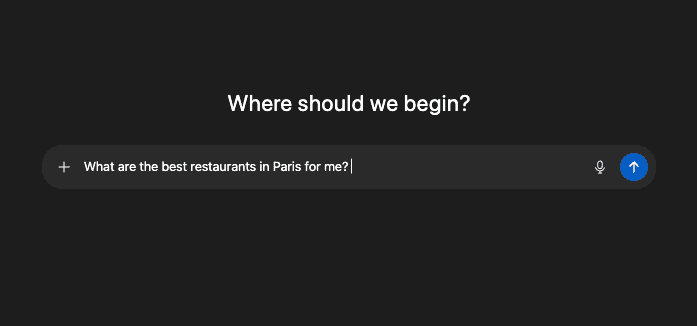
The 3 steps to stay visible on ChatGPT and LLM in 2025
Dec 3, 2025
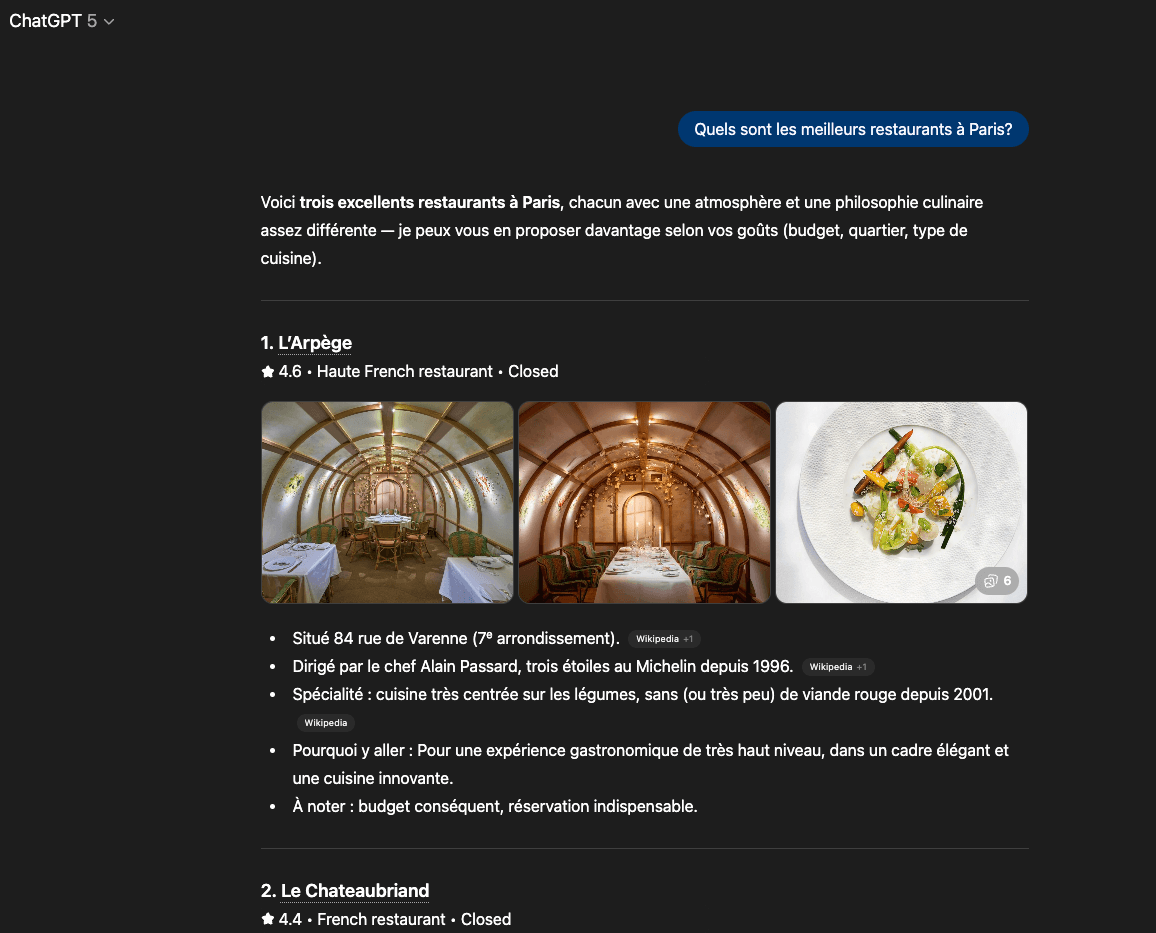
AI is transforming research – How independent restaurants can adapt and thrive
Nov 7, 2025

How Instagram Boosts Google Rankings for Restaurants in 2025
Nov 4, 2025

7 SEO mistakes made by 70% of independent restaurants in 2025 (and how to fix them)
Oct 17, 2025

Why Local SEO Is Vital for Restaurants in 2025
Oct 10, 2025
How to ask a customer to leave a Google review online?
Oct 9, 2025
How ChatGPT Influences Local SEO in 2025, and What Restaurants Should Do to Stay Visible
Oct 6, 2025

Responding to restaurant customer reviews: 10 tips for restaurant managers and marketing executives
Oct 3, 2025
Cross-platform SEO: the new key to visibility for restaurants in 2025
Oct 1, 2025

SEO for Restaurants: How to Be Found and Chosen Online
Sep 29, 2025
ChatGPT for Restaurants: How to Appear in the First Recommendations
Sep 27, 2025

10 Proven Restaurant Marketing Ideas to Drive More Sales
Sep 22, 2025

Restaurant Marketing Guide
Sep 15, 2025
