
Blog
Explaining Restaurant Loyalty Programs for Owners
Unlock the power of customer retention! Discover how explaining restaurant loyalty programs can boost revenue and build regulars for your eatery.
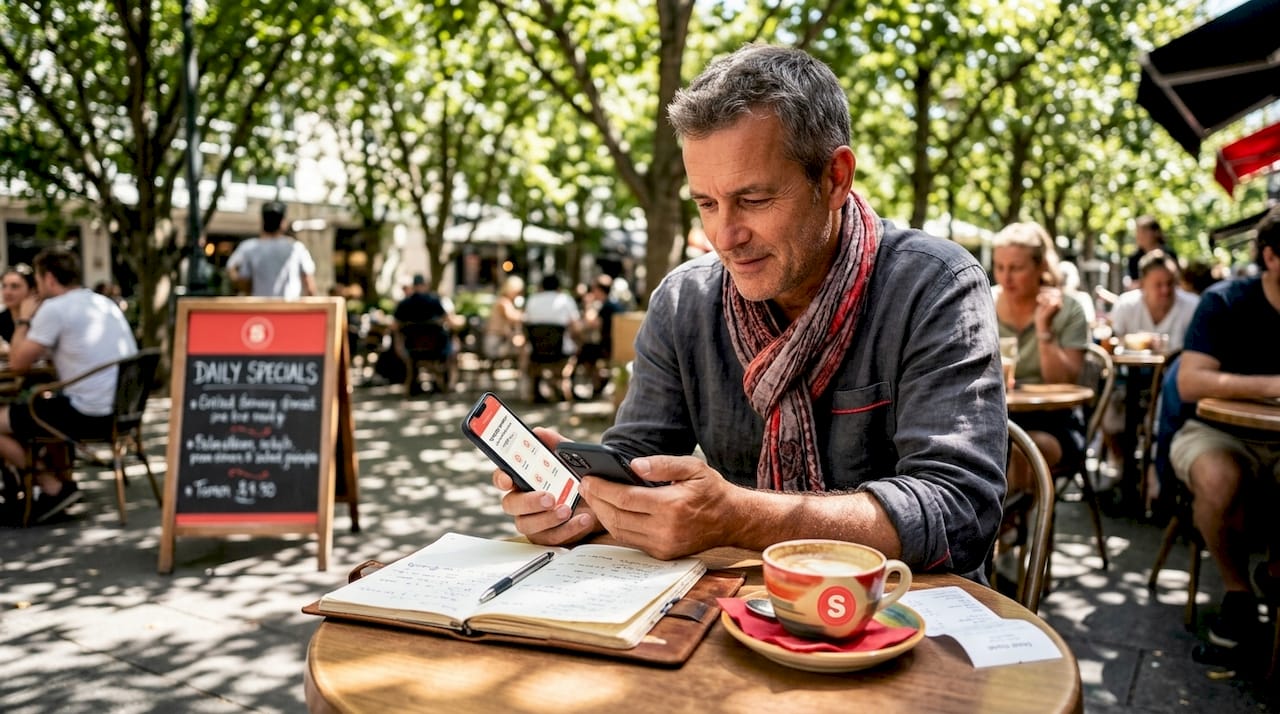
Explaining Restaurant Loyalty Programs for Owners
TL;DR:
- Effective restaurant loyalty programs focus on reachable rewards and easy enrollment to encourage repeat visits and increase customer lifetime value. Digital tools, AI personalization, and simplified program structures outperform complex systems by meeting guests where they are and tracking meaningful behavior changes. Launching simple, well-measured programs with minimal friction yields better engagement and loyalty than elaborate, over-engineered designs.
A restaurant loyalty program is a structured system where customers earn points, discounts, or free items in exchange for repeat visits, designed to build habitual ordering rather than just collect sign-ups. DoorDash’s 2026 guidance confirms the core mechanic: visit, earn, redeem, return. That cycle, when designed correctly, turns a first-time guest into a regular. Explaining restaurant loyalty programs to your staff and customers is the first step toward making that cycle work. The stakes are real. Loyalty members order more often, spend more per visit, and cost far less to retain than new customers cost to acquire.
Why do restaurant loyalty programs work to boost retention and revenue?
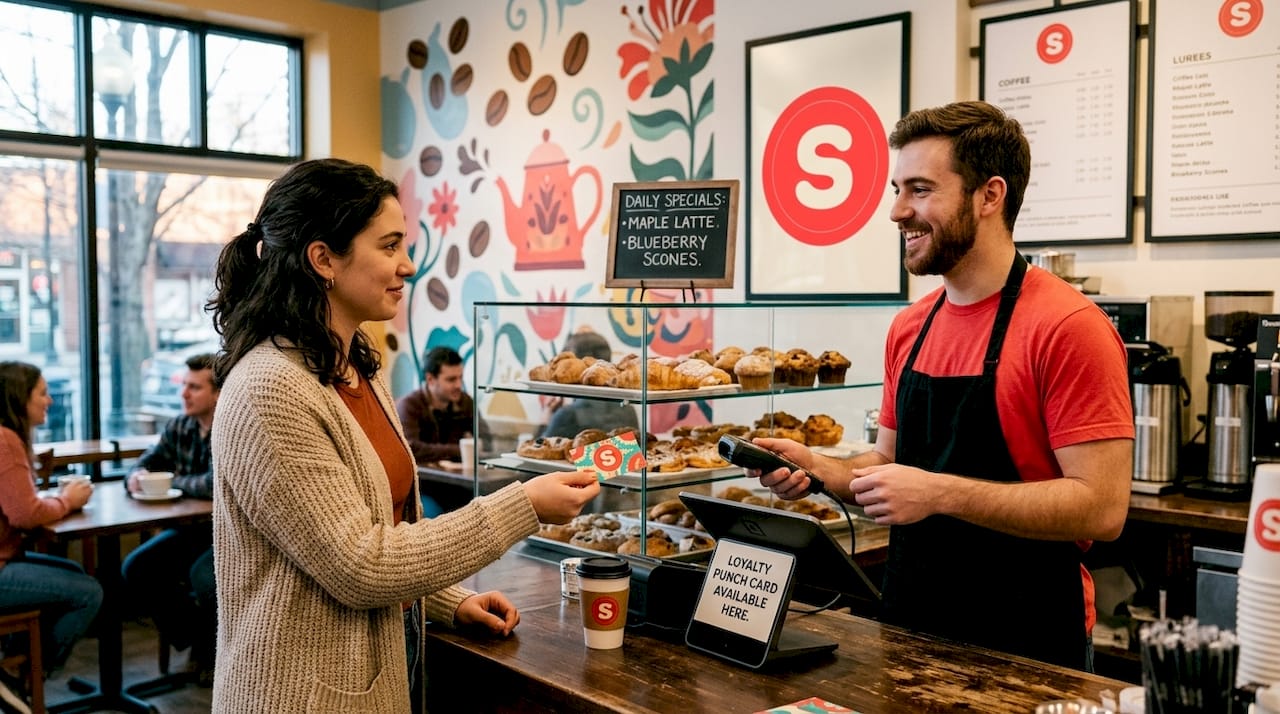
The psychology behind loyalty programs is straightforward. When a customer knows a reward is within reach, they return sooner. Customers who can earn a reward in roughly 3 to 4 visits engage far more consistently than those facing a 10-visit threshold. That gap matters because distant rewards feel abstract, while a free coffee after four visits feels like a near-certain payoff.
The financial case is equally strong. Consider what happens when a guest who previously visited twice a month starts visiting three times because they are chasing a reward. That single behavioral shift compounds across your entire member base. Industry data supports this: points-only programs are becoming obsolete, and programs that incorporate experiential rewards and AI analytics improve guest lifetime value by 20% to 50%. That is not a marginal gain. It is the difference between a guest who spends $400 a year and one who spends $600.
The loyalty rewards cycle also creates measurable behavior patterns you can track:
- Visit frequency lift: Members visit more often than non-members, giving you a direct comparison metric.
- Average check growth: Customers earning toward a reward often add an item to hit a point threshold.
- Redemption rate: A healthy redemption rate signals the reward is reachable and desirable, not just theoretical.
- Churn reduction: Members who have redeemed at least once show significantly higher 90-day retention than those who never reached a reward.
The restaurant loyalty benefits compound when you treat the program as a behavior-change tool, not a discount mechanism. The goal is not to give away margin. The goal is to make returning your restaurant the obvious choice.
What types of restaurant loyalty programs fit different business models?
Not every program structure fits every concept. The four most common models each carry distinct trade-offs.
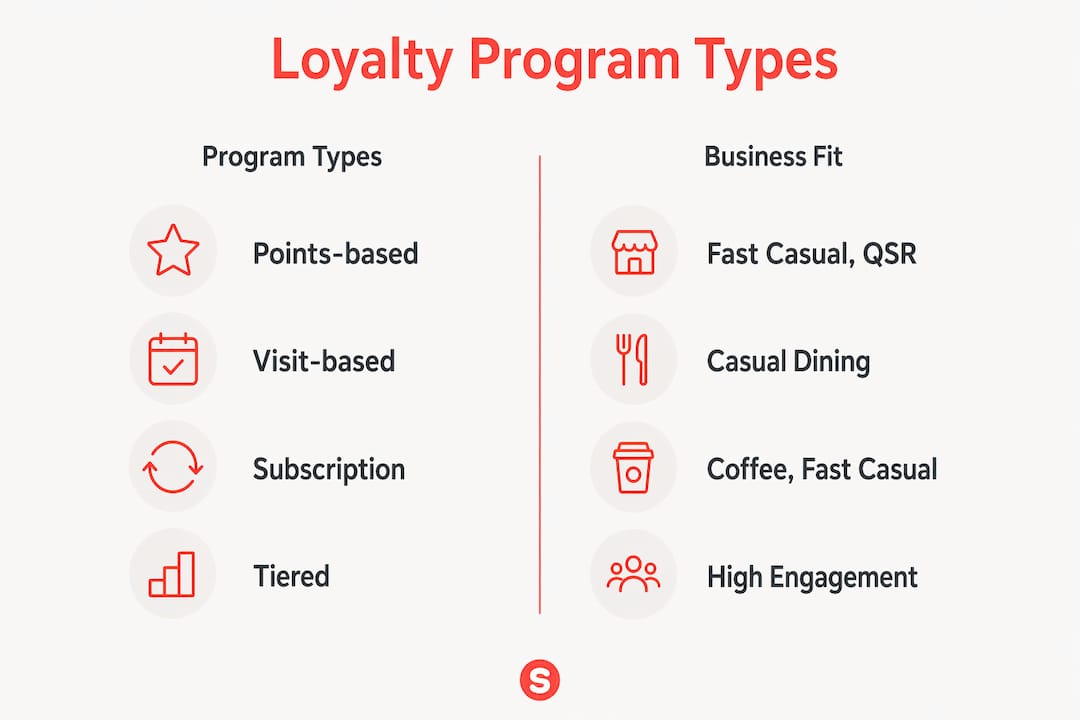
| Program type | Best fit | Key advantage | Main risk |
|---|---|---|---|
| Points-based | Fast casual, QSR | Flexible, scalable | Can feel transactional |
| Visit-based (punch card) | Coffee shops, bakeries | Simple to understand | Easy to game or forget |
| Tiered (status levels) | Full-service, chains | Drives aspirational behavior | Complex to manage independently |
| Subscription/paid | High-frequency concepts | Predictable revenue | Upfront commitment deters casual guests |
For most independent restaurants and fast-casual operators, a points-based or visit-based program offers the best balance of simplicity and engagement. Tiered programs work well for chains like Chipotle, which relaunched its program as Chipotle’s “Rewards on Repeat” with more than 21 million active members, monthly free food drops, and flexible point redemption. That scale justifies the complexity. A 40-seat neighborhood bistro does not have the same infrastructure.
Setting the right reward threshold is the most underrated design decision. Take your average ticket and your typical visit frequency, then set the first reward to land at 3 to 4 visits. If your average guest spends $18 and visits twice a month, a reward unlocking at $54 in cumulative spend (three visits) is reachable within six weeks. That timeline keeps the program top of mind without giving away margin on every transaction.
Subscription models deserve a mention because they are growing fast in coffee and fast-casual. A flat monthly fee for unlimited drip coffee or a weekly free item creates a predictable revenue stream and locks in visit frequency. The risk is that guests who subscribe but visit infrequently feel they wasted money and cancel. Subscription programs work best when your core product has a daily-use case.
Pro Tip: Avoid launching a tiered program if you cannot automate tier tracking. Manual tier management leads to errors, guest frustration, and staff confusion. Start with a single-tier points model and add complexity only after you have 500-plus active members.
How do digital tools and AI improve restaurant loyalty programs?
Digital enrollment changes the economics of loyalty programs entirely. Digital guests adopt loyalty programs at roughly 50%, which is 20% higher than in-store adoption. Olo reports a 23% growth in SMS adoption after adding opt-in at the point of sale. That single friction-reduction move, asking for a phone number at checkout instead of directing guests to a separate app, meaningfully expands your member base.
AI-driven personalization is where the real lift happens. Rather than sending every member the same “earn double points this weekend” message, AI analytics identify which guests are lapsing, which are approaching a reward threshold, and which respond to free-item offers versus discount offers. The Paytronix 2026 Loyalty Report, summarized by Restaurant Dive, found that behavior-targeted loyalty can improve guest lifetime value by 20% to 50%. Personalization is not a luxury feature. It is the mechanism that separates programs that drive behavior from programs that just track it.
Gamification adds another layer of engagement. Chipotle’s Summer of Extras campaign used streaks, badges, and limited-time challenges to keep members checking the app between visits. The result was higher app open rates and increased visit frequency during the campaign window. You do not need Chipotle’s budget to borrow this mechanic. A “visit 3 times this month, unlock a bonus reward” challenge costs nothing to set up in most loyalty platforms and creates a reason for members to think about your restaurant proactively.
SMS is the most underutilized channel in restaurant loyalty. Olo’s automated SMS journeys show that SMS opt-in customers deliver 7 to 8 times higher guest lifetime value than non-SMS members. The mechanism is simple: SMS reaches guests where they already are, with a message that feels personal rather than algorithmic. A text that says “You’re 50 points away from a free entrée” converts at a far higher rate than an email saying the same thing.
“Loyalty programs that integrate across in-store, app, and delivery channels consistently outperform single-channel programs because they meet guests wherever they order.”
For more on AI-driven restaurant marketing, the connection between personalization and loyalty ROI becomes even clearer when you see the data broken down by channel.
What are practical steps for launching a restaurant loyalty program?
Launching a program that actually changes guest behavior requires more than picking a platform. Follow these steps in order.
-
Define the behavior you want. More visits? Higher average check? Referrals? Your reward structure must directly incentivize that behavior. If you want more visits, reward visit frequency. If you want higher checks, reward spend thresholds.
-
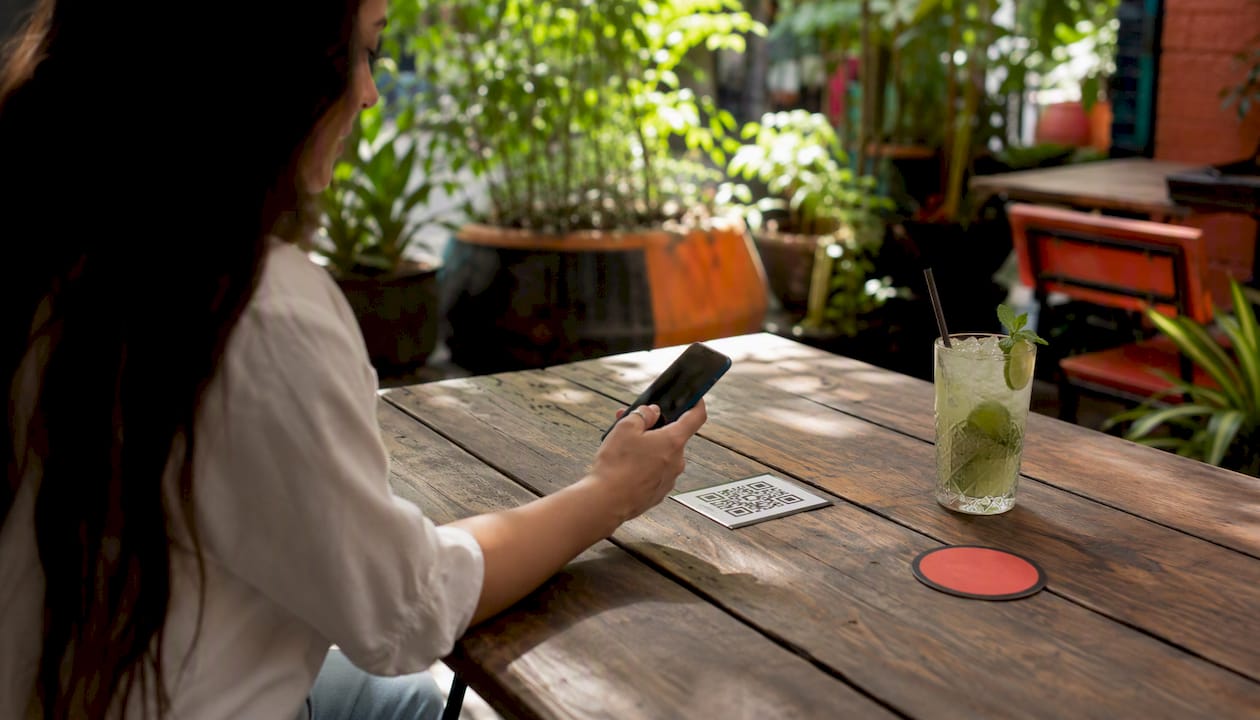
Remove enrollment friction. Sweetgreen’s 2026 playbook sets the standard: enrollment should complete in 30 seconds at checkout via QR scan and automatic point registration. No app download required at sign-up. No password creation. Capture the phone number or email, confirm the first points, and let the guest leave. You can deepen the relationship later.
-
Train your team to promote it. Crew incentives tied to sign-up counts work. A simple “mention the program to every guest this week” script, combined with visible signage at the register, can double enrollment rates in the first month.
-
Set your measurement framework before launch. Talon.One recommends comparing member versus non-member metrics over rolling 90-day and 12-month windows. Track visit frequency, average check, and redemption rate separately for members and non-members. That matched-cohort comparison gives you a true read on program impact, not just a sign-up count.
-
Audit your reward threshold after 60 days. If fewer than 30% of enrolled members have redeemed a reward within 60 days, your threshold is too high. Lower it. Redemption is not a cost. It is proof the program is working.
Pro Tip: Avoid the common mistake of measuring loyalty success by enrollment numbers alone. A program with 2,000 sign-ups and 5% redemption is underperforming. A program with 400 sign-ups and 60% redemption is building real loyalty.
For proven engagement tips that go beyond the basics, including digital enrollment tactics and SMS strategies, the Sorbey blog covers the mechanics in detail.
Key takeaways
Restaurant loyalty programs succeed when they are designed around reachable rewards, low enrollment friction, and measurable behavior change rather than sign-up volume.
| Point | Details |
|---|---|
| Reachable rewards drive visits | Set the first reward threshold at 3 to 4 visits to keep members engaged and returning. |
| Digital enrollment doubles adoption | Adding SMS opt-in at POS increases membership and delivers 7 to 8x higher guest lifetime value. |
| AI personalization lifts lifetime value | Behavior-targeted programs improve guest lifetime value by 20% to 50% over points-only mechanics. |
| Measure behavior, not sign-ups | Compare member vs. non-member metrics over rolling 90-day windows to assess real program impact. |
| Match program type to your concept | Points-based models suit most independents; tiered programs require scale and automation to work. |
Why simple programs beat complex ones every time
I have watched restaurant owners spend months designing elaborate tiered loyalty systems with five reward levels, expiring points, and bonus multipliers for specific menu categories. Almost every one of those programs underperforms a simple “earn a free item after five visits” card. Not because complexity is wrong in principle, but because complexity requires infrastructure most independent operators do not have.
The programs I have seen actually change guest behavior share three traits. They enroll guests in under a minute. They deliver a first reward within a month. And they send at least one personalized message between enrollment and first redemption. That last point is where most operators drop the ball. They set up the program, print the signage, and then go silent. The guest forgets they enrolled. The points sit unclaimed. The program flatlines.
The shift toward restaurant CRM integration is the most important development in loyalty right now. When your loyalty data connects to your CRM, you can see which members are lapsing and send a targeted win-back message before they are gone. That is not a feature reserved for chains. Platforms that serve independent operators now offer this at accessible price points.
My honest recommendation: launch the simplest program you can manage well, measure it rigorously for 90 days, and add one layer of complexity only after the baseline is working. Gen Z guests in particular respond to mobile-first experiences and personalized offers, but they abandon programs that feel clunky or impersonal faster than any other demographic. Simple, fast, and personal beats elaborate and forgettable every time.
— Barthelemy
How Sorbey helps you build loyalty programs that actually work
Sorbey’s restaurant marketing solutions are built specifically for local restaurant operators who want loyalty programs that drive measurable results, not just sign-up numbers. Sorbey combines digital enrollment tools, AI-driven analytics, and CRM integration into one platform designed for restaurants that do not have a dedicated marketing team.
Whether you are launching your first program or rebuilding one that has stalled, Sorbey handles the technical setup, the messaging strategy, and the performance tracking so you can focus on running your restaurant. From SMS opt-in flows to personalized reward triggers, Sorbey gives you the tools that chains use at a scale that works for independent operators. Visit sorbey.co/en/services to see how Sorbey supports restaurant loyalty from day one.
FAQ
What is a restaurant loyalty program?
A restaurant loyalty program is a system where customers earn points, discounts, or free items for repeat visits, designed to drive habitual ordering through a visit, earn, redeem, and return cycle.
How do loyalty programs work for small restaurants?
Small restaurants typically use points-based or visit-based models where guests earn rewards after a set number of visits or a spend threshold, with enrollment captured at the point of sale via phone number or QR code.
What reward threshold keeps customers engaged?
Setting the first reward to unlock after 3 to 4 visits keeps engagement high. Thresholds requiring 10 or more visits significantly reduce program participation and behavior change.
How do you measure if a loyalty program is working?
Compare visit frequency and average check between members and non-members over rolling 90-day and 12-month windows. A program that is working shows measurably higher visit frequency among enrolled members.
Do restaurant loyalty programs need an app?
No. SMS-based and web-based programs remove the app download barrier and consistently achieve higher enrollment rates. Digital guests enroll at 50% when friction is low, regardless of whether an app is involved.
Recommended
- Examples of Restaurant Loyalty Programs That Actually Work | Sorbey Blog | Sorbey
- Boost restaurant loyalty with 10 proven engagement tips | Sorbey Blog | Sorbey
- Why Customer Engagement Is Important for Restaurants | Sorbey Blog | Sorbey
- How to attract local diners and grow restaurant loyalty | Sorbey Blog | Sorbey
You might also like
Best Restaurant Loyalty Programs 2026: ROI Guide
Discover the best restaurant loyalty programs 2026 that boost repeat visits. Learn how Sorbey’s platform can transform your guest data strategy!

Why Mobile Marketing Matters for Business Growth
Discover why mobile marketing matters for business growth. Learn how optimizing for mobile drives traffic, conversions, and customer retention.

SF Dim Sum Restaurant Marketing Checklist for 2026
Transform your SF dim sum with our 2026 marketing checklist. Optimize your profile, showcase dishes, and attract customers fast!