
Blog
Optimize your restaurant website for more customers in 2026
Learn proven strategies to optimize your restaurant website in 2026. Boost engagement, improve local SEO, increase bookings, and attract more customers with our complete guide.

Optimize your restaurant website for more customers in 2026
Your restaurant’s website is often the first impression potential diners get of your business. Yet many restaurant websites load slowly, confuse visitors with cluttered layouts, or fail to show up in local searches. These problems cost you customers every day. This guide walks you through proven optimization strategies that boost engagement, improve search visibility, and increase bookings for U.S. restaurant owners in 2026.
Table of Contents
- Understanding The Importance Of Restaurant Website Optimization
- Preparing Your Restaurant Website For Optimization Success
- Step-By-Step Restaurant Website Optimization Process
- Verifying And Maintaining Your Optimized Restaurant Website
- Boost Your Restaurant Marketing With Sorbey
- What Is The Typical Timeline To See Results From Restaurant Website Optimization?
- How Important Is Mobile Optimization For Restaurant Websites In 2026?
- What Common Mistakes Should Restaurant Owners Avoid During Website Optimization?
- Can I Optimize My Restaurant Website Without Technical Expertise?
Key takeaways
| Point | Details |
|---|---|
| Mobile design matters | A clear, mobile-friendly layout keeps visitors engaged and drives conversions. |
| Local SEO drives traffic | Technical and local SEO put your restaurant in front of nearby hungry customers. |
| Speed affects revenue | Fast loading times and engaging content directly impact user experience and sales. |
| Monitor continuously | Regular tracking and updates maximize long-term performance and results. |
Understanding the importance of restaurant website optimization
Your website performance directly affects how many customers find and choose your restaurant. Poor navigation, slow pages, or missing information frustrate visitors and send them to competitors. Optimized restaurant websites increase customer engagement and sales significantly by meeting modern expectations.
Today’s diners expect seamless experiences. They want fast load times, easy menu browsing on phones, and quick access to reservations or ordering. When your site delivers these essentials, you earn trust and bookings. When it doesn’t, potential customers bounce within seconds.
Optimization brings measurable benefits:
- Higher rankings in Google searches mean more visibility
- Better engagement keeps visitors exploring your menu and specials
- Increased reservations and online orders boost revenue
- Stronger local presence attracts nearby customers actively searching for restaurants
Local search importance for restaurants has never been greater. When someone searches for dining options on their phone, you want your restaurant appearing at the top with accurate details. Local SEO ensures you capture these high-intent customers ready to make decisions.
A well-optimized website transforms casual browsers into loyal customers by removing friction from their decision-making process.
Think of your website as your digital storefront. Just as you keep your physical location clean and inviting, your online presence needs the same care. The difference is that online improvements reach thousands of potential customers simultaneously, multiplying your impact far beyond foot traffic.
Preparing your restaurant website for optimization success
Before diving into optimization tactics, you need a solid foundation. Start by auditing your current website performance and user experience. Check how pages load on different devices, whether menus display correctly, and if contact information is easy to find. This baseline assessment reveals what needs immediate attention.
Mobile responsiveness is critical because most customers browse restaurants on smartphones. Your site must adapt seamlessly to small screens with readable text, tappable buttons, and intuitive navigation. Test every page on your phone to experience what visitors see. If you struggle to find the menu or reservation button, so will your customers.
Set clear business goals before optimizing. Do you want more phone calls, online reservations, or delivery orders? Define what success looks like with specific targets like increasing monthly bookings by 30% or cutting bounce rates in half. These goals guide your optimization priorities and help measure results.
Gather essential assets:
- High-quality photos of dishes, ambiance, and staff
- Updated menu with current prices and descriptions
- Accurate contact details including phone, address, and hours
- Customer reviews and testimonials
- Special offers or event information
Pro Tip: Create a checklist covering design, content, technical elements, and local listings. Work through each item systematically rather than jumping between unrelated tasks. This organized approach prevents overlooking crucial optimization elements.
Ensure your hosting can handle traffic spikes during busy periods. Nothing damages your reputation faster than a crashed website when customers are trying to book weekend reservations. Verify your hosting plan provides adequate speed and reliability for restaurant traffic patterns.
Step-by-step restaurant website optimization process
Start with site structure and navigation. Organize your menu logically with clear categories and intuitive paths to key actions like reservations or ordering. Visitors should reach any page within three clicks from your homepage. Simplify menus by removing unnecessary pages that dilute focus from your core offerings.
Implement local SEO fundamentals by ensuring consistent NAP information across your website and all online directories. Your restaurant name, address, and phone number must match exactly everywhere they appear. Set up and optimize your Google Business Profile with complete information, regular posts, and prompt review responses.
Improve page load speed dramatically:
- Compress images without sacrificing quality using tools like TinyPNG
- Enable browser caching so repeat visitors load pages faster
- Minify CSS and JavaScript code to reduce file sizes
- Use a content delivery network to serve files from servers near your visitors
- Remove unused plugins or scripts that slow loading
Add engaging content that serves customer needs. Your menu should include appetizing descriptions and clear pricing. Feature current specials prominently on the homepage. Add an online reservation system or ordering integration that works smoothly. Include an about section sharing your restaurant’s story and values.

Use schema markup specifically designed for restaurants. This structured data helps search engines understand your business type, menu items, price range, and reviews. When implemented correctly, schema can earn you rich snippets in search results showing ratings, prices, and availability directly in Google.
| Optimization Step | Estimated Time | Impact Level |
|---|---|---|
| Mobile design fixes | 2-3 weeks | High |
| Local SEO setup | 1 week | High |
| Speed improvements | 1-2 weeks | High |
| Content updates | 1 week | Medium |
| Schema implementation | 3-5 days | Medium |
| Ongoing monitoring | 2 hours/week | High |
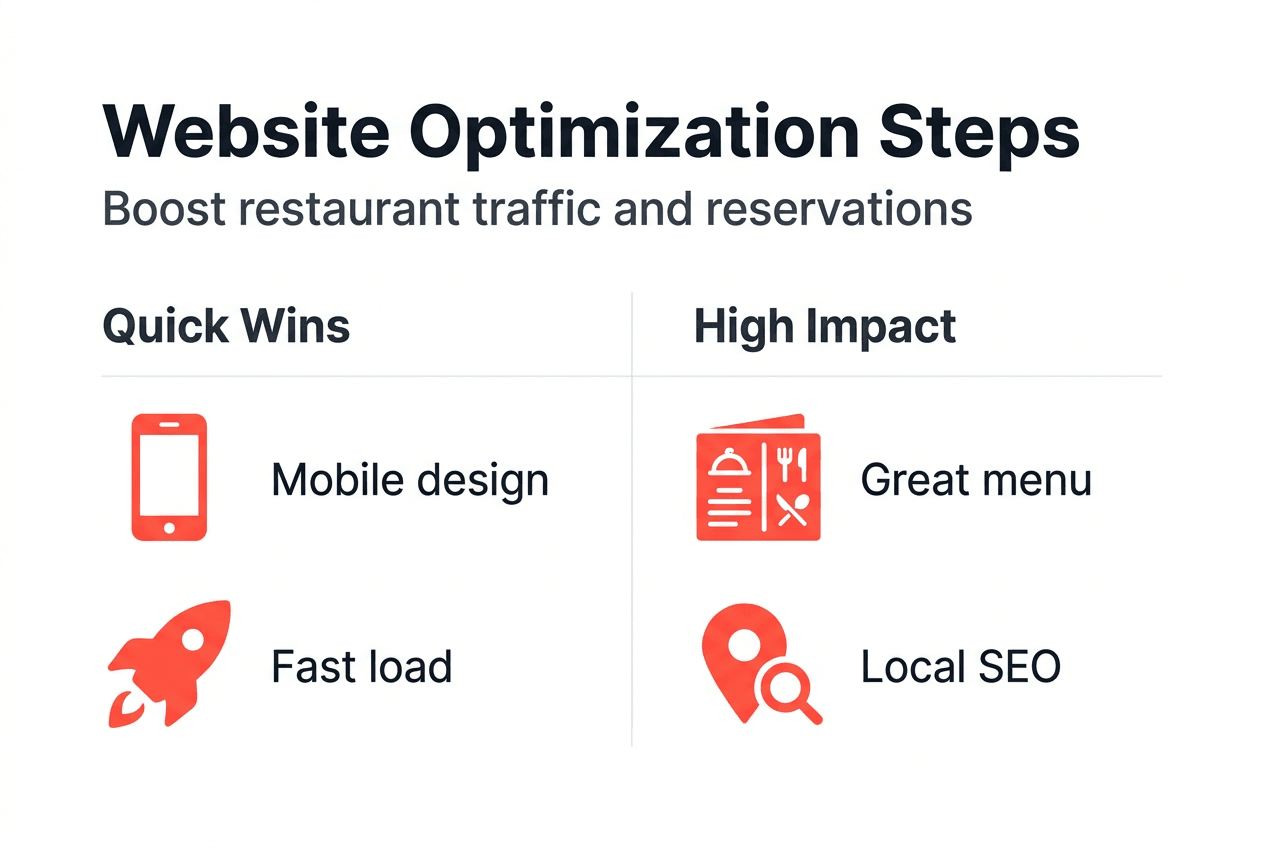
Pro Tip: Test your site speed monthly using Google PageSpeed Insights and mobile usability with Google’s Mobile-Friendly Test. These free tools identify specific issues preventing optimal performance and provide actionable recommendations.
Don’t forget accessibility. Ensure your website works for visitors using screen readers or keyboard navigation. Simple improvements like descriptive alt text for images and proper heading hierarchy make your site welcoming to all potential customers while boosting SEO.
Verifying and maintaining your optimized restaurant website
Optimization isn’t a one-time project but an ongoing process. Track website analytics through Google Analytics to monitor traffic sources, popular pages, and conversion rates. Pay attention to bounce rates showing visitors leaving immediately and session duration indicating engagement levels. These metrics reveal what’s working and what needs adjustment.
Set up goal tracking for key actions like reservation clicks, phone calls, and online orders. Regular monitoring keeps restaurant websites competitive and engaging by highlighting successful elements worth expanding and weak spots requiring fixes.
Gather customer feedback directly through surveys or comment cards asking about their online experience. Many customers will mention if they struggled finding information or had trouble booking. This qualitative data complements analytics by revealing the “why” behind the numbers.
Maintain your website actively:
- Update menus immediately when dishes change or prices adjust
- Refresh photos seasonally to showcase current offerings
- Post about special events, holiday hours, or new menu items
- Respond promptly to reviews on your Google Business Profile
- Fix broken links or outdated information monthly
- Test forms and reservation systems weekly to catch technical issues
Repeat SEO audits quarterly to catch new optimization opportunities. Search algorithms evolve constantly, and competitors improve their sites. Regular audits ensure you maintain your competitive edge rather than falling behind.
Avoid common maintenance mistakes. Neglecting mobile updates alienates the majority of visitors browsing on smartphones. Ignoring customer feedback about website issues frustrates users and costs conversions. Outdated menus or hours create confusion and erode trust. Stay proactive with updates rather than reactive to problems.
Refresh your content strategy regularly. Add blog posts about your chef’s inspiration, ingredient sourcing, or seasonal specialties. Share behind-the-scenes stories that build emotional connections. Fresh content signals to search engines that your site remains active and relevant.
Boost your restaurant marketing with Sorbey
Optimizing your website is just the beginning of effective restaurant marketing services that drive real results. Sorbey provides AI-powered marketing solutions specifically designed for restaurant owners who want to maximize their online presence and customer acquisition in 2026.
Our platform helps you make smarter marketing decisions with tools like the restaurant marketing budget calculator that shows exactly how to allocate spending across channels for maximum impact. Track your return with the restaurant marketing ROI calculator measuring how each dollar invested translates to revenue growth.
Partner with marketing experts who understand the restaurant industry’s unique challenges and opportunities. We help your business stand out in crowded local markets and turn more website visitors into paying customers.
What is the typical timeline to see results from restaurant website optimization?
Most restaurants observe noticeable improvements in traffic and engagement within three to six months of implementing comprehensive optimization strategies. Early wins like faster load times and mobile fixes often show impact within weeks. Local SEO and content marketing require more time as search engines index changes and build trust in your site’s authority. Consistent maintenance accelerates results and sustains growth over time.
How important is mobile optimization for restaurant websites in 2026?
Mobile optimization is crucial for restaurant websites in 2026 to capture the majority of users on smartphones. Over 70% of restaurant searches happen on mobile devices, and Google prioritizes mobile-friendly sites in rankings. A responsive design that loads quickly and displays menus clearly on small screens directly boosts engagement and conversion rates. Neglecting mobile functionality means losing a significant portion of potential customers to competitors.
What common mistakes should restaurant owners avoid during website optimization?
Ignoring mobile responsiveness ranks as the most damaging mistake, immediately frustrating the majority of visitors. Failing to update menus, prices, and contact information regularly creates confusion and damages credibility. Many restaurants overlook local SEO basics like consistent business listings and Google Business Profile optimization, missing easy opportunities for visibility. Finally, neglecting to monitor website analytics or customer feedback prevents you from identifying problems and measuring the impact of your optimization efforts.
Can I optimize my restaurant website without technical expertise?
You can handle many optimization tasks without deep technical knowledge by using website builders with built-in mobile responsiveness and SEO tools. Focus on content improvements like updating menus, adding quality photos, and writing clear descriptions that any restaurant owner can manage. For technical elements like schema markup, site speed optimization, or advanced local SEO, consider partnering with specialists who deliver faster results and avoid costly mistakes. The investment in professional help often pays for itself through increased bookings and improved search visibility.
Recommended
You might also like

Best Restaurant Loyalty Programs 2026: ROI Guide
Discover the best restaurant loyalty programs 2026 that boost repeat visits. Learn how Sorbey’s platform can transform your guest data strategy!

Why Mobile Marketing Matters for Business Growth
Discover why mobile marketing matters for business growth. Learn how optimizing for mobile drives traffic, conversions, and customer retention.

SF Dim Sum Restaurant Marketing Checklist for 2026
Transform your SF dim sum with our 2026 marketing checklist. Optimize your profile, showcase dishes, and attract customers fast!